
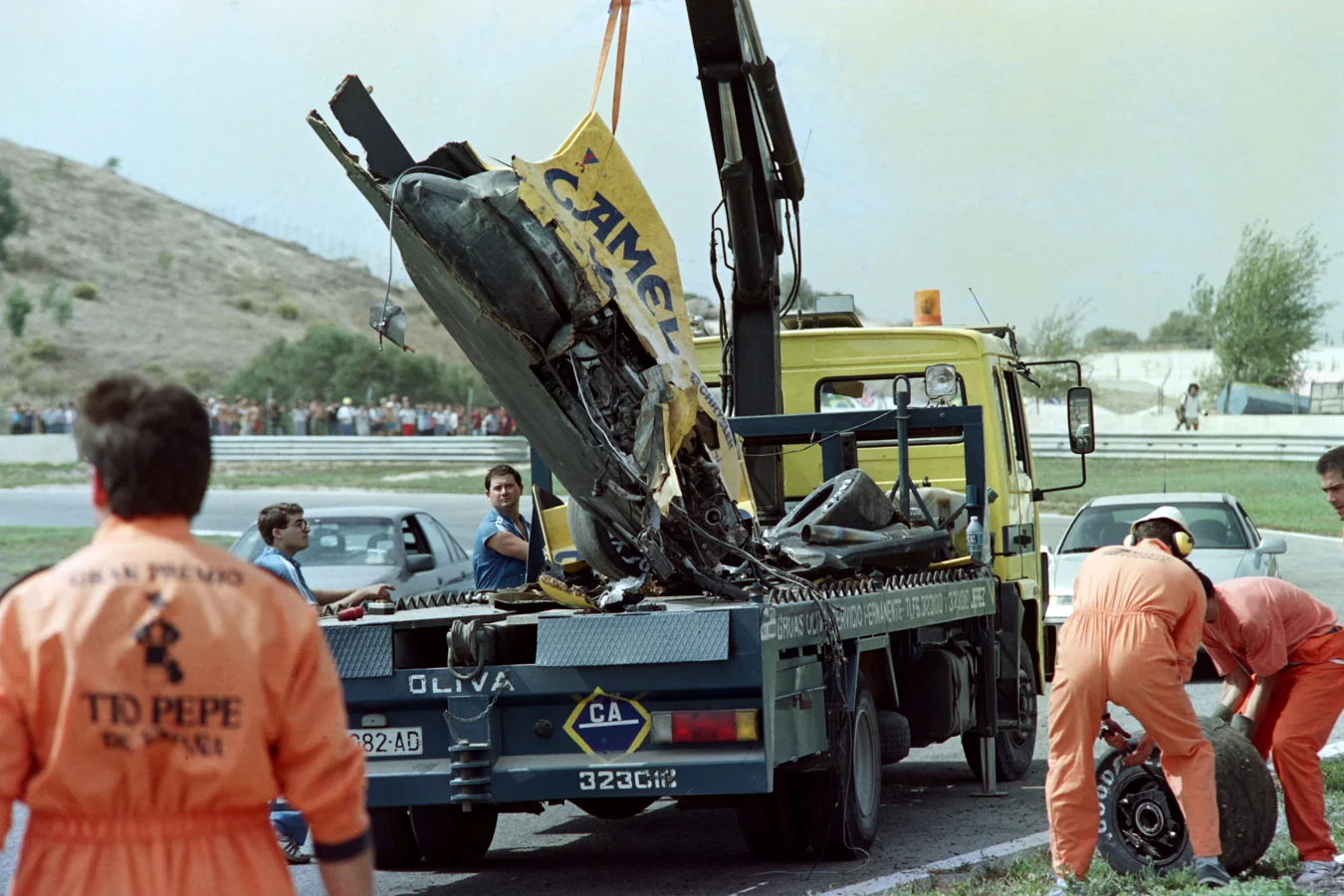

Martin Donnelly, the former Lotus Formula 1 driver, recently revisited the traumatic crash he endured during the 1990 Spanish Grand Prix, which was carefully recreated for Brad Pitt’s latest F1 movie. Donnelly shared details of his involvement in this project after a surprising phone call from seven-time world champion Lewis Hamilton, sparking renewed attention on the devastating incident and its impact on his life.
This crash, caused by a suspension failure, saw Donnelly’s car collide with the barriers at approximately 160 mph. The force of the crash shattered the carbon fiber monocoque, ejecting him from the vehicle for nearly 60 meters. His body, strapped into the seat, was left motionless on the track, resulting in severe injuries that ended his racing career.
Severe Injuries and Recovery Following the Crash
Donnelly suffered multiple critical injuries, including broken legs, head trauma, crushed lungs, and a swallowed tongue. He was placed in a coma to reduce the risk of permanent brain damage, as his vital organs, including his heart, began to fail. After enduring numerous surgeries and an intense rehabilitation process, Donnelly gradually regained his health, though the psychological impact caused him to withdraw permanently from Formula 1 racing.
Despite the physical recovery, the incident left a lasting mark on his confidence, removing him from the competitive arena. Hamilton’s unexpected outreach brought Donnelly back into the spotlight, inviting him to consult on the film’s depiction of Sonny Hayes, a character suffering a crash inspired by Donnelly’s own experience.
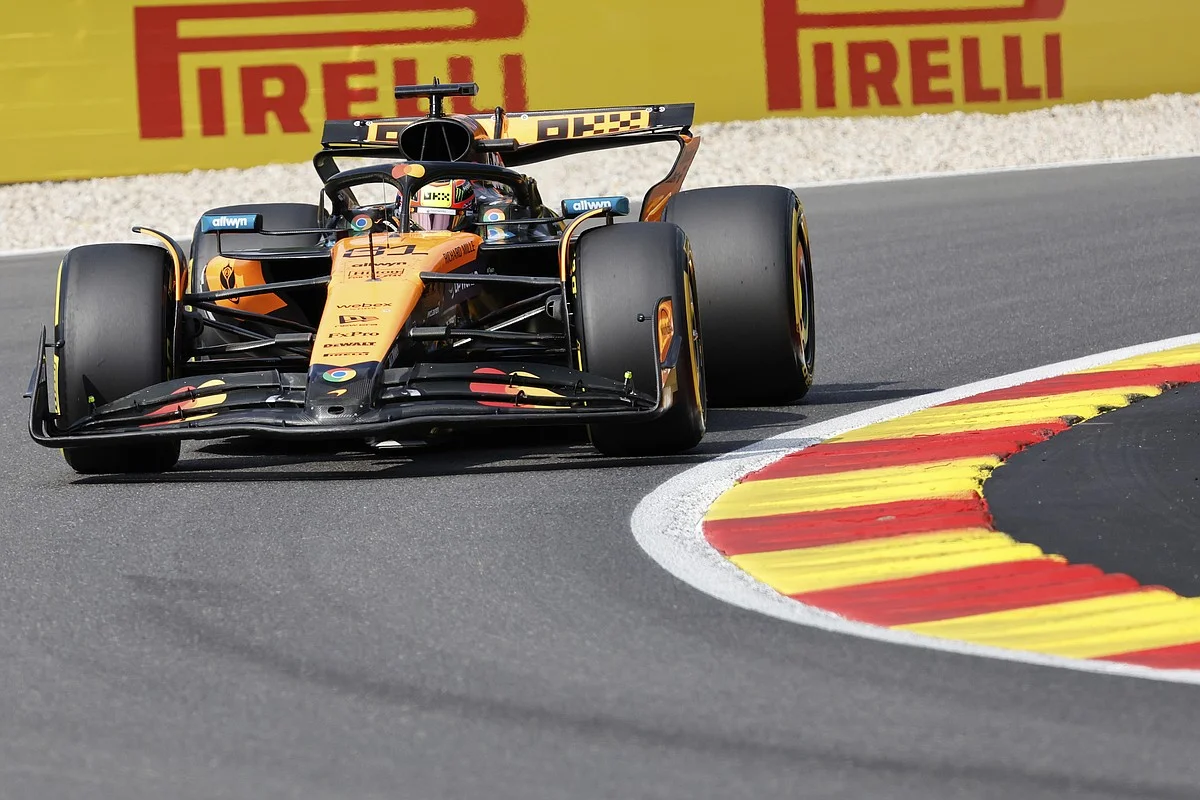
Working with Lewis Hamilton and the Film Team
Donnelly recounted his surprise at receiving a call from Lewis Hamilton, recalling a moment of disbelief about the nature of the conversation.
“I thought it was going to be one of those cold calls for central heating or double-glazed windows,”
he said with a laugh.
“I was quite aggressive … It’s not every day you receive a call from a seven-time world champion.”
—Martin Donnelly, Former F1 Driver
His cooperation ensured a faithful reproduction of the crash’s severity and consequences in the movie, focusing on the violent disintegration of the car and his subsequent trajectory as he was propelled through the air.
“The carbon fibre tub shattered like a car bomb, and I went with the energy,”
Donnelly described.
“I got thrown out by about 60 metres (almost 200 feet) and travelled through the air and along the ground like a rag doll.”
—Martin Donnelly, Former F1 Driver
The Emotional Impact of Seeing His Crash Reenacted
Watching the scene unfold on screen provided Donnelly with a sobering moment of reflection.
“I watched them get a mannequin in yellow overalls and a helmet fly out of this car 15 times and all these cameras are taking pictures,”
he recalled.
“And then it would drop and be dragged along the ground. For me, that was a reality check because I’ve never seen it happen.”
—Martin Donnelly, Former F1 Driver
He also expressed a mix of frustration and regret when comparing his career trajectory to that of his former teammates, many of whom went on to achieve great success and wealth.
“This is what I’ve been reenacted for. And my friends at the time – Damon Hill, Johnny Herbert, Eddie Irvine, David Coulthard have all gone on to be very successful and very rich. Why wasn’t I given a chance to have that? Because when they were my team-mates, I kicked their asses!”
—Martin Donnelly, Former F1 Driver
Gratitude for Survival Amidst the Loss of Ayrton Senna
Donnelly acknowledged the fine line between survival and tragedy within Formula 1, especially reflecting on the death of Ayrton Senna in 1994, who died after a crash at the San Marino Grand Prix.
“I do believe that I could easily have become a world champion,”
Donnelly admitted.
“But then I come back to reality. I’m still talking to you. My friend Senna is dead. He had all the millions in his back pocket, three-time world champion, but who’s he going to share it with?”
—Martin Donnelly, Former F1 Driver
The loss of Senna became a pivotal moment for Donnelly, reinforcing his perspective on life and racing:
“His death on May 1st, 1994, was the final nail in the coffin for me to say, ‘Hey Martin, look around you, you’re in the paddock, you’re still involved with the sport that you love. You’ve got no right to complain.’”
—Martin Donnelly, Former F1 Driver
Enduring Legacy and Continued Connection to Formula 1
Though his competitive career ended abruptly, Martin Donnelly’s experience remains a haunting reminder of motorsport’s dangers. His involvement in Brad Pitt’s film through the Martin Donnelly F1 crash recreation project ensures that audiences gain an authentic glimpse of the risks drivers face. Lewis Hamilton’s dedication to honoring Donnelly’s story underscores the sport’s ongoing respect for its history and those affected by tragedy.
This collaboration not only preserves Donnelly’s legacy but also contributes to educating fans and newcomers about the human element behind the racing spectacle. The film’s detailed depiction could inspire further conversations about safety advancements and the personal sacrifices of drivers like Donnelly, whose lives were irrevocably changed by the sport they loved.
Our Reader’s Queries
Q. Is number 13 banned in F1?
A. Certainly, 13 is permitted. Pastor Maldonado actually used this number when F1 introduced the fixed number system in 2014. Although some cultures view 13 as unlucky, F1 let drivers decide their own numbers.
Q. Which F1 driver has ADHD?
A. Lewis Hamilton’s experiences with ADHD and dyslexia have greatly influenced his personal and racing life. His journey challenges the traditional view of success in Formula 1 and highlights the importance of recognizing learning differences.
Q. Is 69 allowed in F1?
A. F1 Driver Number Rules: Every driver can pick a permanent number from 2 to 99, except 17, to use for their entire F1 career.