
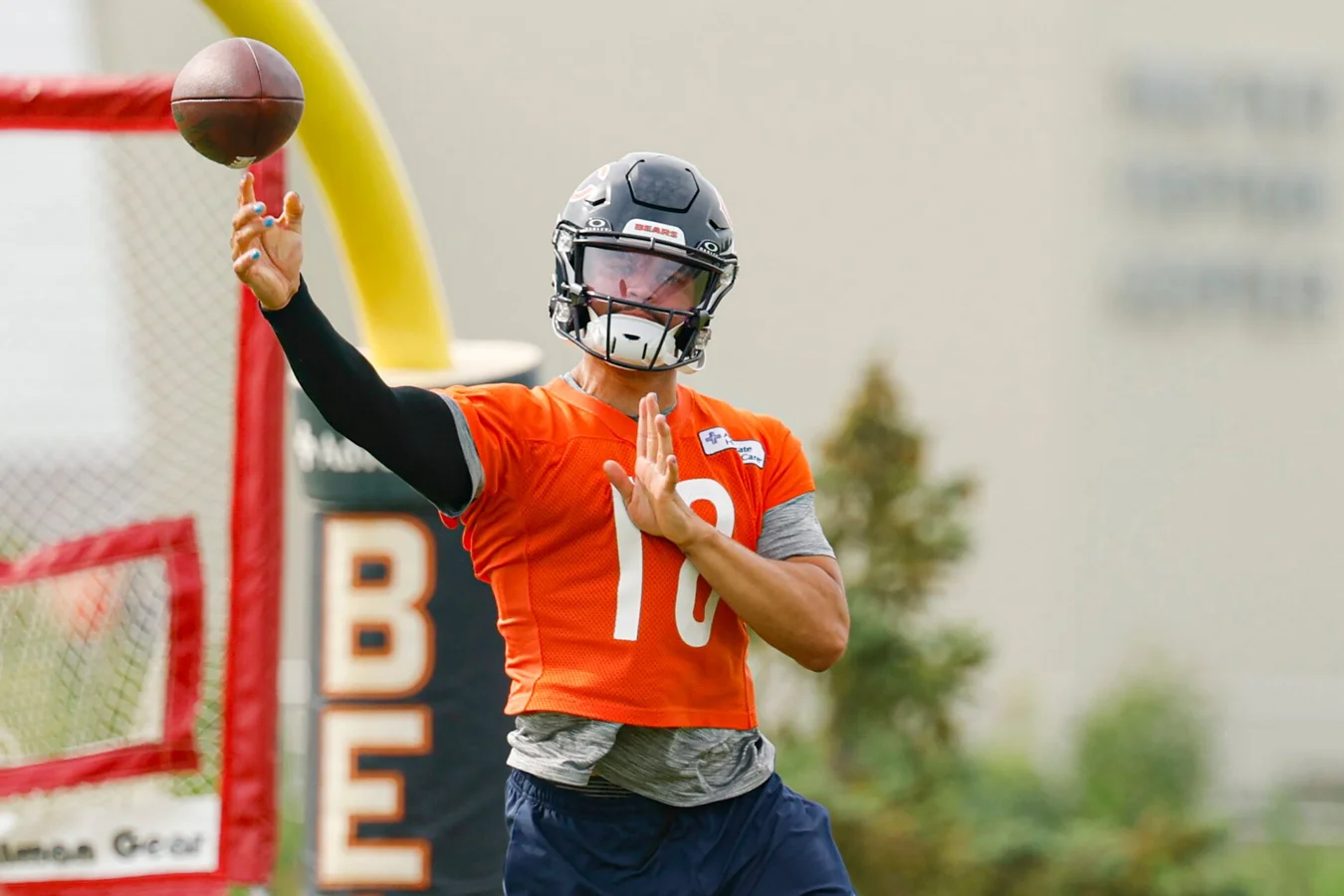

The Chicago Bears’ quarterback Caleb Williams has drawn attention for throwing multiple interceptions during training camp, sparking concern among fans as they watch closely. However, examining historical context and coach insights shows that these early interceptions, often highlighted in training camp, are not reliable indicators of future game performance or overall success.
Williams’ interceptions during camp illustrate issues tied to adjusting to a new offense, rather than fundamental failure, according to Bears head coach Ben Johnson and past examples from the <a href=”https://www.buzzineintl.com/category/football/nfl/”>NFL.
Historical Perspective on Interceptions During Training Camp
The Bears’ former coach Matt Nagy famously remarked in 2018 about Mitchell Trubisky’s frequent interceptions in camp:
“Right now, I don’t care about interceptions. I truly don’t. I love the fact that he’s trying to learn this offense and make throws. I’d rather him do that than take the 5-yard check-down. I need him to test it right now.”
At that time, Trubisky threw three interceptions in practice, yet he later posted his career-high passer rating as a starter and led the Bears to a division title in his second year.
Training camp interceptions have varied wildly in impact. The very next season after his 2018 camp struggles, Trubisky threw four picks in camp and experienced a rough year, showing that camp performance is not a steady predictor of regular-season success.
Jay Cutler faced similar scrutiny in 2015 when he threw his first pick in practice mid-August after 11 camp practices without one. Cutler ended with a decent interception rate that season, proving that intermittent interceptions during preparation are common and not definitive signs of failure.
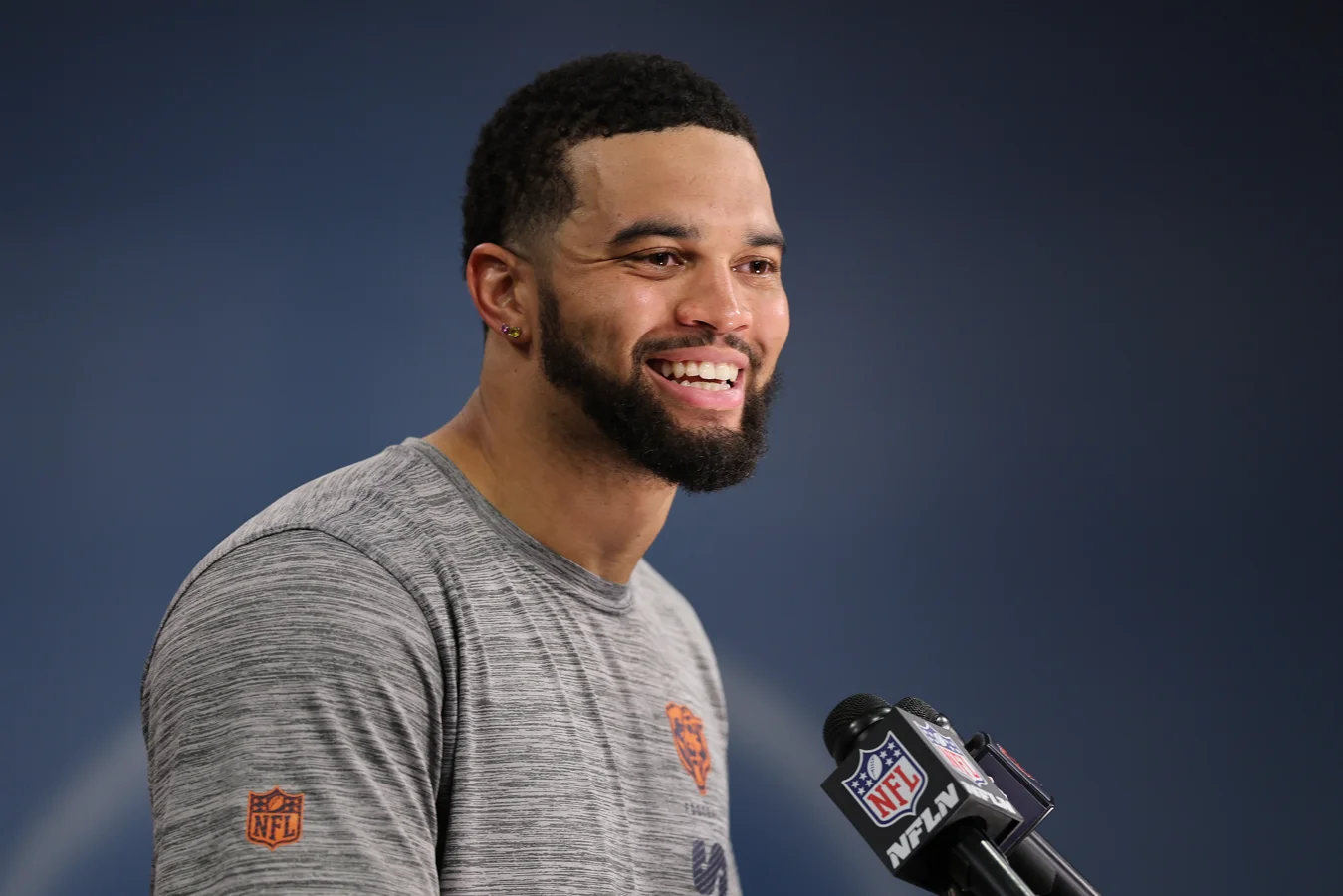
Analyzing Caleb Williams’ Performance with Context
Williams has thrown a significant volume of passes during the Bears’ practices, and although his interceptions have garnered plenty of attention on social media and in fan circles, these isolated events do not capture the complexity of his development. Often, interceptions receive disproportionate focus despite the broader context of many successful plays and the adjustment period Williams is navigating.
Coaches emphasize progress in decision-making and execution over simply avoiding picks. For example, Bears offensive analyst Declan Doyle highlighted:
“(Pre-snap command) is the biggest improvement I’ve seen. It’s all a progression. We’ve got to continue to get better post-snap and all those things with his vision and where the ball needs to go.”
This underscores the incremental nature of growth during camp.
Williams’ interceptions this camp have not been due to poor decision-making in each instance. According to Ben Johnson, certain interceptions occurred because of execution errors, such as one throw not being placed high enough to the back of the end zone or plays deflected by defensive pressure. These are nuances that statistics alone cannot reveal.
Why Training Camp Settings Distort Interception Evaluations
Training camp practices are controlled environments focused on detailed teaching and testing specific skills and strategies. Coaches evaluate how throws are made and how quarterbacks handle pressure rather than just the interception total. The primary goal is to see how the quarterback adapts, learns, and handles an increased mental load during rapid-fire drills and complex play-calling.
Williams is essentially learning a new offense with head coach Ben Johnson, offensive coordinator Shane Waldron, and defensive coordinator Dennis Allen, which leaves very little continuity with his previous playing style. As Johnson explained,
“We are loading his plate up, we wanna see how much he can handle.”
This means that interceptions reflect a transition phase rather than a sudden drop in skill or potential.
Furthermore, Williams faces the Bears’ No. 1 defense swarming receivers, unlike other quarterbacks in camp such as Tyson Bagent, Case Keenum, and Austin Reed, who do not face the same level of defensive pressure or throw to the Bears’ top-tier receivers as Williams does. This disparity complicates a straightforward comparison of interception numbers among quarterbacks during camp.
Fan Reactions and the Social Media Amplification of Interceptions
The limited glimpses into Williams’ practice sessions spread rapidly on social platforms where every interception can trigger loud reactions. Tweets like
“Caleb Williams throwing his 6th interception of training camp… Caleb Williams cannot run a Ben Johnson offense and he isn’t NFL ready”
reflect a sharp divide between fan expectations and the coaching staff’s measured assessment.
On the other hand, some voices urge patience, emphasizing Williams’ talent and need for development time. One fan tweeted,
“Can we agree that the hate Caleb Williams receives from NFL fans is so unwarranted and completely unnecessary? He’s a great QB and just needs time to develop. Would be surprised if he’s the best sophomore QB next season,”
which mirrors the more tempered viewpoint held by the coaching staff.
There is always a risk for young quarterbacks to be prematurely judged by these camp metrics without considering the broader developmental context coaches interact with daily and understand deeply.
Comparisons to Other NFL Quarterbacks’ Rookie Struggles
The experience of other quarterbacks confirms training camp interceptions’ limited significance. In 2020, a quarterback navigating a new offense recorded three interceptions in only his first two practices, triggering widespread pessimism among fans. That quarterback was Tom Brady, who would lead the Tampa Bay Buccaneers to a Super Bowl victory just months later.
This history serves as a reminder that early practice struggles, including interceptions, do not doom a quarterback’s season or career. What matters more is the progression in command, execution, and understanding of the offense over time, which coaches say Williams is making.
Conclusion: Patience Needed as Williams Adjusts to the NFL
Given everything, Bears fans should view Caleb Williams’ training camp interceptions as part of the learning curve rather than a red flag. Coaches, with extensive experience and insider insight, focus on his mental growth, improving pre-snap reads, and handling the demanding system being installed.
While fans may react emotionally to interceptions, the coaching staff’s perspective reinforces that development takes time, and mishaps in camp don’t translate directly to in-game performance. As Johnson and others continue to monitor Williams, the key will be sustained improvement as training progresses.
For now, the interceptions are an expected part of the process as Williams adapts to a new offense and elevates his abilities. The Bears’ future with Williams at quarterback depends more on his trajectory of progress than on early camp mistakes.
Our Reader’s Queries
Q. Was Caleb Williams number 13?
A. He was among six quarterbacks chosen in the first round, matching the 1983 draft for the most in NFL history. Since his college jersey number 13 was already used by Keenan Allen, Williams chose number 18, which he wore in high school. This decision was announced within 30 minutes after he was drafted.