
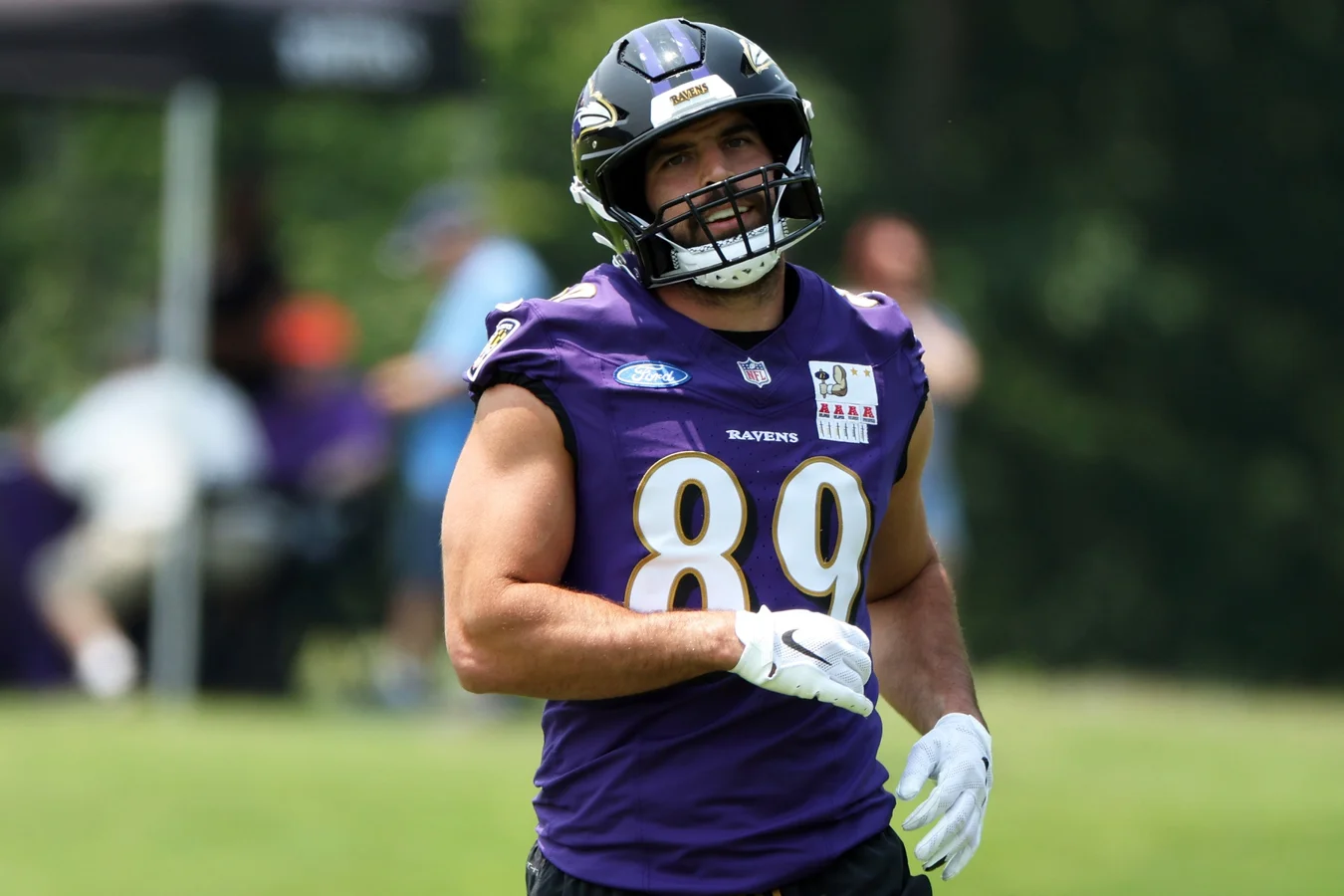

Mark Andrews, the Baltimore Ravens’ leading tight end, is generating concern among fantasy football managers as the 2024 season approaches. Despite a strong reputation, Andrews’ fantasy value is under question due to a combination of declining performance and intensified competition within the Ravens’ offense.
Once a dependable top choice at his position, Andrews has seen a noticeable drop in his fantasy football outlook, raising questions about his reliability this season. This emerging risk underscores the challenges fantasy managers must navigate when considering Andrews for their rosters.
Performance Challenges Highlight Andrews’ Declining Draft Appeal
During the prior campaign, Andrews stood out among tight ends by finishing sixth in points per reception (PPR) and leading with 11 touchdowns. However, his momentum did not carry into the following year’s start. Andrews began the 2024 season with a disappointing stretch, registering only six receptions for 65 yards in the first month.
Such a slow start has caused concern, especially given the inconsistency often seen in touchdown-dependent fantasy production. This downturn has contributed to his fall in average draft position, where Andrews now ranks as TE7, a significant decline from previous seasons when managers viewed him as a top-five tight end option.
Rising Competition from Isaiah Likely Adds Pressure
The rise of Isaiah Likely as a prominent target within the Ravens’ offense presents an additional hurdle for Andrews’ fantasy prospects. Likely’s increasing role threatens to reduce Andrews’ opportunities, which could further depress his scoring output if the trend continues.
With the competition growing and Andrews’ early season struggles evident, there is a very real chance he falls out of the top 10 for tight ends in fantasy drafts. This shifting dynamic calls for caution among managers who may have once counted on Andrews as a cornerstone player.
Broader Implications for Ravens’ Fantasy Strategy
While Mark Andrews’ fantasy stock wavers, other Ravens players like Lamar Jackson and the team’s wide receivers continue to attract attention, maintaining strong fantasy appeal. As the preseason unfolds, fantasy enthusiasts will be closely monitoring the team’s offensive balance and player roles, recognizing how these factors influence draft strategies.
Ultimately, Andrews’ status as a fantasy asset reflects the evolving nature of the Ravens’ offense and the challenges athletes face in sustaining peak performance amid emerging talent. This situation exemplifies why fantasy managers should weigh recent trends and internal team shifts carefully when planning their draft picks.
Our Reader’s Queries
Q. Is Mark Andrews a T1D?
A. Mark Andrews found out he had type 1 diabetes at age nine in 2005. He joined the Baltimore Ravens in 2018. His journey of dealing with T1D and reaching his goals encourages people who have T1D.
Q. What did Lamar Jackson say to Mark Andrews?
A. I approached him and said, “We all contributed to what happened here. I made mistakes too, and we shouldn’t be in this position.” Jackson shared these words with Hart when talking about his conversation with Andrews. He added, “I know you’ve been working really hard all season.”
Q. Does Mark Andrews have T1D?
A. Mark Andrews found out he had type 1 diabetes in 2005 when he was nine years old. In 2018, the Baltimore Ravens selected him for their team.
Q. What did Lamar Jackson do to Mark Andrews?
A. Jackson threw a precise pass to the experienced player while moving to his right, but Andrews let it slip through his hands. Andrews acknowledged it was “tough” to deal with his mistake, especially since it turned out to be the Ravens’ last offensive play in their 27-25 defeat, marking the end of their season. Jackson was conscious of the significance at that time.