
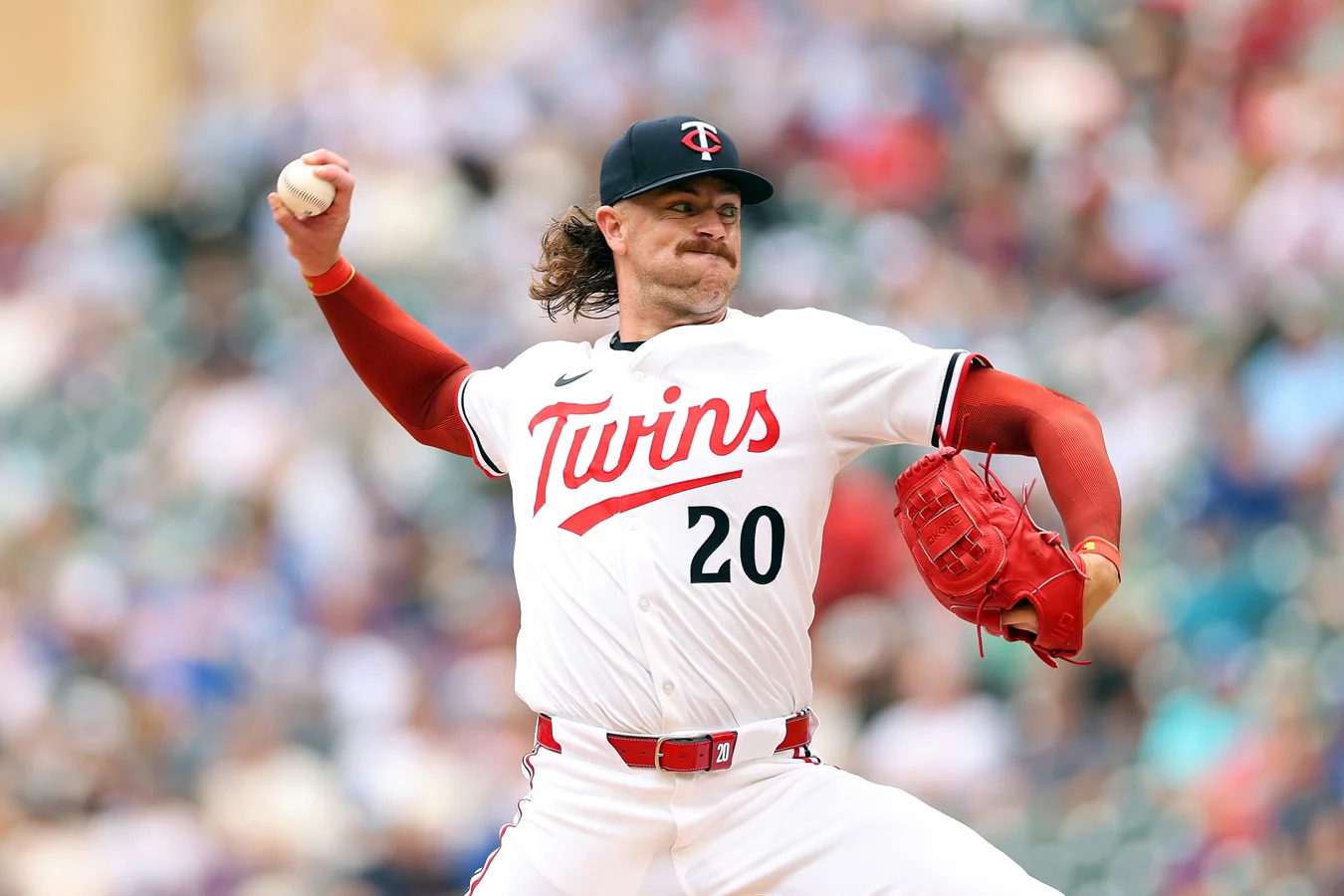

The Detroit Tigers have strengthened their pitching staff by acquiring right-hander Chris Paddack from the Minnesota Twins, a move announced during the afternoon of the trade day. Along with Paddack, the Tigers also received pitcher Randy Dobnak. In exchange, the Twins obtained the Tigers’ catcher and first baseman prospect Enrique Jimenez. This transaction reflects the Tigers’ strategy to reinforce their rotation depth as they continue their push for a playoff berth in the current season.
Alongside the announcement, the Tigers placed pitcher Reese Olson on the 60-day injured list, clarifying part of the reasoning behind this acquisition aimed at shoring up their starting rotation.
Paddack’s Career Trajectory and Recent Performance
Chris Paddack, 29, has experienced a career marked by both promise and setbacks. He debuted with the San Diego Padres in 2019, delivering arguably his strongest season by throwing 140⅔ innings with a 3.33 earned run average (ERA), a 26.9% strikeout rate, and a low walk rate of 5.5%. However, his performance declined over the subsequent seasons, with his ERA increasing to 4.73 in 2020 and 5.07 in 2021, while strikeout rates dipped below 24%.
After being traded to Minnesota, Paddack’s career was disrupted by Tommy John surgery in May 2022, which sidelined him for much of that year and 2023. Returning last season, he faced ongoing arm issues that led to multiple ill-spelled returns to the injured list, managing 88⅓ innings over 17 starts with a 4.99 ERA and a strikeout rate of 20.6%.
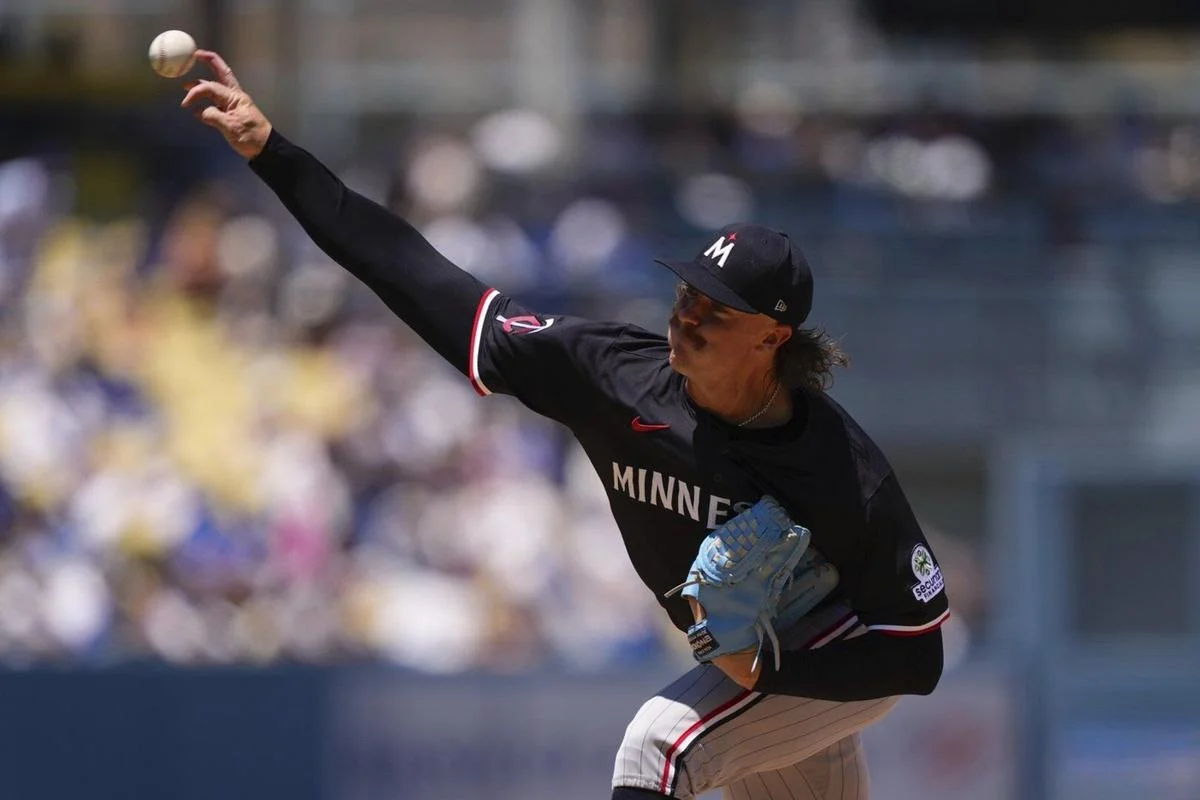
This season, Paddack has stayed on the active roster and accumulated 111 innings across 21 starts, though results have fluctuated. He began the year with challenging outings, allowing a total of 12 earned runs across his first two starts, resulting in a 14.73 ERA early on. Nevertheless, in the subsequent 11 starts, he delivered a strong stretch with a 2.25 ERA across 64 innings, despite a relatively low strikeout rate around 19%. His walk rate remained modest, and advanced metrics suggested his ERA might have been somewhat optimistic during that period.
More recently, Paddack struggled with inconsistency again, surrendering eight earned runs in a single start against Houston last month and posting a 6.31 ERA in seven starts thereafter. However, his most recent outing saw a resurgence, pitching six innings while allowing just one run and striking out eight against the Los Angeles Dodgers.
Interest from Other Teams Highlights Paddack’s Market Value
Despite his uneven results, Paddack attracted substantial interest around the league. Sources indicated that the Tampa Bay Rays and New York Yankees were among the teams considering acquiring him, underscoring a strong demand for starting pitching. The current playoff format has expanded opportunities, and relatively few teams have conceded further contention, driving up the value of pitchers who can provide innings at a reasonable cost.
Paddack’s affordability adds to his appeal; he is earning $7.5 million this season, with only about $2.5 million remaining on his contract for the rest of the year. This is notably less than many veteran pitchers with similar innings pitched who command much higher salaries, making Paddack an economical option for teams seeking to bolster or deepen their rotations.
Detroit’s Rotation Context and the Need for Additional Depth
For the Tigers, adding Paddack is a strategic depth move as they face multiple pitching injuries. Established pitchers Alex Cobb, Jackson Jobe, José Urquidy, Sawyer Gipson-Long, and Ty Madden are all currently sidelined, limiting Detroit’s options. Cobb has been absent all year due to hip problems, Jobe is recovering from Tommy John surgery, and Urquidy has yet to begin a rehab assignment following his own recovery from the same procedure. Gipson-Long and Madden are also on the injured list.
The Tigers’ present starting rotation features Tarik Skubal, Jack Flaherty, Casey Mize, Reese Olson, and newcomer Troy Melton, who recently struggled in his major league debut by allowing six earned runs. With Paddack’s arrival, the team now has an experienced option who is expected to slot in as their fifth starter. This addition could allow Detroit to option Melton back to the minors, providing the young arm time for development without rushing.
While Paddack is unlikely to be a fixture in the Tigers’ playoff rotation if the postseason began imminently, his presence adds valuable insurance for the stretch run and could prove crucial if more injuries arise.
Randy Dobnak’s Role in the Deal and Twins’ Financial Considerations
The trade also included Randy Dobnak, a pitcher whose contract is significant in understanding the Twins’ motivation. Dobnak signed a contract extension early in his career, but his on-field performance has been underwhelming, having spent much of the time since 2021 in the minors. This year, he posted a 7.12 ERA over 60⅔ innings at Triple-A.
Dobnak’s salary totals $3 million this season, with around $1 million remaining, and his contract features a $1 million buyout on a $6 million club option for 2026. The Tigers appear to have accepted these financial obligations as part of the package, potentially reducing the prospect return required to acquire Paddack.
Prospect Enrique Jimenez Sent to Twins as Part of the Exchange
Enrique Jimenez, 19, represents a long-term investment for the Twins. The switch-hitting catcher and first baseman was signed by the Tigers during the 2023 international signing period out of Venezuela for a $1.25 million bonus. Considered an intriguing but risky prospect due to his small stature and defensive challenges—specifically his blocking skills—he has compiled a .255 batting average with a .363 on-base percentage and a .413 slugging percentage in 137 minor league games.
Baseball America ranks Jimenez as the 17th-best prospect in Detroit’s system with an overall grade of 50 on the 20-80 scale. FanGraphs placed him 28th in the Tigers’ system earlier this year and highlighted his developmental risks, but his potential upside fits the Twins’ preference for adding young talent during a rebuilding phase.
Twins Begin Selling, Tigers Push for Playoff Position
The Twins, now at 50-55 and trailing by 5½ games for a playoff spot, appear to have launched the beginning of their sell-off. With just an 11% chance of postseason qualification according to FanGraphs, Minnesota seems motivated to trade other players, including rental signings such as Willi Castro, Harrison Bader, Danny Coulombe, Ty France, and Christian Vázquez.
More significant decisions lie ahead regarding controllable but valuable pitchers like Jhoan Durán, Griffin Jax, and Joe Ryan, who are reportedly attracting high trade price demands. Ownership changes expected in the coming months could accelerate cost-saving measures, as the current Pohlad family owners may look to reduce payroll commitments.
By moving Paddack and accommodating Dobnak’s contract, the Twins have already saved a few million dollars and added Jimenez to their prospect pool, aligning with their emerging strategy to balance financial constraints while rebuilding for the future.
Implications for the Tigers’ Playoff Hopes and Future Pitching Strength
For the Detroit Tigers, the trade presents an opportunity to strengthen a rotation that has been challenged by injury and inconsistency during a critical phase of the season. With an eight-game lead over the Cleveland Guardians in the American League Central, adding an experienced starter like Chris Paddack provides insurance and flexibility that could prove decisive in the final weeks.
Furthermore, the acquisition signals the Tigers’ intent to remain aggressive as contenders in an expanded playoff environment, recognizing the value of depth and experience for a successful postseason run. While Paddack’s results have varied, his ability to stay healthy and compete at a major league level offers Detroit reassurance as they strive to maintain their division lead.
Our Reader’s Queries
Q. How fast does Chris Paddack throw?
A. In the postseason, the fastball had an average speed of 96.6 miles per hour.