
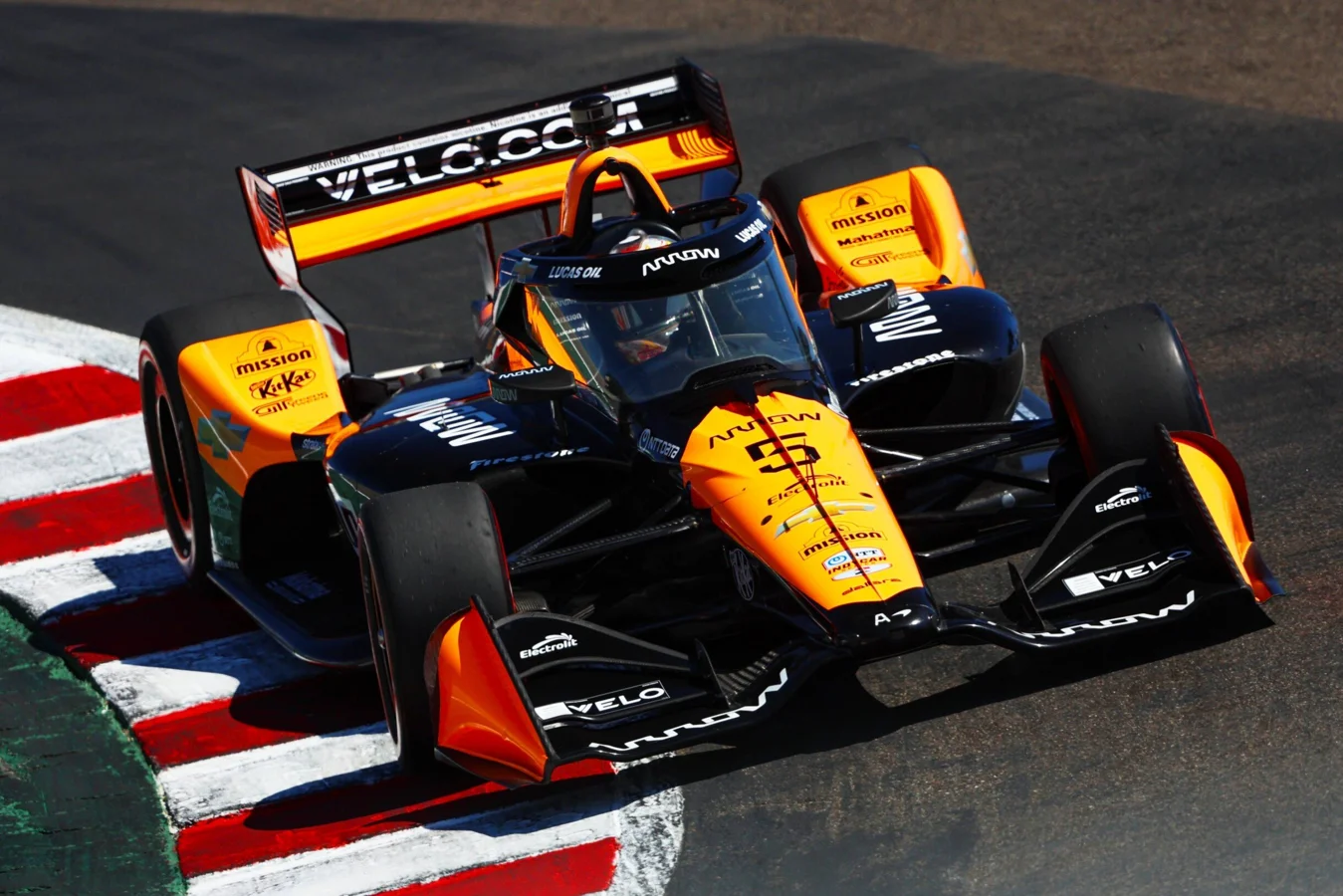

During Sunday’s Java House Grand Prix of Monterey at WeatherTech Raceway Laguna Seca, two incidents brought scrutiny to IndyCar race control’s delay in issuing full-course cautions. Drivers and teams debated the reasoning behind these decisions, with Colton Herta backing the approach while Christian Lundgaard raised concerns about its potential dangers. The focus on the timing of cautions highlights ongoing tension between safety considerations and race strategy in IndyCar.
Race Control’s Patience Under the Spotlight After Two Key Incidents
On lap 25, Rinus VeeKay, driving for Dale Coyne Racing, ended up stranded in the runoff area at Turn 3 after contact with Kyle Kirkwood. This happened during a pit sequence where some drivers were accelerating out of the pits from Turn 2, and others were already racing at full speed. Despite VeeKay’s car being immobilized, race control waited over a minute and a half, utilizing local yellow flags before signaling a full-course caution. This delay allowed the leading pack, including Alex Palou and Colton Herta, to complete first pit stops under green-flag conditions, which impacted Pato O’Ward negatively since he pitted just one lap earlier.
Later, on lap 77, Marcus Ericsson spun at the exit of Turn 6 approaching the Corkscrew and stalled his car with half of it still on the racing line. As racers sped past dangerously close on a blind, uphill part of the track, race control again refrained from immediately calling a full caution, waiting more than ninety seconds under local yellows. This decision came despite the visible risk of a collision with Ericsson’s stationary car.
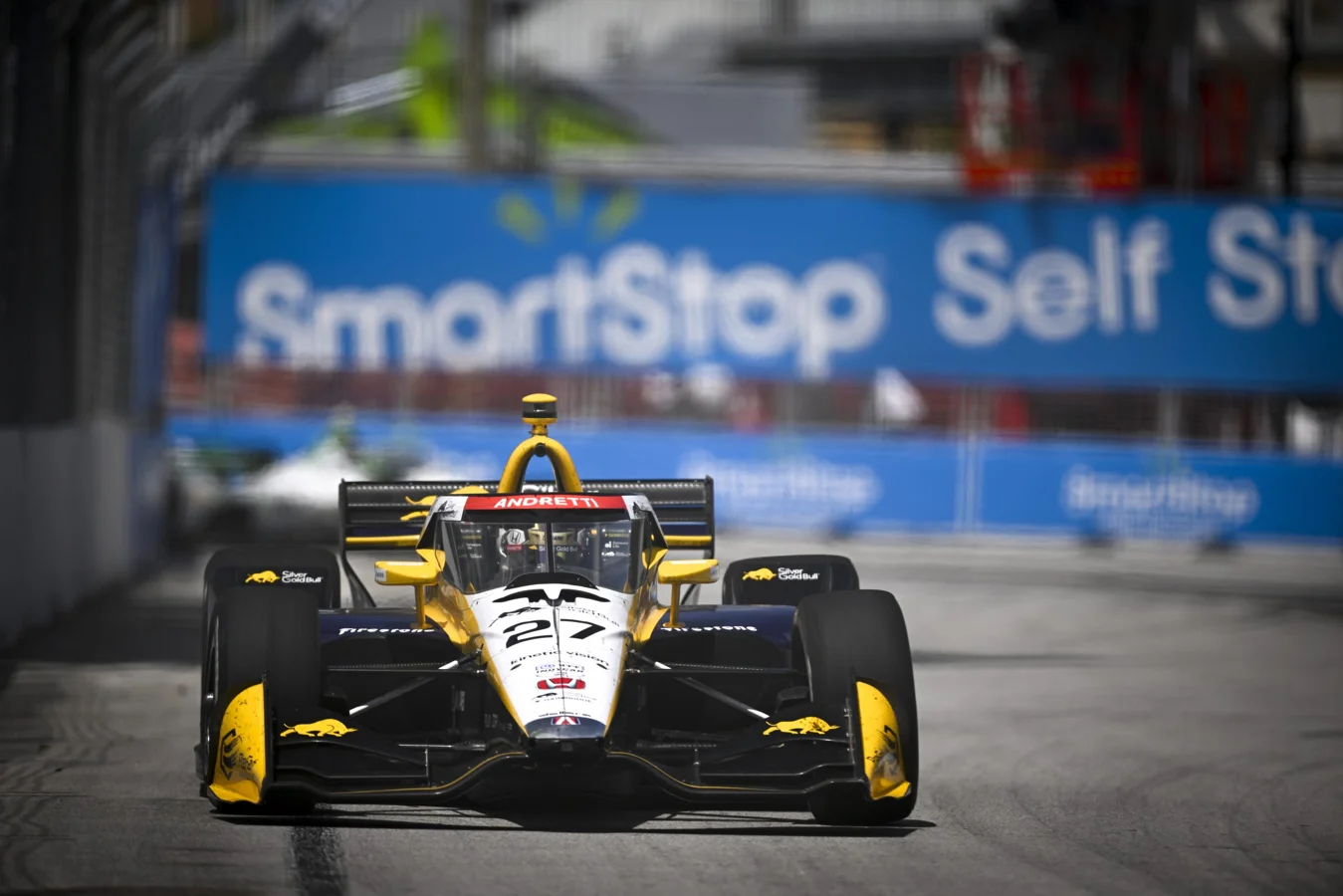
Colton Herta Supports IndyCar’s Timing on Cautions
Colton Herta, who finished third for Andretti Global, expressed his approval of the strategy to delay full-course cautions in order to keep pits open longer for leaders to capitalize on pit opportunities. Herta argued that throwing an early caution can unfairly disrupt drivers who have qualified well and are running at the front. He emphasized the consistency and fairness of IndyCar’s approach.
“Yeah, they should keep it open — they should keep the pits open as long as they can and allow the leaders to pit at every opportunity,”
said Herta.
“I think it’s not fair to be one of the fast guys, qualify well, and then have your day screwed by a yellow. It’s happened to everybody in this series, but when you’re running up front consistently, it burns you more often.”
“It’s something that I think is a real plus from IndyCar. I think it’s fair, and I think it should continue.”
Herta also noted that with the new IndyCar hybrid units, drivers have an improved chance to restart their cars and continue without external help, reducing the immediate need to pause the race for safety concerns.
Christian Lundgaard Highlights Dangers of Delayed Cautions
In contrast, Arrow McLaren’s Christian Lundgaard, who secured second place on Sunday, voiced serious reservations about postponing full-course cautions. He questioned the safety of drivers navigating the track under green flags while a car like Ericsson’s sits stranded on a hazardous part of the circuit.
“I think there are pros and cons to it, in a sense. I mean, I was definitely driving around thinking, why is there a car sideways — well, technically backwards — going into the Corkscrew, and we’re green for two laps?”
Lundgaard warned that local yellows alone might not be enough protection in such scenarios, as a momentary lapse in driver attention could lead to a serious crash.
“Yes, there’s a local yellow, but if someone isn’t really paying attention — maybe changing a switch on the steering wheel — it can go terribly wrong.”
Regarding VeeKay’s incident in Turn 3, Lundgaard considered it less dangerous since the driver was off the racing surface in gravel, and indicated that while he might not fully agree with the delayed caution policy, he appreciated IndyCar’s consistency in applying it.
“The one with VeeKay in Turn 3 I think was more fair in a sense because you see him parked in the gravel. You’re not really going to end up there unless you really aren’t paying attention. I think IndyCar has been consistent with that. Not necessarily saying that I agree with it, but I do appreciate that they’re being consistent.”
Balancing Race Strategy and Safety on IndyCar’s Challenging Track
These two high-profile incidents at Monterey have amplified the ongoing debate between prioritizing race flow and maintaining driver safety. IndyCar’s newer hybrid technology encourages officials to wait longer before halting the race, a tactic supported by racers like Herta who value race strategy and fairness in pit sequence timing. However, drivers such as Lundgaard emphasize the inherent risks of allowing cars to continue at full speed near stranded vehicles, especially in blind or tight corners.
With race control striving to balance competitive fairness and on-track safety, future decisions on cautions at WeatherTech Raceway Laguna Seca and other venues may remain contentious. Teams and officials will need to weigh driver safety concerns alongside strategic implications to suit the evolving dynamics of IndyCar racing.
Our Reader’s Queries
Q. What happened to Colton Herta?
A. IndyCar driver Colton Herta managed to walk away unhurt after a big crash during the Indianapolis 500 qualifying on Saturday morning. His car lost control after Turn 1 on his first lap, hit the outside wall, and then flipped over.