
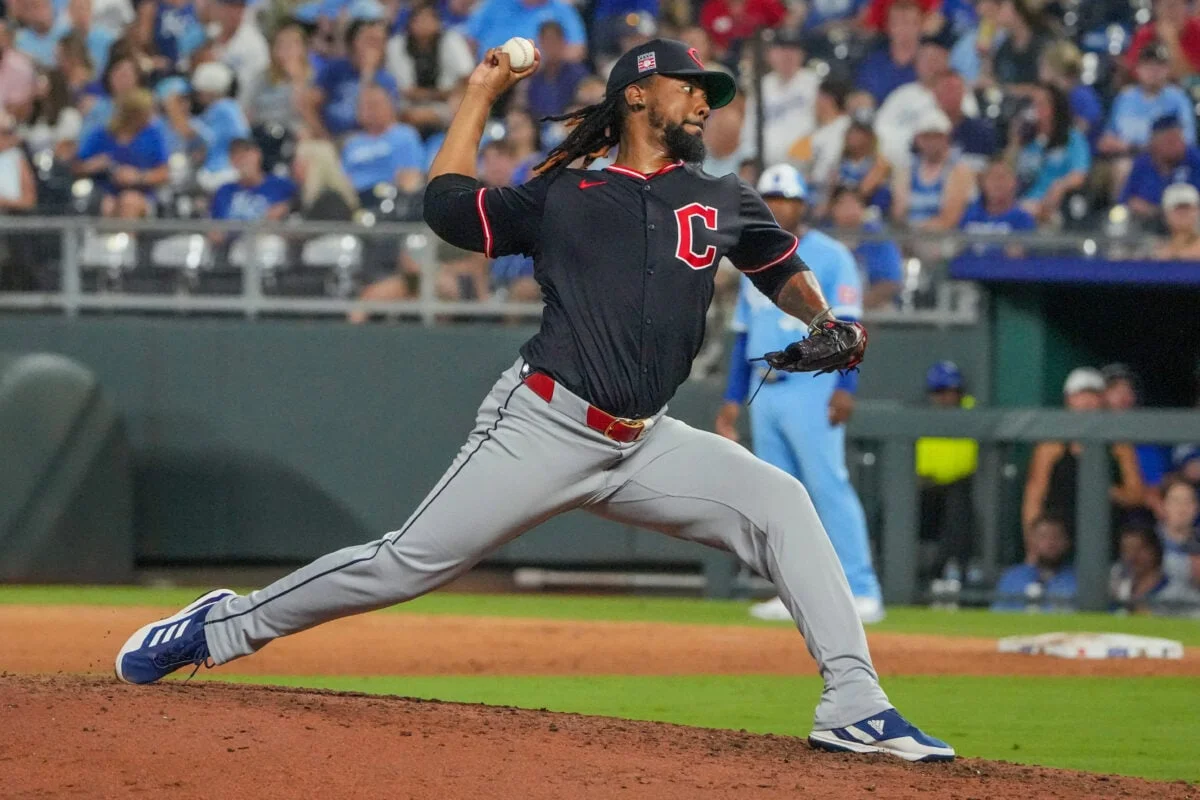

Major League Baseball announced on Monday that Cleveland Guardians closer Emmanuel Clase has been placed on non-disciplinary paid leave through August 31 while the league investigates allegations related to sports betting. This development comes just three days before the MLB trade deadline, adding unexpected turmoil to an already pivotal period. Clase will continue to receive his salary and maintain contact with the Guardians but is barred from all major league facilities during the investigation.
Clase’s teammate Luis Ortiz has been on the same type of leave since July 3, with both players expected to return to team activities on September 1. These moves reflect MLB’s growing concern about gambling-related misconduct within the sport, an issue that has repeatedly surfaced throughout the season.
High-Profile Gambling Concerns Unlike Previous Controversies
Most prior gambling incidents in baseball often involved lesser-known players, with only a few exceptions like the Ippei Mizuhara case linked tangentially to Shohei Ohtani, who was never accused of any wrongdoing. Emmanuel Clase’s involvement marks a significant escalation given his status as a 27-year-old Cy Young finalist and one of baseball’s premier relief pitchers. If the investigation uncovers any improper conduct, Clase would become the most prominent player caught in a gambling scandal since figures referenced implicitly by MLB Commissioner Rob Manfred resurfaced earlier this year.
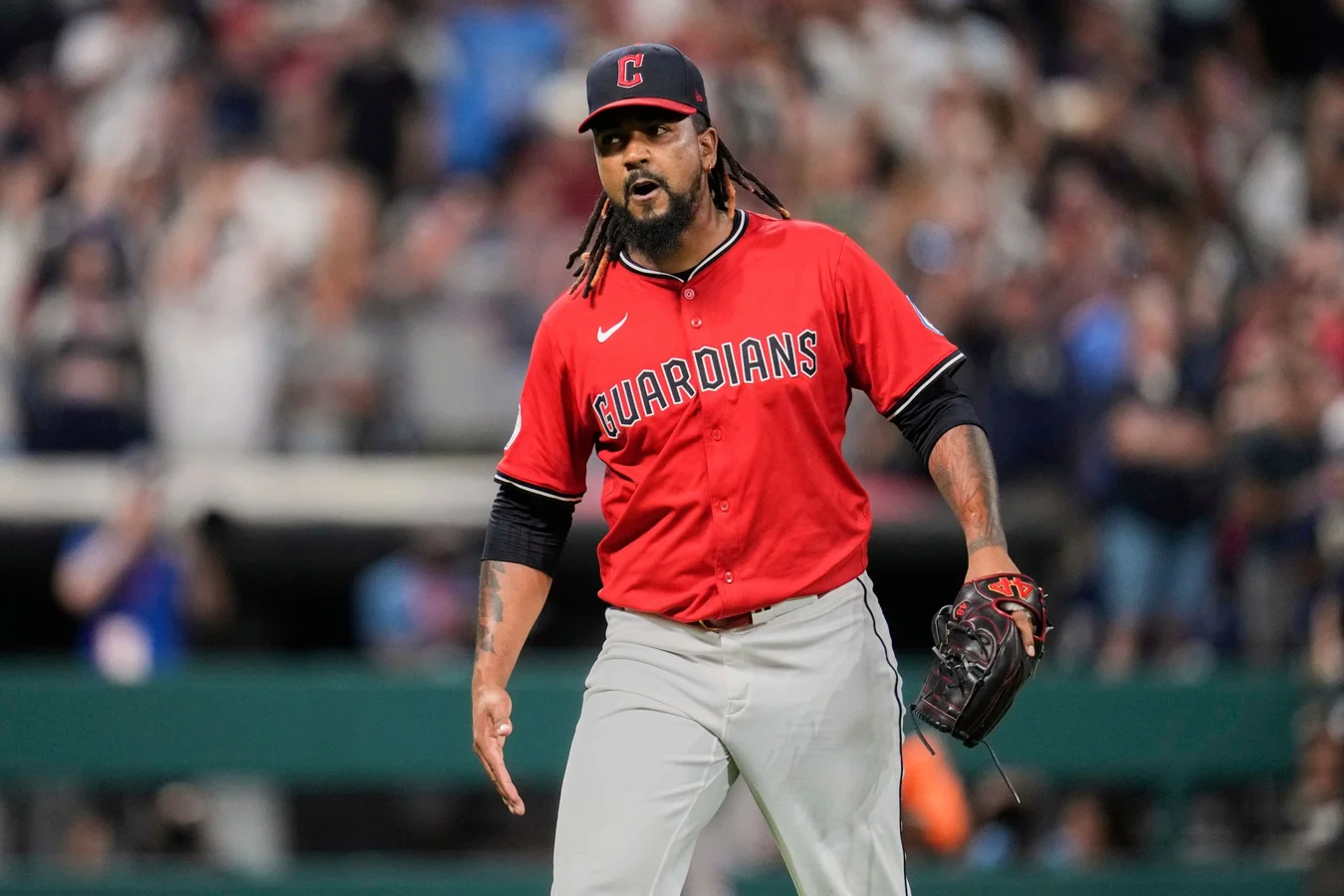
At this stage, details explaining the specific reasons behind Clase’s removal from major league settings remain private. Regardless of the investigation’s outcome, this case is expected to influence the trade deadline dramatically, especially since protections of the game’s integrity remain paramount amid evolving external pressures.
The Trade Deadline Impact: Clase’s Value Suddenly Uncertain
Clase’s value in the trade market was substantial prior to this development. His affordable contract—$4.9 million this season and $6.4 million guaranteed for 2026, followed by two club options at $10 million each for 2027 and 2028—made him a prized asset. In a year where dependable relief pitchers are highly sought after, teams likely viewed Clase as a cornerstone acquisition for the stretch run.
Now, the uncertainty stemming from the gambling investigation severely complicates any potential trade involving Clase. Even if a prospective acquiring team believed the pitcher would be cleared and return promptly, the fact that he would miss half of the pennant race makes pursuing him a high-risk proposition. Teams must look elsewhere to fortify their bullpens in these final weeks.
Understanding MLB’s Strict Gambling Prohibitions
While neither Clase nor Ortiz faces formal disciplinary action yet, the issue of gambling remains a deeply sensitive and strictly regulated subject in Major League Baseball. The league’s rules explicitly forbid anyone associated with MLB from wagering on baseball or placing bets through unlicensed bookmakers. Legal betting on other sports is permitted, but betting on baseball itself is a strict no-go.
These prohibitions have existed for over a century and are visibly emphasized in every clubhouse. MLB Commissioner Rob Manfred and previous leadership have consistently reinforced this rule, even amid the sport’s growing relationship with legal sports betting operators. Players are well aware of these boundaries.
There are two big red-letter no-nos if you work for MLB or a team: You can’t bet on baseball, and you can’t wager with unlicensed bookmakers. Betting on other sports through legal means is in bounds. Whether this position is morally consistent or socially healthy is entirely beside the point. These are the rules, and if players (or coaches or trainers or whoever) break them, the entire credibility of the sport crumbles rapidly.
—Author (Unattributed in source but treated as author’s commentary)
This strict line was demonstrated last June when infielder Tucupita Marcano received a lifetime ban after betting $150,000 on Pirates games, including during his time on the injured list. The consequences serve as a stark warning to all players, regardless of status or role.
Complications and Confusion Amid Growing Legal Sports Betting
Despite MLB’s clear rules, some confusion persists regarding sports betting, even among baseball professionals beyond players—coaches, umpires, and others too have struggled to navigate these restrictions fully. The widespread presence of sportsbooks in ballparks and heavy advertising by companies like DraftKings contributes to mixed signals about what betting behaviors are acceptable.
There’s a sportsbook in the ballpark.
There are DraftKings ads on the broadcast.
I can bet on football and tennis and buzkashi all from an app on my phone.
Go nuts, I hope you win big. You still can’t bet on baseball.
—Author
Despite the betting boom, the core rules remain: baseball wagers are barred regardless of where or how placed, maintaining a firewall to protect the sport’s integrity. Dismissing infractions as “not hurting anyone” overlooks the slippery slope that gambling violations can lead to, threatening the entire fabric of professional baseball.
Microbets and the Growing Threat to Game Integrity
Unlike traditional bets on game outcomes, modern sports betting includes highly specific “microbets” on singular plays or events within a game, opening new avenues for players to exploit for personal gain without requiring large-scale game manipulation. These granular bets may not visibly alter outcomes but erode public trust and invite corruption.
This type of suspicious activity was flagged during the investigation into Luis Ortiz, where betting integrity firm IC360 detected unusual wagering patterns on events such as the first pitch of certain innings in Guardians games throughout June, particularly in Ohio and other states. The stakes involved seemingly inconsequential plays, which only heightens concerns about covert influences on game dynamics.
Such activity parallels match-fixing scandals in other sports, like tennis, where minor bets on obscure matches involved small financial incentives for players to subtly influence outcomes. The Washington Post identified the extensive criminal enterprise led by Grigor Sargsyan, who attempted to bribe low-ranked players to drop individual service games, enabling large-scale betting fraud without impacting televised championship matches.
Potential Consequences and the Danger of Coerced Game Manipulation
The possibility exists that even a single player’s private involvement with illegal gamblers could evolve into more severe corruption, including coercion or blackmail to throw games or entire playoff series. MLB and regulators remain vigilant, investigating every suspicious incident regardless of perceived scale, knowing that unchecked misconduct can quickly metastasize into a larger threat.
Past incidents show the necessity of strict enforcement, as the league cannot tolerate compromising behavior by any participant, from celebrated Cy Young finalists like Clase to umpiring staff or minor league hopefuls. Such vigilance protects not only the sport’s reputation but also the public’s confidence in fair competition.
The Broader Implications for Baseball’s Future Integrity
The emergence of legalized sports betting in the United States has created a complex environment for professional sports, especially MLB, which must simultaneously embrace the commercial opportunities it presents and safeguard against the very real risks it entails. The league’s leadership understands well that maintaining the integrity of the game is crucial to its survival and broader cultural relevance.
Investigations such as the one involving Emmanuel Clase test MLB’s ability to apply consistent and meaningful consequences, regardless of a player’s stature or perceived innocence. The effectiveness of these efforts will help determine whether baseball can continue thriving amid mounting pressures or if gambling-related scandals will further erode fan trust and disrupt competition.
As Clase and Ortiz remain on paid leave, the league’s inquiry will proceed with the scrutiny and severity required to protect the sport’s long-term viability, sending a message that no individual is above established rules, and everyone involved must act responsibly within the framework baseball has maintained for more than a century.
Our Reader’s Queries
Q. What tattoo does Emmanuel Clase have?
A. For half a year, Emmanuel Clase was almost unbeatable. His performance was powerful and as striking as the new lightning bolt tattoo on his neck.
Q. What ethnicity is Emmanuel Clase?
A. Emmanuel Clase, pronounced as closs-AY, was born on March 18, 1998. He is a Dominican baseball player who pitches for the Cleveland Guardians in Major League Baseball (MLB). Before joining the Guardians, he made his MLB debut with the Texas Rangers in 2019.