
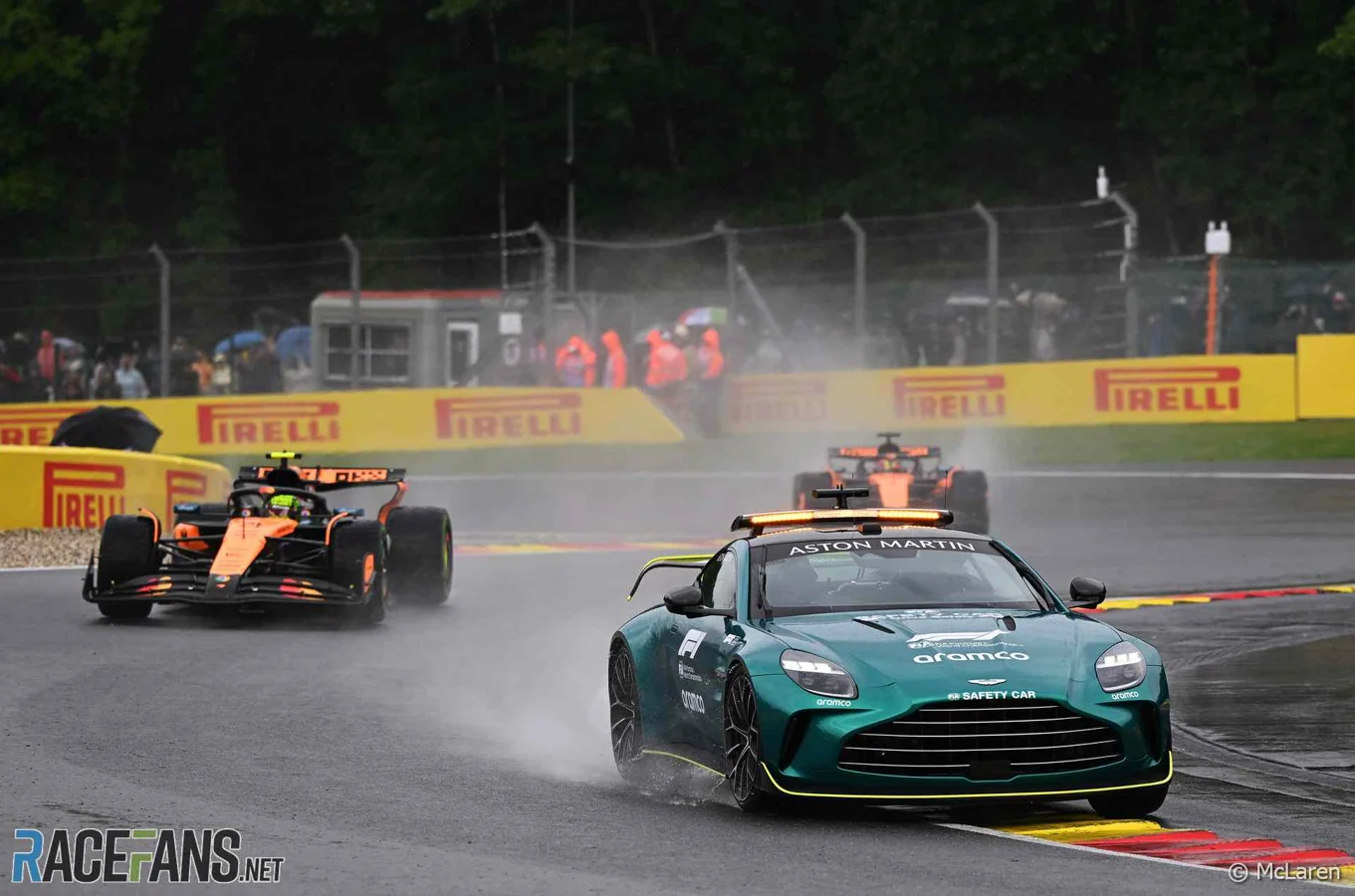

The 2023 F1 Belgian GP experienced an 80-minute delay between the race’s initial formation lap and the official start, which was conducted under neutralised conditions behind the safety car. The postponement, driven by heavy rain and challenging visibility at the Spa-Francorchamps circuit, led to visible impatience among fans, broadcasters, and commentators. Despite the frustration, concerns over F1 Belgian GP race delay safety were the primary reason officials and team leaders supported the cautious approach.
While some had hoped the race would proceed without delay, most drivers and team principals agreed with the decision to prioritise safety, considering Spa’s notorious reputation for dangerous wet-weather incidents and its history of fatal accidents.
History of Tragedy Underlines Wet Weather Risks at Spa
The Spa circuit holds poignant significance due to past fatalities in wet conditions. In the days leading up to the race, Alpine’s Pierre Gasly organized his annual ‘Run for Anthoine,’ honoring his late friend Anthoine Hubert who died in a 2019 crash. The runners also paused at a spot on the Kemmel Straight where Dilano van’t Hoff lost his life in a Formula Regional event two years ago.
These areas represent the most perilous sections of Spa during rain, where high speeds and thick spray drastically reduce visibility and increase risk. This legacy of tragedy weighs heavily on decision-makers weighing the timing to start the race despite difficult weather conditions.
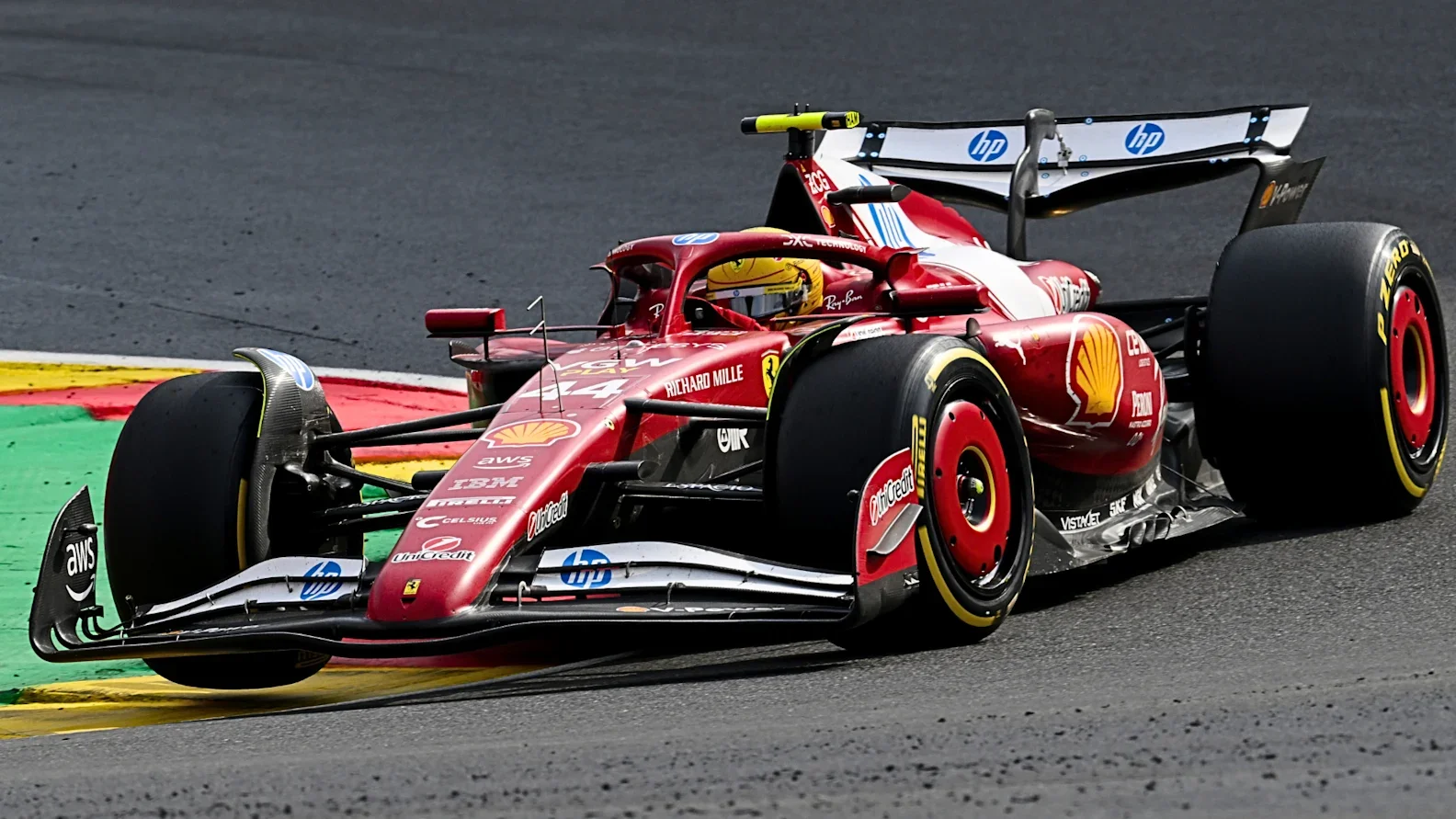
Ferrari’s Frederic Vasseur Supports FIA’s Safety-First Decision
Frederic Vasseur, team principal and general manager of Scuderia Ferrari, publicly defended race control’s cautious stance during the delay. He acknowledged the responsibility placed on officials when worker safety collides with fan expectations.
“We can’t blame them [race control] because we would be collectively the first ones to give them shit if something happened,” —Frederic Vasseur, Team Principal and General Manager, Scuderia Ferrari
Vasseur also emphasized his confidence in the officials’ judgment given his detailed understanding of the car setups his team used, which varied between high and low downforce configurations to adapt to the uncertain conditions.
“In this sense, we have to respect their decision. I can speak frankly because I have one car pushing on the high downforce, one car pushing on the low downforce and I was comfortable to respect their decision because they are taking a huge responsibility also.” —Frederic Vasseur, Team Principal and General Manager, Scuderia Ferrari
Disagreement Among Teams Over Timing and Strategy Impact
Not all team principals shared the same positive view of the delayed start. Some, particularly those who set up their cars to perform better in wet conditions, expressed frustration at the prolonged wait and the extended laps behind the safety car.
Laurent Mekies, Red Bull team principal and former deputy race director, indicated the team was caught off guard by how late the race began, given the persistence of poor conditions and the wait for the rain to stop and sunlight to appear.
“I think we’re all surprised, I believe, by how late we started the race,” —Laurent Mekies, Red Bull Team Principal
“I’m sure the FIA had its own considerations. But certainly, for us as a team, it surprised us. Because fundamentally we waited not only for the rain to stop, but also for pretty much the sun to come out. And then we still had many laps behind the safety car.” —Laurent Mekies, Red Bull Team Principal
“In our specific case, having biased the cars towards wet running, for sure, it’s costing us performance. But it’s part of the game.” —Laurent Mekies, Red Bull Team Principal
Visibility Remains Critical Challenge for Wet Races at Spa
The primary safety concern was not grip levels but the severely reduced visibility caused by spray from the cars ahead. This problem is amplified by the current design of F1 cars, which generate intense ground-effect downforce through venturi tunnels under the floor. This creates large clouds of spray in wet conditions, making it nearly impossible for drivers to see obstacles or other cars.
The topography of Spa also exacerbates visibility issues. The compression zone at Eau Rouge forces drivers downhill into the Raidillon corner, where spray accumulates heavily. The following Kemmel Straight then subjects drivers to a wall of water spray at high speed, heightening the risk of collisions.
McLaren’s Praise for FIA’s Safety-First Race Handling
Andrea Stella, McLaren team principal, applauded the approach taken by officials to delay and manage the race start conservatively, emphasizing that waiting too long could lead to dangerous outcomes.
“I think today the race was managed in a very wise way,” —Andrea Stella, McLaren Team Principal
“We always praise the work of the FIA when this is deserved, and I think this is one of the cases in which this should be praised. Because I understand that it would be quite entertaining to see cars going in wet conditions, but we all should be wary that the average speed in Spa is so high that the cars just displace such a large amount of water that it’s just impossible to see.” —Andrea Stella, McLaren Team Principal
“We’ve seen already in Silverstone that a car [Isack Hadjar] drove into the gearbox of another car [Andrea Kimi Antonelli] because it was impossible to see it, and it was lower and there was less water. So, we don’t want to see the same in Spa.” —Andrea Stella, McLaren Team Principal
Future Safety Considerations for Wet-Weather Racing at Spa
The ongoing challenges with spray and visibility at Spa raised questions about how Formula 1 might reduce risks in future wet races. Attempts after the 2021 Belgian GP, which was ended early due to extreme spray conditions, to limit spray left by the current generation of cars have so far not yielded effective solutions.
With Spa’s difficult landscape and high-speed nature, race control will likely continue to face tough decisions between maintaining race continuity and ensuring driver safety during adverse weather. The 2023 Belgian GP highlighted that safety considerations remain paramount, even at the cost of disappointing fans eager for racing.
Our Reader’s Queries
Q. Is number 13 banned in F1?
A. Yes, the number 13 is permitted. Pastor Maldonado selected #13 when the fixed number system started in 2014. While some cultures think 13 is unlucky, F1 allowed drivers to choose.
Q. Which F1 driver has ADHD?
A. Lewis Hamilton’s ADHD and dyslexia have significantly influenced both his racing career and personal life. His journey offers a new understanding of achieving success in Formula 1 while highlighting the importance of recognizing learning differences.
Q. Is 69 allowed in F1?
A. F1 drivers can select a number from 2 to 99, except for 17, to use throughout their F1 career. Each driver gets to pick this number once, and it stays with them for their entire career.