
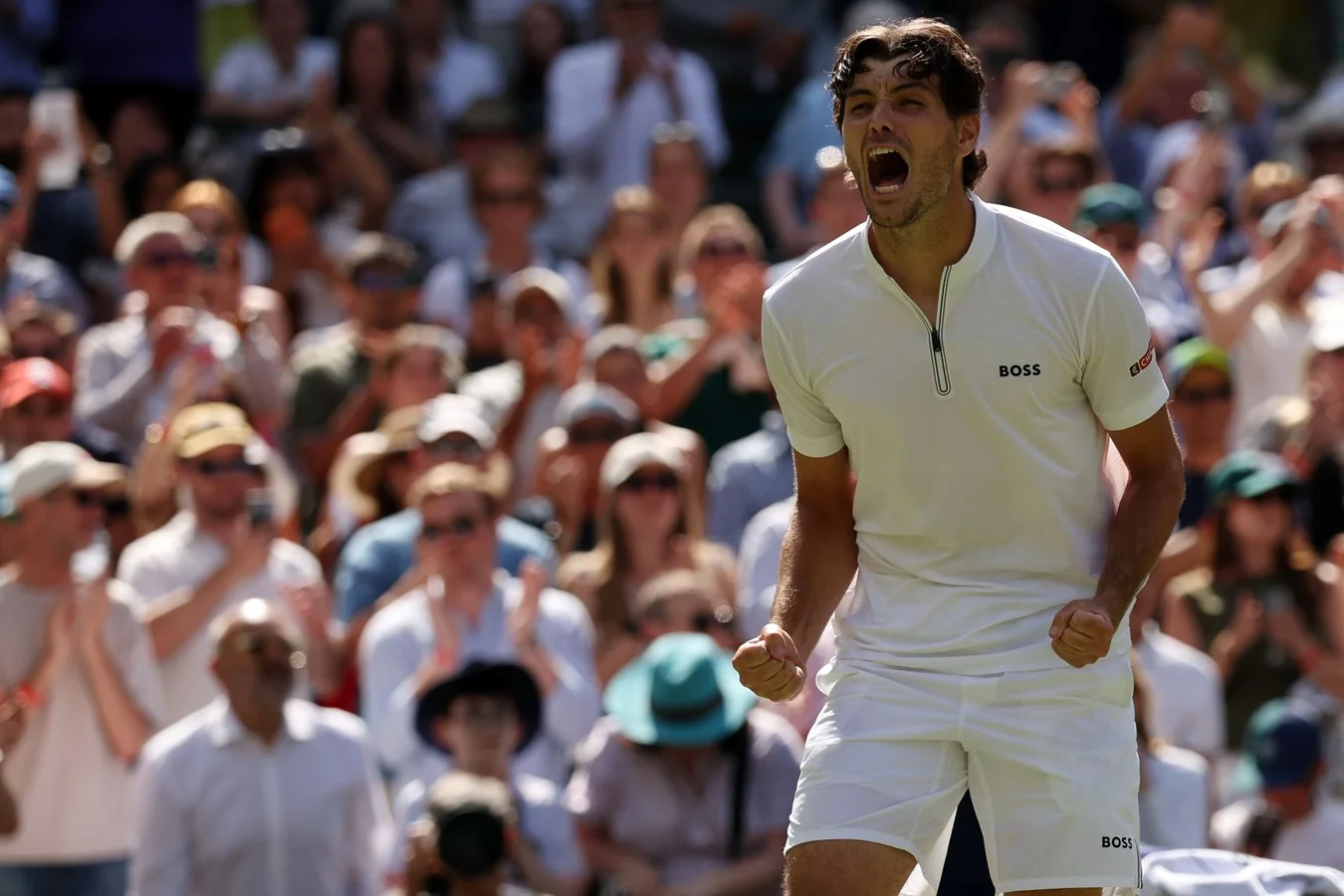

The Citi DC Open in Washington D.C. last week brought intense scrutiny on leading tennis stars including Emma Raducanu, Taylor Fritz, and Frances Tiafoe amid a series of controversies. Fans and critics debated Raducanu’s questionable medical timeout, while Fritz and Tiafoe openly criticized the taxing ATP schedule and its expanding calendar.
Meanwhile, Daniil Medvedev’s post-match meltdown after losing to Corentin Moutet drew sharp criticism, and other players such as Jannik Sinner and Stefanos Tsitsipas found themselves entangled in coaching conflicts and doping concerns. These incidents highlight the growing tensions within the professional tennis circuit.
Emma Raducanu’s Quarterfinal Timeout Sparks Criticism
Emma Raducanu delivered strong performances, reaching the semifinals in both singles and doubles, the latter alongside Elena Rybakina. Still, her medical timeout during the quarterfinal against Maria Sakkari stirred controversy, particularly as it took place while Sakkari was leading 5-2 in the second set.
The heated Washington D.C. conditions were cited as the reason for Raducanu’s timeout to check her blood pressure, yet many spectators accused her of using the break to disrupt Sakkari’s momentum, pointing to past instances where Raducanu employed similar tactics. The criticism reflects growing frustration over perceived gamesmanship in critical moments.
Medvedev’s Frustrated Outburst After Narrow Loss
Daniil Medvedev, having lost a three-set quarterfinal match to Corentin Moutet, visibly struggled to control his emotions after the defeat. The match had been paused on Thursday night with Moutet narrowly leading 5-4 in the final set, only for Medvedev to lose by double faults once play resumed the next day.
Medvedev’s anger manifested in racket tosses and smashed water bottles, behaviors that exceeded even his usual level of frustration and attracted considerable criticism from fans and analysts alike. His reaction underscored the mounting pressure top players face in high-stakes matches.
Tennis Calendar Expansion Draws Criticism from Fritz and Tiafoe
Reflecting wider player concerns, Taylor Fritz and Frances Tiafoe sharply criticized the increasingly demanding tennis schedule during the Citi DC Open. Fritz described the season as unnecessarily lengthened, with more tournaments added and existing events extended, leaving players physically and mentally drained.
“Yeah, I mean, I think, like, I mean, probably pretty much all the players for a long time have been asking for the season to be shorter, but all we are doing is just lengthening it, adding more stuff, we’re adding more, like, longer tournaments,” Fritz said.
The Canadian Open’s recent expansion serves as a prime example, where the draw increased from 56 to 96 players, and the event duration doubled from seven to twelve days. Tiafoe expressed particular frustration about the unusual scheduling of the final on a Thursday instead of the weekend.
“It is what it is. I like that it’s a bit shorter than Madrid, Rome. Weird because the final is on a Thursday. That’s garbage,” Tiafoe said.
Despite these drawbacks, Tiafoe acknowledged the advantage of competing closer to home in North America, making the circuit somewhat less taxing than the distant European tournaments with their language barriers and travel fatigue.
“But yeah, I mean, I guess I’m ready to get going and see how that goes. The 10-day events are tough, but I think it will be easier since I’m so close to the States. Something goes wrong, I’m a quick flight home. It’s not like when I’m stuck in Europe and playing on red clay and people speaking different languages and s—. It’s better to kind of be in the States, so for sure, I’m really happy. Hopefully put up some good results going into the Open. That’s kind of what matters,” he added.
Both Fritz and Tiafoe exited the Citi DC Open in the quarterfinals and proceeded to Toronto for the Canadian Open, where their seeded status granted them first-round byes.
Jannik Sinner’s Coaching Choice Reignites Doping Debate
In a move that surprised many, Jannik Sinner rehired his former fitness coach Umberto Ferrara, despite the coach’s involvement in the doping controversy that led to Sinner testing positive for clostebol last year. Sinner served a three-month suspension but rebounded to win Wimbledon this year.
Previously, Sinner blamed Ferrara for providing the contaminated spray that caused the positive test during treatment involving physiotherapist Giacomo Naldi. After firing Ferrara and Naldi amid the scandal, Sinner’s decision to bring Ferrara back ahead of the hardcourt season has raised eyebrows and fueled speculation about the player’s management and team dynamics.
Stefanos Tsitsipas and Goran Ivanisevic End Short-Lived Partnership
Stefanos Tsitsipas’ recent split with coach Goran Ivanisevic came after just under a month and was marked by public criticism and tense exchanges. Following Tsitsipas’ early Wimbledon exit, Ivanisevic criticized the player’s fitness harshly, claiming he was in better shape despite his own knee issues and age.
“Me, at my age and with this bad knee, I’m three times in better shape than him. I’m not sure what he was doing in the previous 12 months, but his current shape is very poor,” Ivanisevic said.
Tsitsipas cited Ivanisevic’s negative attitude and controlling demeanor as reasons for ending their collaboration.
“It is very difficult to have dictators and people who speak negatively and you don’t feel like they are close to you like family,” Tsitsipas said.
Despite the acrimony in public statements, Ivanisevic later sought to clarify that no lasting bad blood exists. Tsitsipas has now returned to working with his father, Apostolos, as coach following the split.
Implications of Player Discontent for Tennis Season and Future Tournaments
The controversies and criticisms surrounding player conduct, coaching changes, and especially the overloaded tennis calendar underscore systemic pressures in the sport. Taylor Fritz’s pointed remarks on the extended ATP schedule highlight a growing need for reform to protect player well-being and maintain competitive integrity.
Sinner’s controversial choices and Tsitsipas’ coaching difficulties illustrate the challenges of maintaining stability and trust in support teams amid high stakes. Meanwhile, Medvedev and Raducanu’s on-court dramas emphasize the emotional toll exacted by expanding tournament demands.
As the tour progresses through major events like the Canadian Open and the upcoming US Open, the tennis world will be watching closely whether these players’ concerns spark meaningful changes to the calendar or team dynamics, or if controversies continue to cloud the sport’s elite competitions.
Our Reader’s Queries
Q. Did Taylor Fritz leave his wife?
A. He ended his marriage with Raquel Pedraza in December 2019 after being married for three years. Fritz and Pedraza, who connected through their love for tennis as high school sweethearts, got married in 2016. The wedding took place in Rancho Santa Fe, California, after he proposed to her at the Eiffel Tower in Paris.
Q. How old was Taylor Fritz when he had a child?
A. American tennis star Taylor Fritz became a father at a young age. He had his son Jordan in 2017 when he was just 19 years old. Fritz, who is currently participating in Wimbledon, got married to his high school girlfriend Raquel Pedraza at 18, but they have since divorced.
Q. Why did Taylor Fritz leave Nike?
A. Fritz emphasized the need to trust your shoes. He wants to feel secure when sliding into shots or playing a long match without foot pain.
He describes ASICS shoes as comfortable, flexible, and strong.
Q. Why has Taylor Fritz gone blonde?
A. Discussing advertising in an ATP video, Fritz shared he’s thought about going blonde for “years” and finally kept his word this season. Every Australian Open, Fritz would ask others about it before deciding to go blonde.