
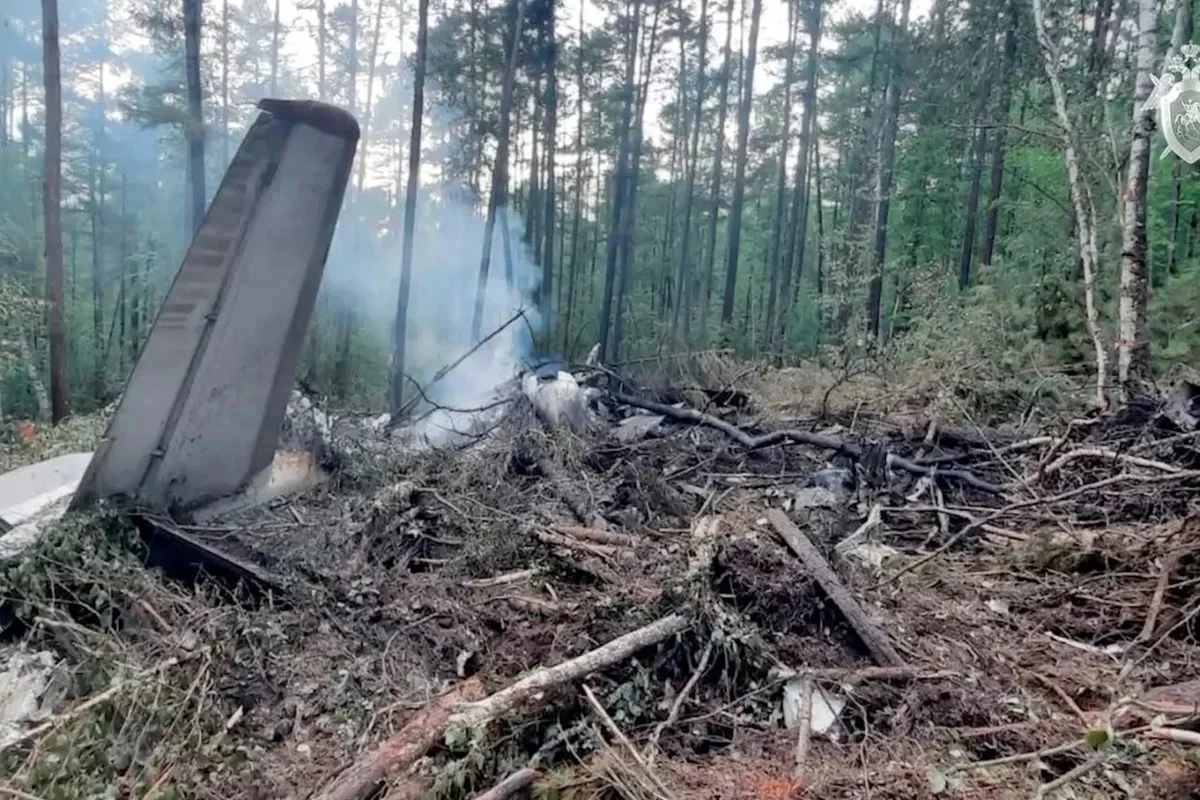

David Coulthard has opened up about his astonishing survival following a plane crash just days before the 2000 Spanish Grand Prix. The former McLaren Formula 1 driver was involved in a tragic crash-landing at Lyon Satolas Airport in France on May 2, 2000, yet managed to escape with his life amid devastating losses.
Details of the crash and immediate aftermath
At the time of the accident, Coulthard was traveling from Farnborough to Nice on a private jet, accompanied by his then-fiancée Heidi Wichlinski and his trainer Andy Matthews. The flight crashed due to a single engine failure during its approach to Lyon Satolas Airport, resulting in the death of both pilots, David Saunders and Dan Worley. Miraculously, Coulthard, his fiancée, Matthews, and even his fiancée’s dog survived the impact.
Reflecting on the incident during an interview on The High Performance Podcast, Coulthard described the moment as surreal. He said,
“I said hello to the pilots, got on board and an hour later, we were crashing in Lyon with a single engine failure,”
before adding,
“Seconds later, I’m getting out of that aircraft because fate had decided that, although they both lost their lives, pretty sure instantly upon impact, fate decided that myself, my fiancee at that time, my trainer, and my fiancee’s little dog all survived, got out of the aircraft.”
After escaping the wreckage, Coulthard and his companions stood beside the burning aircraft on the outskirts of an international airport, waiting for recovery teams. Despite the trauma, the group was transported back to Monaco that same night, arriving late ahead of the Spanish Grand Prix scheduled for the following weekend.
Impact on Coulthard’s mindset and career trajectory
The incident left a deep imprint on Coulthard’s outlook, prompting intense reflection on his life and career. He recalled the emotional aftermath, saying,
“I remember lying in bed… You know sometimes you get that kind of shiver through your body? I had that little shiver and I went, ‘God, that could have been it today, all over, 30 years old, done, you’re just a footnote in a column somewhere.’”
He further emphasized how the experience led to significant personal growth and change, sharing,
“And I was like, ‘Right, how have I done so far, and what are my aspirations going forward?’ It put in place a lot of changes.”
Commenting on the tragedy that affected the families of the pilots who lost their lives, Coulthard expressed solemnity:
“Knowing that two families’ lives had been changed forever – they were fathers, they were husbands, they were sons – it was horrible, absolutely horrible,”
he said.
Speaking in a later podcast, Coulthard was candid about how the ordeal forced him to mature quickly:
“What that did do was make me grow the f*** up,”
he admitted. He acknowledged that before the crash, he had been enjoying the perks of being a well-paid Formula 1 driver, saying,
“I think I’d just turned 30 and I was living the comforts of being well paid as a Formula 1 driver, jumping on private planes and all the good things… I think I was getting a little bit spoiled without realising it.”
Return to racing and career highlights following the crash
Despite the trauma of the crash, Coulthard returned to competitive racing without delay. At the 2000 Spanish Grand Prix, he qualified in fourth place and finished the race on the podium, securing second place behind his McLaren teammate Mika Hakkinen. That season, Coulthard built momentum by winning the Monaco and French Grands Prix, ultimately finishing third in the World Drivers’ Championship.
The following year, Coulthard achieved another second-place finish, cementing his position as one of the sport’s consistent front-runners before transferring to Red Bull Racing in 2005. Over the course of his Formula 1 career, Coulthard amassed 13 Grand Prix victories and stood on the podium 62 times. He retired from racing at the end of the 2008 season and transitioned into broadcasting, joining the BBC’s coverage alongside Jake Humphrey and Eddie Jordan.
Official response and crash circumstances
Airport director Bernard Chaffange confirmed the severity of the incident, stating that the jet was on fire upon its crash-landing at Lyon Satolas Airport. The crash was a devastating event for everyone involved, yet Coulthard’s survival and swift return to the sport underlined his resilience amid the tragedy.
The striking circumstances around the crash have been a poignant reminder in Coulthard’s life, serving as a turning point that affected both his personal development and professional pursuits.