
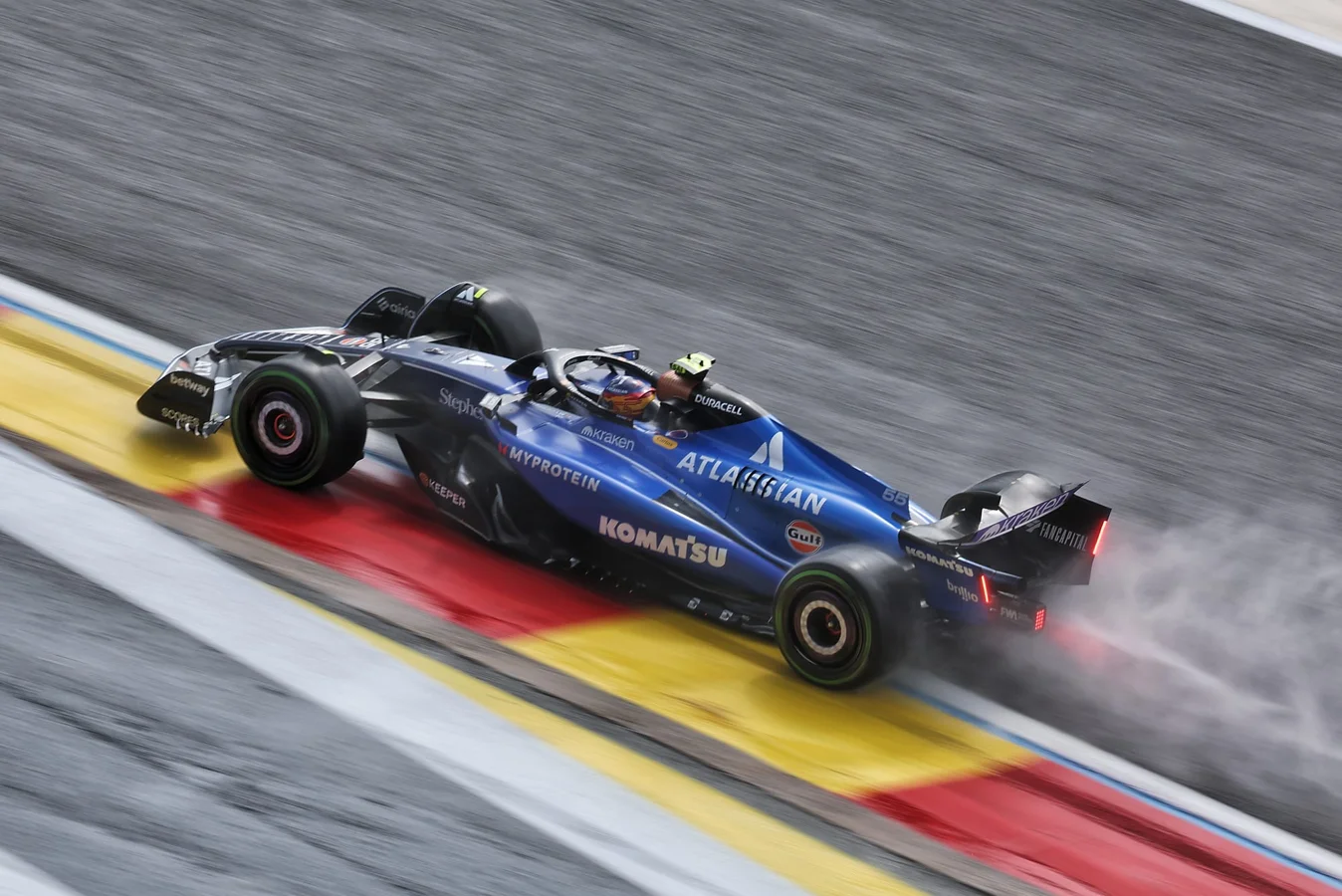

Max Verstappen’s impatience was clear as he waited in the pit lane during the heavily delayed Belgian Grand Prix at the Circuit de Spa-Francorchamps. A severe F1 wet weather visibility problem forced race officials to suspend the start during the formation lap, resulting in drivers sitting idle for over 80 minutes before the race finally began.
The persistent downpour led to an extended wait, with racing only getting underway well after the initial attempt to start at 3pm. Despite the wet track surface, the main issue was not the rain itself but the intense spray kicked up by the cars at full speed, especially on the fast sections. This mist reduced visibility to barely a couple of meters, raising serious safety concerns.
Drivers’ Divided Reactions to Safety-Driven Race Postponement
After 165 minutes of delay, Australian driver Oscar Piastri emerged victorious when the race concluded late in the afternoon. However, several top drivers voiced sharp criticism over the decision to postpone the race, claiming that waiting for clearer conditions nullified strategic advantages and diminished the spectacle of wet-weather racing.
Verstappen openly challenged the wet-weather safety rationale, arguing that the race should have commenced on schedule despite the spray conditions. “It was not even raining,” he said after the event, insisting he would have started the race immediately at 3pm. He acknowledged the water between turns one and five but suggested that running laps behind the safety car would have improved visibility and that other track sections were ready.
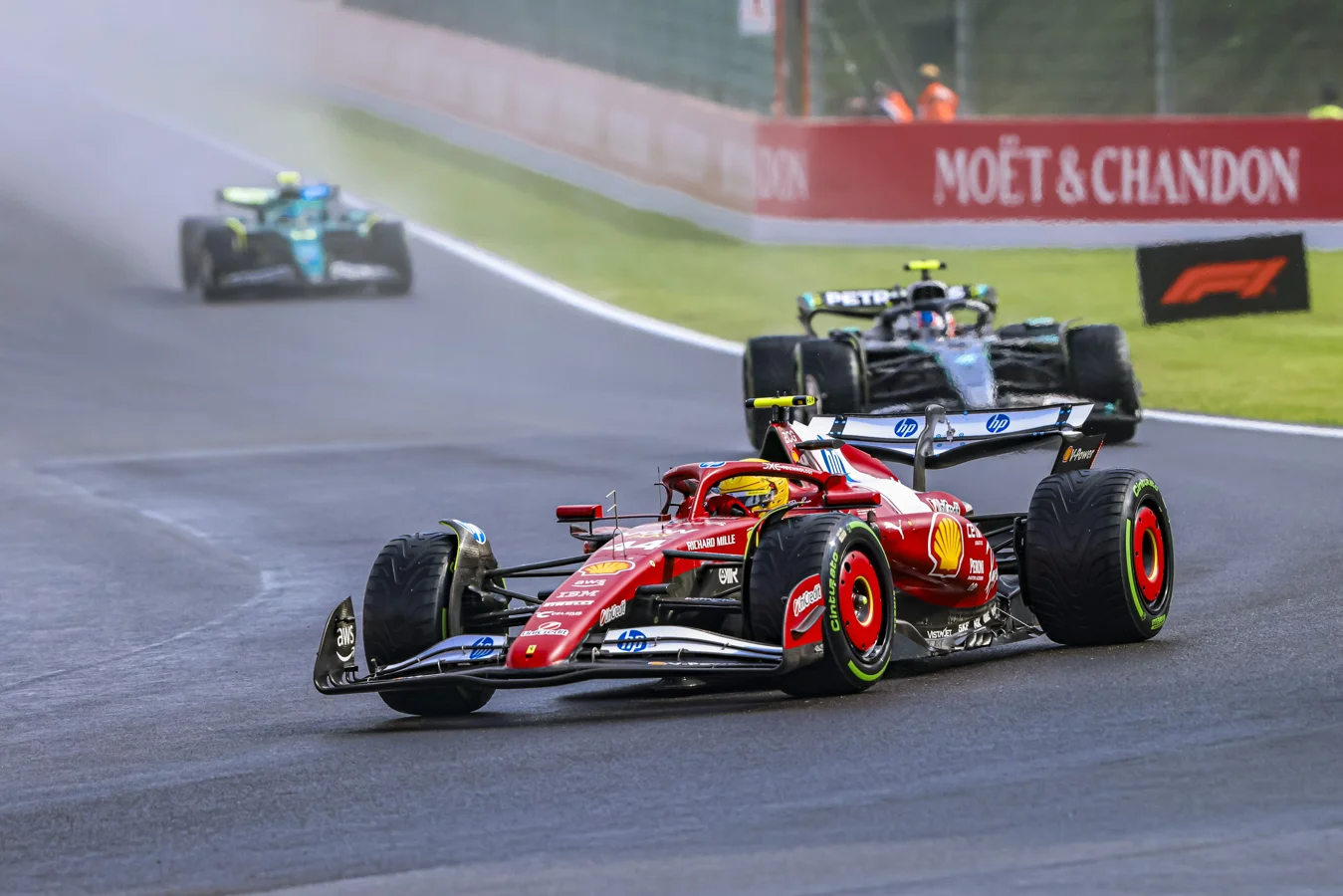
This also didn’t make sense. Then it’s better to say, ‘You know what? Let’s wait until it’s completely dry and then we just start on slicks,’ because this is not really wet-weather racing for me.
—Max Verstappen, Driver
Verstappen also downplayed the visibility concerns, noting that the poor conditions would have lasted only a few laps and believed drivers could manage by reducing speed if needed.
“And if you can’t see, you can always lift,”
he stated.
The Dutchman was disappointed especially because his car had been specifically tuned for wet conditions, and the delay negated those efforts. Being forced onto dry tyres early hampered his performance, leaving him stuck behind Charles Leclerc throughout the race.
It was a choice that we made with the set-up of the car. It was then the wrong one because they didn’t allow us to race in the wet,
—Max Verstappen, Driver
It just ruined a nice classic wet race as well.
—Max Verstappen, Driver
Similarly, Lewis Hamilton expressed frustration at the late start, having prepared his car for rain with increased downforce and started from the pit lane after a poor qualifying run. He made strong progress through the field on slick tyres but was ultimately hindered by a lack of straight-line speed and a low fuel load intended for a wet race pace.
We started the race a little bit too late, I would say,
—Lewis Hamilton, Driver
I kept shouting, ‘It’s ready to go, it’s ready to go’ and they kept going round and round and round.
—Lewis Hamilton, Driver
I think they were probably overreacting from the last race where we asked them not to restart the race too early because visibility was bad, and I think this weekend they just went a bit too much the other way because we didn’t need a rolling start.
—Lewis Hamilton, Driver
Safety Concerns Lead Most Drivers to Support Race Delay
Despite Verstappen and Hamilton’s objections, the vast majority of drivers supported the cautious approach taken by race control. Many reported near-zero visibility from spray during the formation laps, with several explicitly describing the conditions as dangerously poor.
“Mate, I literally can’t see anything,”
Liam Lawson said during team radio communications. Lance Stroll echoed the sentiment, calling it “totally blind.” According to compiled driver feedback, nearly every participant expressed concern about the spray’s severity.
Only Verstappen and Alex Albon felt the delay was excessive, though Albon suggested that running behind the safety car to help dry the track would have been preferable to the extended wait. George Russell, Grand Prix Drivers Association director, emphasized the risk of racing in such conditions, calling it “stupidity” to continue given the near-zero visibility on sections where cars reach speeds over 200 miles per hour.
As a racer you always want to get going, you love driving in the rain,
—George Russell, Driver
But the fact is when you’re doing over 200 miles an hour out of Eau Rouge, you literally cannot see anything, you may as well have a blindfold on. It isn’t racing; it’s just stupidity.
—George Russell, Driver
Considering it was clearly going to be dry from 4pm onwards, they made the right call.
—George Russell, Driver
Furthermore, drivers had emphasized the need for caution during discussions with race director Rui Marques before the race, following dangerous conditions and crashes experienced at the recent British Grand Prix. Hamilton noted that previous driver feedback had urged officials to avoid premature restarts when visibility was poor.
We sat down and spoke about it, and the drivers said in the last race we shouldn’t have restarted,
—Lewis Hamilton, Driver
So I think they just focused on visibility. As soon as someone said up ahead [that] visibility was really bad … I think they just waited just to be sure.
—Lewis Hamilton, Driver
I think they still did a good job. Of course we did miss some of the extreme wet racing, which I think would have been nice, but for some reason the spray here is … like going through fog.
—Lewis Hamilton, Driver
I don’t know what we’re going to do to try and fix it.
—Lewis Hamilton, Driver
Historical Dangers of Spa Highlight the Severity of the Visibility Problem
The Circuit de Spa-Francorchamps, often regarded as one of the most challenging tracks on the calendar, has a long and tragic history that underscores the risks posed by poor visibility in wet conditions. It was the scene of intense safety battles in the late 1960s and early 1970s, including driver boycotts due to dangerous conditions. Although the circuit was reconfigured in the 1980s, fatal accidents have continued into the modern era.
In 2019, Formula 2 driver Anthoine Hubert died following a high-speed crash under wet conditions at the Eau Rouge-Raidillon complex, one of the fastest and most hazardous sections on the track. The accident was triggered when Giuliano Alesi lost control, causing a multi-car pileup. Hubert’s injuries were fatal, while Juan Manuel Correa sustained life-threatening trauma but later returned to racing.
Just two years later, 18-year-old Dilano van ’t Hoff perished at the same section during a Formula Regional European Championship race. He spun in heavy spray and was struck by another car traveling at high speed, resulting in a fatal crash.
The Eau Rouge-Raidillon corner is notorious for its combination of high speed, elevation changes, and limited runoff area, leaving little margin for error. Despite recent safety improvements like better barriers, the narrow topography limits further meaningful changes without altering the character of this iconic sequence.
Charles Leclerc, acknowledging the dangerous legacy of the circuit, stressed the importance of prioritizing safety over expediency in race decisions.
On a track like this with what happened historically, I think you cannot forget about it,
—Charles Leclerc, Driver
For that reason, I’d rather be safe than too early.
—Charles Leclerc, Driver
Underlying Technical Causes Behind F1’s Persistent Wet Weather Visibility Issue
The visibility trouble at Spa is part of a broader problem affecting Formula 1’s wet weather racing across multiple venues. A similar situation at Silverstone last year, where heavy spray forced a race suspension, heightened sensitivity to these conditions and influenced decisions at Spa.
One major factor is the reintroduction of ground-effect aerodynamics in recent car designs. These systems generate powerful downforce by accelerating airflow underneath the car and ejecting it behind. Unfortunately, water is also expelled following the same air streams, producing enormous plumes of spray that severely restrict the vision of following drivers.
Compounding this, modern wide tyres disperse more water over a larger surface area, increasing the volume of spray in wet races. This partially explains why Pirelli’s full wet tyres are rarely deployed; when conditions warrant their use, the spray becomes so thick that race control often suspends sessions.
The issue worsened to widespread attention during the controversial 2021 Belgian Grand Prix, which was halted after just two laps behind the safety car—barely enough to award championship points. Following that event, the FIA experimented with wheel covers designed to reduce spray as mudguards, but these devices proved impractical or ineffective and were ultimately rejected.
The root of the problem remains aerodynamic design and wheel configuration. Formula 1 thrives on generating extreme downforce for performance gains, but this inherently creates greater spray in the wet. The open-wheel layout combined with wide tyres turns cars into rolling mist machines under rain.
Future Challenges and the Search for Solutions to Wet Weather Safety
Upcoming rule changes that reduce reliance on ground-effect aerodynamics may help mitigate spray issues, but as the 2021 Belgian Grand Prix ran under a previous aerodynamic regime with high downforce, the problem is complex and deeply integrated into the sport’s technical fabric.
Balancing Formula 1’s high-performance demands with wet weather safety will require comprehensive solutions involving car designs, tyre technology, and possibly circuit adaptations. Until such measures are found and implemented, poor visibility during rain-affected races will remain a critical safety and sporting challenge for the sport.
With the memories of recent accidents and ongoing driver safety concerns, F1’s wet weather visibility problem at iconic and dangerous circuits like Spa-Francorchamps has reached a crisis point. The conflicting perspectives of drivers, teams, and officials highlight the tension between competitive desire and the imperative to protect lives during extreme conditions.