
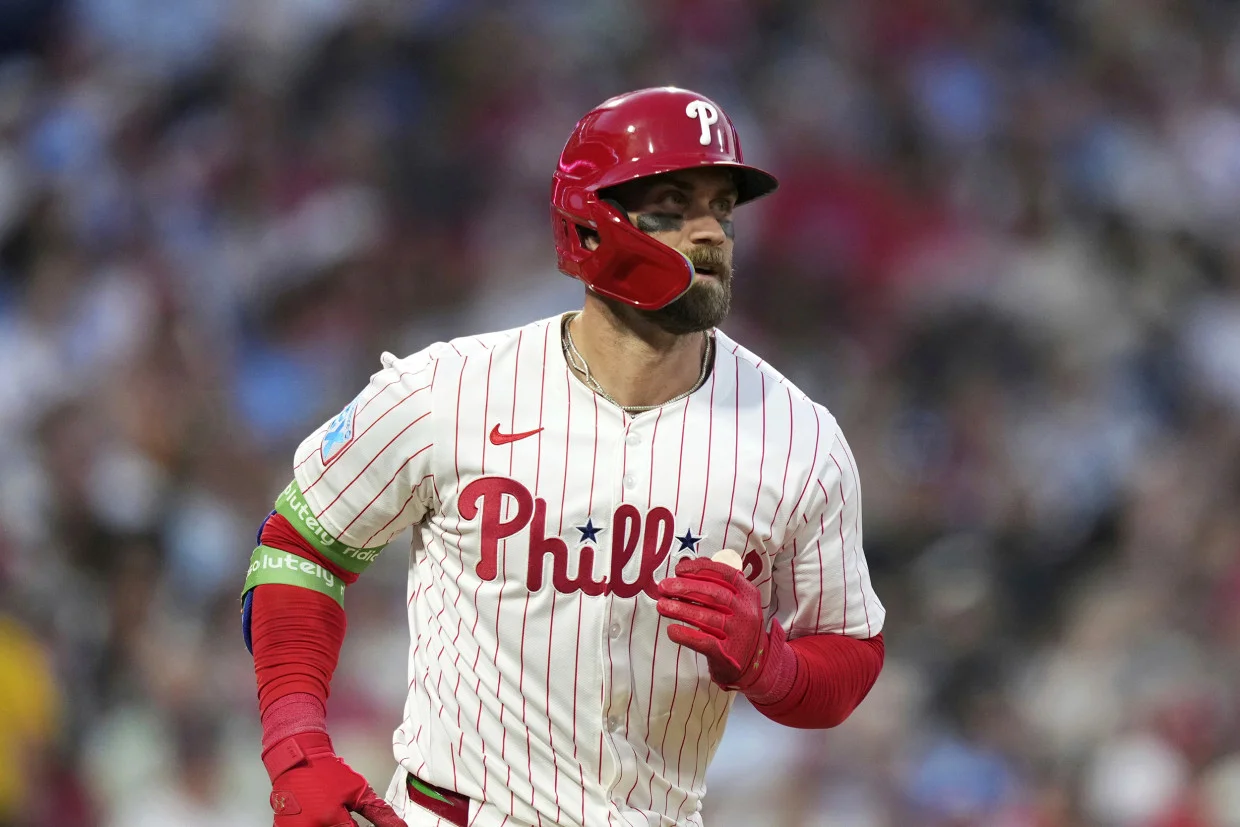

Bryce Harper openly confronted Major League Baseball commissioner Rob Manfred during a tense meeting this week, prompting ESPN’s Stephen A. Smith to call for disciplinary action against the Philadelphia Phillies All-Star. The incident unfolded amid discussions intended to improve player relations but instead escalated into a fiery exchange, highlighting growing frustrations over league matters.
Details Emerge About the Altercation
According to ESPN’s Jeff Passan, Harper told Manfred to
“get the f*** out of our clubhouse”
during the encounter. Reports state that Harper and Manfred were nearly nose-to-nose as tensions flared, though Manfred steered clear of explicitly mentioning a salary cap. Harper, however, felt the conversation was heading in that direction, sparking the outburst during the meeting meant to ease tensions between players and league officials.
Stephen A. Smith Reacts: Suspension Should Follow
On Wednesday morning’s “What Are You Mad About?” segment with Chris Russo, Stephen A. Smith expressed his outrage at Harper’s disrespectful behavior toward Manfred, insisting that such confrontations are unacceptable. Smith said,
“That warrants a suspension. I’m not gonna lie to you, you can’t confront the commissioner like that and talk to him like that.”
—Stephen A. Smith, Sports Commentator
Though Smith emphasized his admiration for Harper, he maintained that the level of disrespect shown in the confrontation crossed a line.
I love Bryce Harper, I really, really do,
Smith acknowledged before adding,
We all got to remember there’s so much more that goes into the world of business, negotiations, and things of that nature, it’s not just one individual. And to have an authoritative figure like that be talked to like that and disrespected like that, I’m sorry.
—Stephen A. Smith

Comparisons and Reflections on Respect and Professionalism
Smith further reflected on the significance of showing respect toward figures in authority roles, imagining a scenario where a player spoke disrespectfully to the late NBA commissioner David Stern. He recognized that times have changed but cautioned that maintaining decorum during business negotiations remains vital.
Maybe in certain respects, it needs to go back to some of the previous days where you just know the importance of decorum and respect, particularly when you’re thinking about business.
—Stephen A. Smith
Underlying Issues Fueling Player-Owner Tensions
As the 2026 MLB season approaches, industry insiders like Ken Rosenthal have predicted a high likelihood of a work stoppage, estimating a 90 percent chance of players being locked out. The main bone of contention remains the owners’ push for a salary cap, a move vehemently opposed by the players’ union. Given the union’s history of fighting for player rights, acceptance of such a cap appears highly unlikely and tensions are expected to escalate further, potentially resulting in lost games.
Why Harper’s Outburst Resonates Among Players and Fans
While Harper’s language might be seen as confrontational, many players share his perspective and frustration toward any salary cap discussions. In the wider public eye, fans often align with the players’ union, favoring millionaire athletes over billionaire owners who are frequently perceived as frugal. The players’ defiant stance symbolizes deeper discontent with the league’s current ownership and management priorities.
Implications of Punishing Harper for the Confrontation
The commissioner‘s role, primarily focused on representing owners, should arguably shift toward reducing friction between players and management. Suspending Harper for his remarks risks inflaming tensions further and energizing the MLB Players Association. Instead of cooling matters, punishment could deepen the divide during a critical time for labor relations in baseball.