
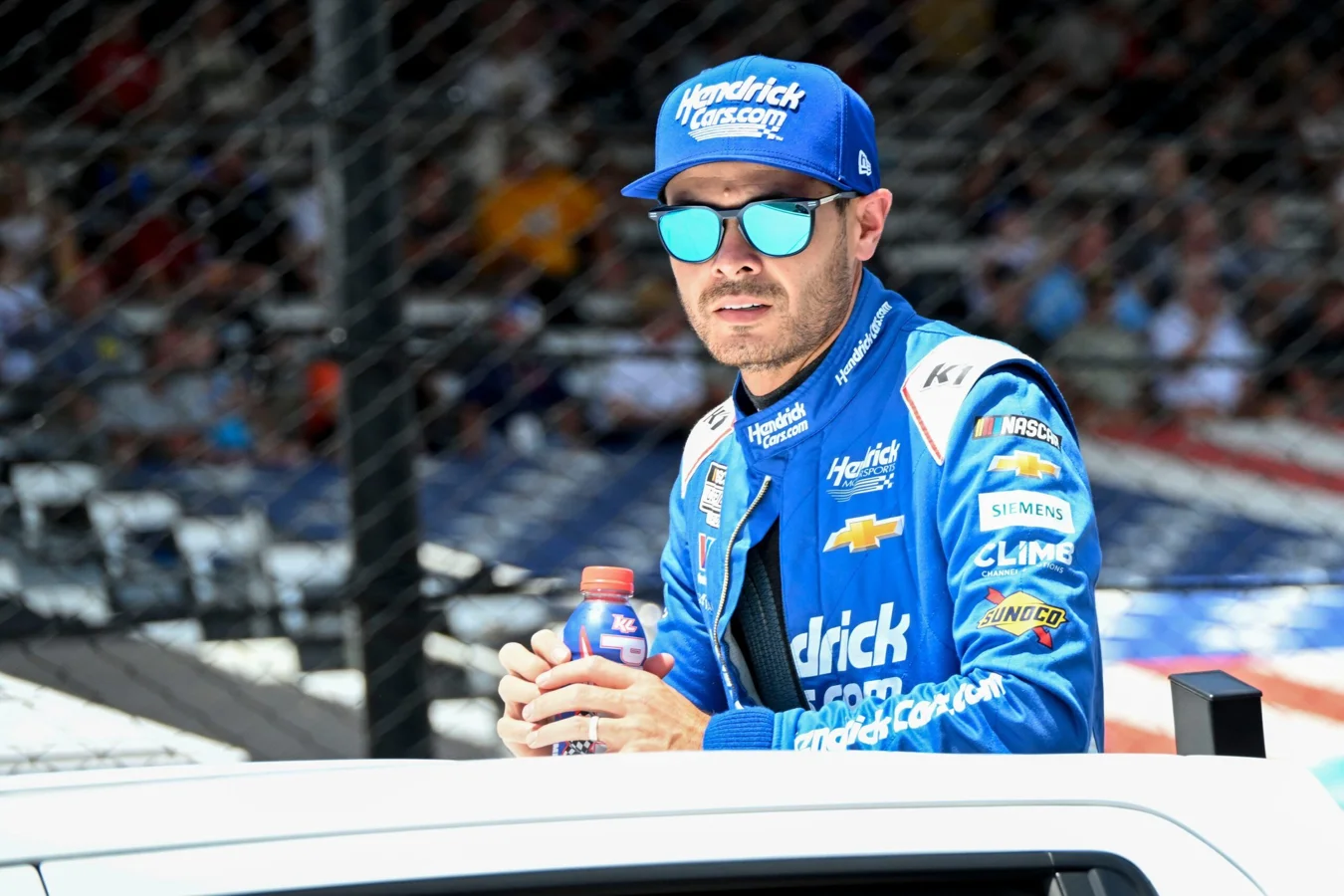

At the Indianapolis race on Saturday, while Dale Earnhardt Jr. celebrated JR Motorsports’ milestone 100th victory with Connor Zilisch, tensions brewed due to an altercation involving Justin Allgaier and Kyle Larson. Allgaier’s race ended prematurely after Larson’s aggressive move on lap 87 caused Allgaier’s car to crash into the wall, marking Allgaier’s third DNF of the season. Larson, starting from 19th, was pushing hard to advance when he made contact with Allgaier’s No. 7 Chevy, who had been leading the pack after finishing second in Stage 1 and winning Stage 2. Despite the incident, Larson finished fourth, and Zilisch took the win.
Dale Earnhardt Jr.’s Perspective on Managing the Conflict
Discussing the clash between Allgaier and Larson on his podcast, Dale Earnhardt Jr. expressed confusion over Larson’s motivation for the aggressive move, recalling a similar on-track tussle at Bristol where Allgaier managed to finish third despite the contact. Earnhardt explained that he gave Allgaier the freedom to respond as he saw fit but emphasized one clear expectation: he wanted to prevent the situation from escalating into a bitter rivalry between the two teams, especially since JR Motorsports and Hendrick Motorsports maintain a collaborative relationship.
From Larson’s viewpoint, Earnhardt explained:
“Larson’s going to drive the way he’s going to drive. He’s going to drive hard and be aggressive. He doesn’t look at the seven of Justin and go, ‘Man, I should take care of him. That’s a Junior Motorsports car.’”
—Dale Earnhardt Jr.
Earnhardt also stressed that while he wouldn’t stop Allgaier from confronting Larson, he preferred the discussion to happen privately and not in public, so it wouldn’t create further division among the racing teams.
He added a warning to Allgaier about careful communication:
“He’s going to get interviewed at the Infield Care Center, so choose your words wisely because we are all in this together.”
—Dale Earnhardt Jr.
Potential Consequences and Next Steps
The incident underscores the tension that can arise when drivers compete aggressively, even among allied teams. Allgaier’s crash not only affected his own standing but also highlighted friction within the broader competitive environment of NASCAR. Earnhardt’s appeal for calm and measured responses aims to preserve the professionalism and mutual respect expected among drivers and teams. Moving forward, how Allgaier and Larson address their differences could influence on-track dynamics and team relations in upcoming races, with Earnhardt hoping for a resolution that avoids escalating conflicts.