
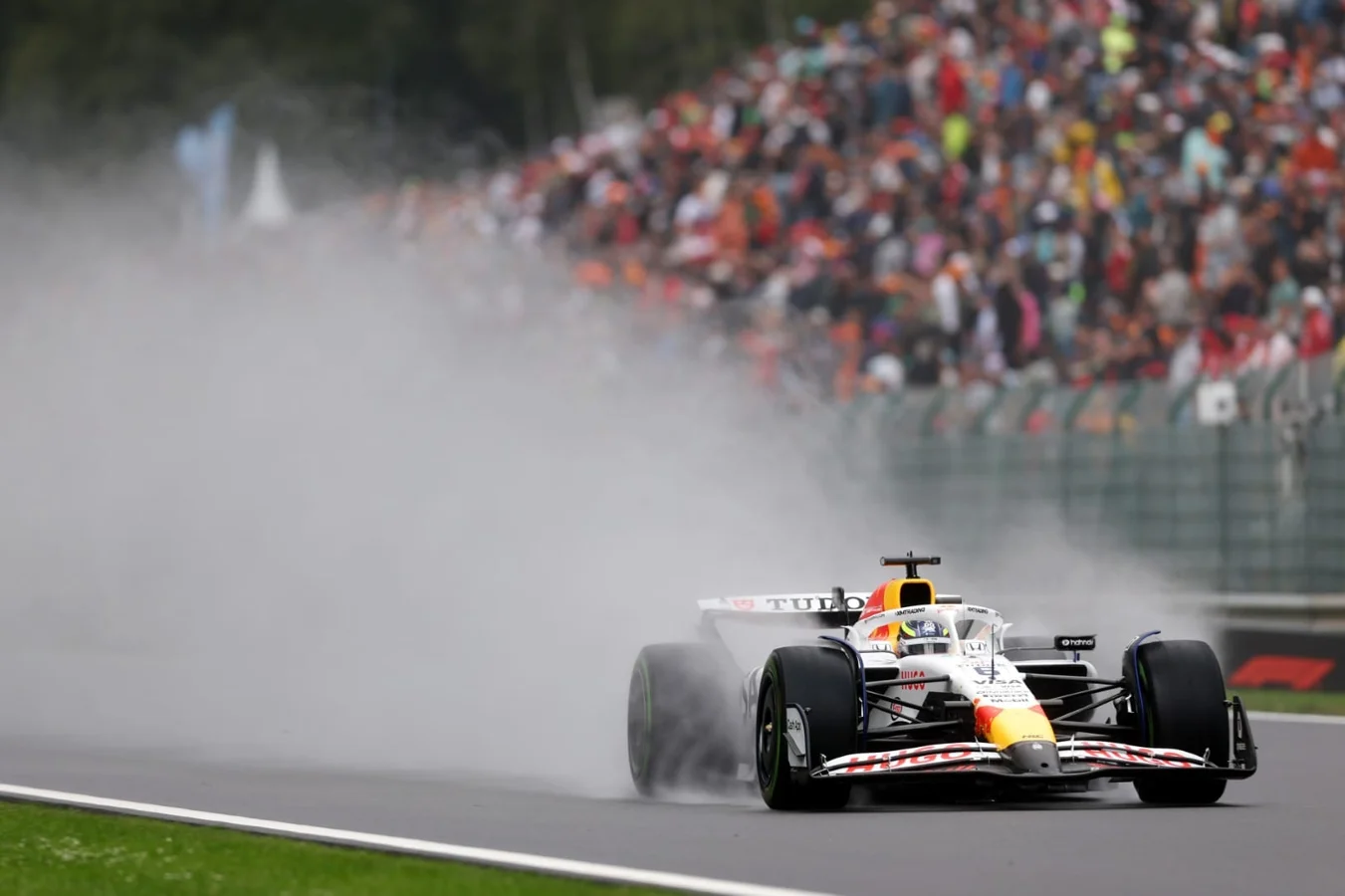

Fernando Alonso, a prominent figure in Formula 1 since his 2001 debut, has suggested a controversial solution to tackle the ongoing problem of poor visibility caused by spray during wet conditions on race tracks. His idea involves resurfacing circuits with a different type of asphalt, which he believes could dramatically reduce spray but may upset race promoters eager to maintain traditional surfaces. This proposal comes after the recent Spa race, where visibility problems led to an 80-minute suspension and cautious pacing behind the safety car.
The delay and safety car period at Spa frustrated many drivers who had opted for setups suited to wetter conditions, only to see the track drying unevenly when racing resumed. However, experts and drivers alike agree the primary challenge was not grip but the thick spray cloud created by water kicked up by the tyres in high-speed zones, limiting visibility and increasing risk.
Alonso Links Wider Tyres and Current Asphalt to Increased Spray Problems
Alonso suggests that the introduction of wider tyres and cars since 2017 has worsened visibility, but he points to changes in track asphalt as an equally important factor. Speaking ahead of the Hungarian Grand Prix, he noted differences between the newly used dark, grippy asphalt and previous surfaces he raced on, such as at Sepang, where wet conditions caused less spray.
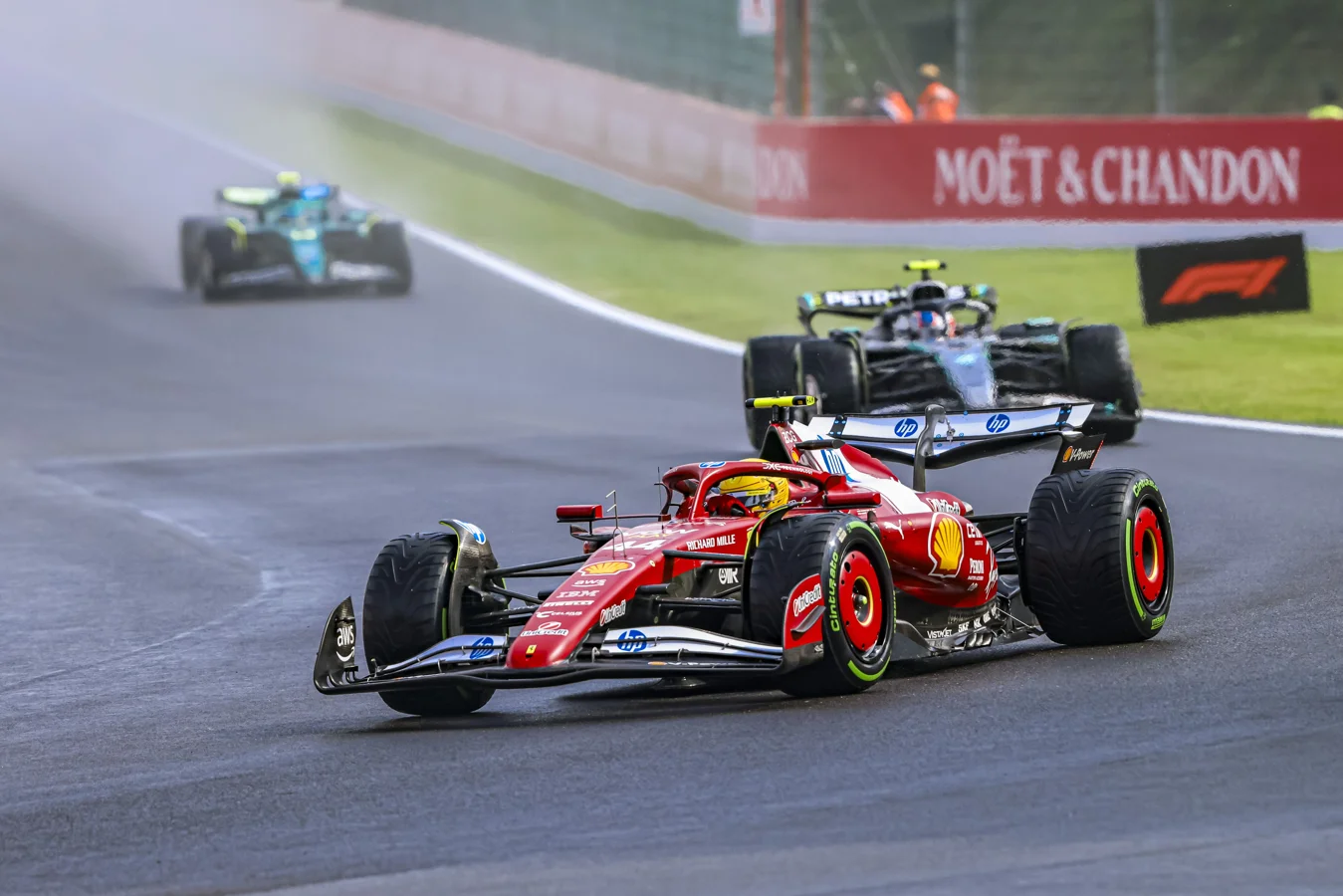
“I think the tyres, the wide tyres definitely made visibility worse,”
—Fernando Alonso, Racing Driver
“And probably some of the asphalt in the circuits, they are a little bit different than what they’ve been in the past. Because we raced with a lot of water in Sepang [Malaysia] and it was always okay.”
—Fernando Alonso, Racing Driver
“And now this new generation of asphalt, which is very black and very grippy in dry conditions, is like a mirror in wet conditions. And yeah, visibility is not nice. But I don’t know what we can do there or what the tyres can do in a very rough tarmac.”
—Fernando Alonso, Racing Driver
“And even some of the highways, I have said many times that the highways, there are some that they have zero spray. So if we implement that tarmac in all the circuits as a normal rule, we will have zero spray.”
—Fernando Alonso, Racing Driver
“Then it will be a huge degradation, probably, in dry conditions – I don’t know. But then we can work from that theme and have a starting point. But I’m just a driver.”
—Fernando Alonso, Racing Driver
Though resurfacing all affected Grand Prix venues would be a costly and complex endeavor, Alonso believes it could offer a long-term solution to the spray issue, despite possible negative effects on dry-condition tyre performance.
The Science Behind Spray-Reducing Asphalt Surfaces
Across the world, some highways use specialized asphalt mixtures designed to manage rainwater better and minimize spray. Known as Open-Graded Friction Course (OGFC), these surfaces consist of a thin top layer of large, coarse aggregate particles with fewer fine particles. This open structure allows water to drain vertically and laterally, significantly reducing surface water and, thus, spray generation.
However, OGFC is more expensive and delicate to install properly, often proving less durable if not maintained well. This type of asphalt is rarely used on racetracks because it could negatively impact tyre wear and grip. At optimal temperatures, tyre rubber interlocks with the aggregate’s tiny gaps to generate traction; a more porous surface increases the rubber’s workload, possibly resulting in faster degradation.
Some circuits like Bahrain already feature surfaces closer to OGFC, which illustrate another challenge: sand and debris can clog the open voids, reducing drainage effectiveness. As a result, Alonso’s resurfacing suggestion remains at the conceptual stage but continues to intrigue drivers and engineers seeking safer wet-weather racing conditions.
Drivers Share Their Support and Concerns Over Visibility and Safety Decisions
Other drivers have echoed Alonso’s concerns about spray and visibility. Carlos Sainz, driving in Hungary, emphasized the frustration caused by the lack of suitable tarmac to minimize spray, highlighting its direct impact on the possibility to race safely in wet conditions.
“I always thought Formula 1 should, if possible, innovate and try something different,”
—Carlos Sainz, Racing Driver
“I think there are certain kind of Tarmacs that if you would put them on a straight line there would be no spray, and they exist but circuits don’t have them. Most circuits don’t have it.”
—Carlos Sainz, Racing Driver
“In the end the biggest problem for us is visibility. It’s what keeps us from racing.”
—Carlos Sainz, Racing Driver
“I think Spa is a very particular case where there’s been a very dark past at this track. The FIA consciously took a very conservative approach, and they warned us on Thursday [of the Belgian GP] that they would take a very conservative approach.”
—Carlos Sainz, Racing Driver
“Maybe we should have done a better job in communicating that or they should have communicated to the fans, to the world… just for everyone maybe to have a bit more awareness.”
—Carlos Sainz, Racing Driver
“I do think we could have raced a bit earlier than what we did, gone a bit earlier after the red flag, and the safety car could have lasted a bit less long. But you also need to put yourself in the shoes of the people that press the button to say go – and then there’s a massive accident because of a lack of visibility, and something fatal could happen, and they are in the end responsible for that situation to occur if you press the button.”
—Carlos Sainz, Racing Driver
“I understand also the conservative approach they took, even though as a racing driver I wish we could have raced a bit earlier.”
—Carlos Sainz, Racing Driver
These remarks reflect the tension between drivers’ desire to compete and safety officials’ responsibility to prevent accidents in hazardous conditions. The visibility issue remains a critical safety concern in wet races, underscoring the urgency for innovative solutions.
Balancing Safety, Performance, and Innovation in Wet Weather Racing
The debate sparked by Alonso’s suggestion highlights the challenges Formula 1 faces in wet weather conditions. While resurfacing tracks with spray-reducing asphalt could enhance visibility and driver safety, the practical hurdles, including cost, circuit maintenance, and effects on tyre behaviour, mean such changes are unlikely to happen quickly.
Yet, with growing concerns from drivers like Lewis Hamilton, Carlos Sainz, Lando Norris, and Oscar Piastri, the sport may need to consider multidisciplinary approaches, combining better tyre technology, improved communication, and potentially new track surfaces to reduce risks on wet days.
As Formula 1 continues advancing technological and safety measures, Alonso’s proposal injects renewed focus on spray visibility, a persistent challenge that influences race outcomes and driver welfare. Future developments will likely depend on balancing performance priorities with safety mandates amidst the sport’s commitment to thrilling but secure racing.