
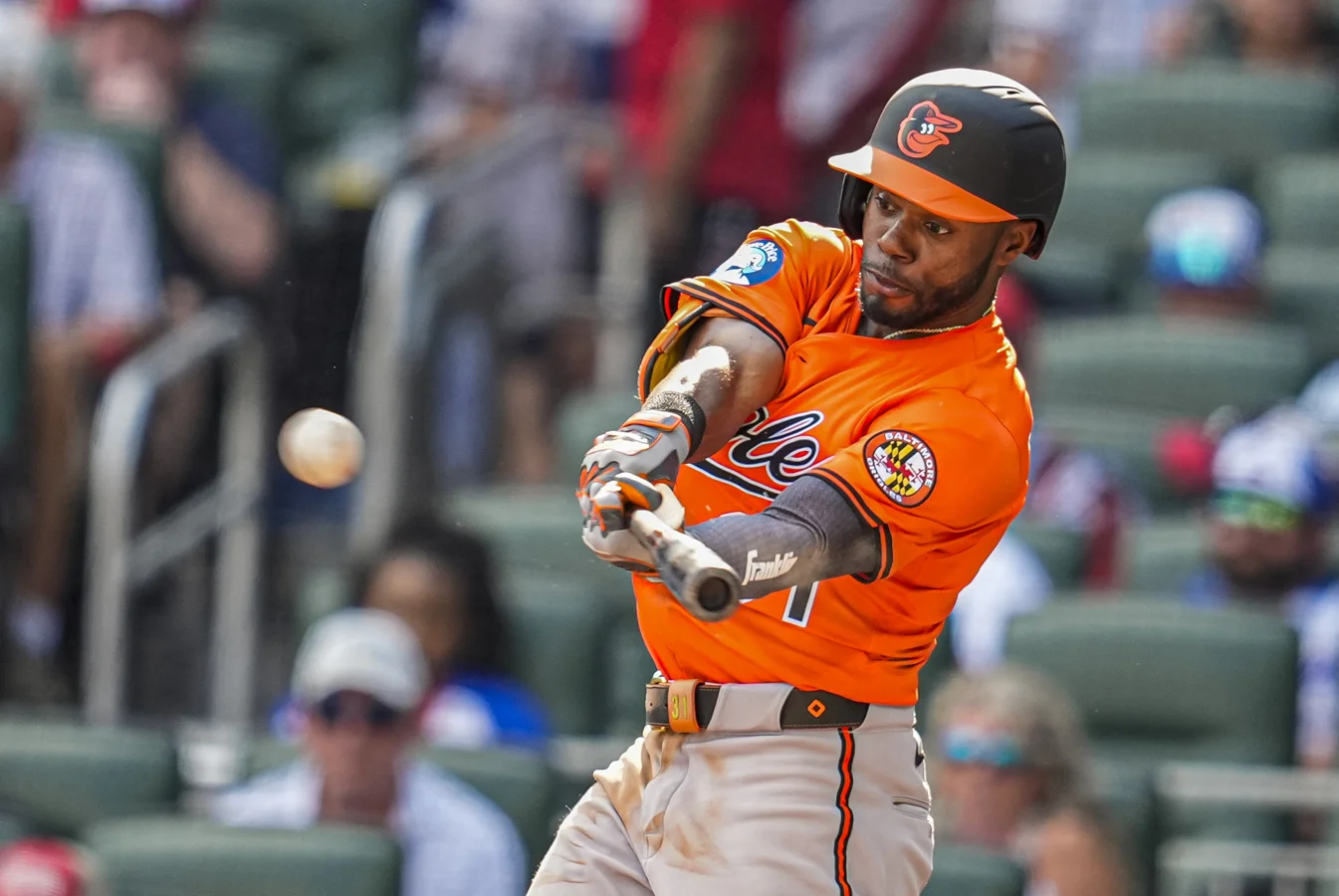

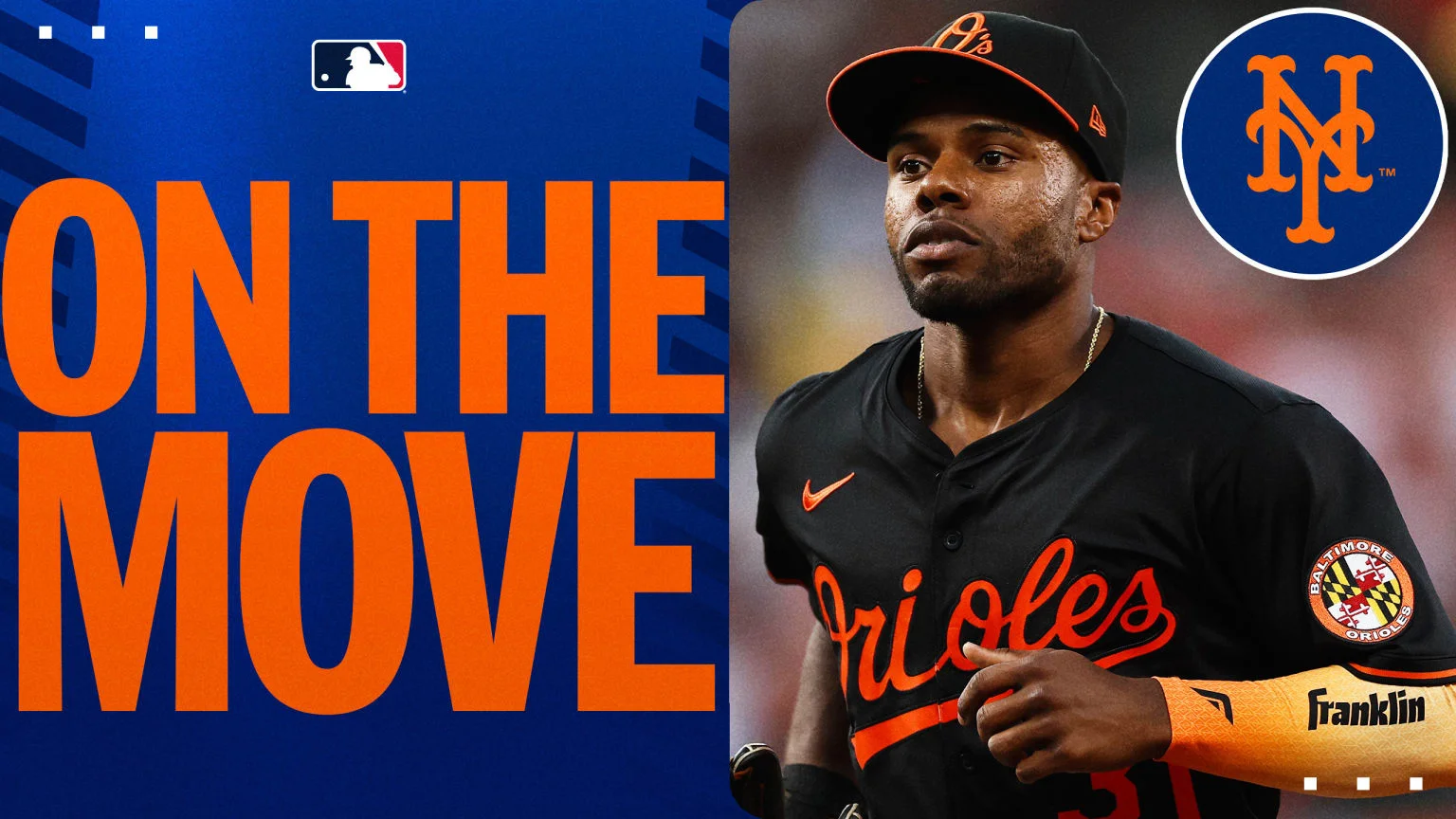
The New York Mets finalized their 2025 trade deadline by acquiring center fielder Cedric Mullins from the Baltimore Orioles, strengthening their lineup as the playoff race heats up. The deal, completed in late July, involved the Mets sending three pitching prospects to Baltimore in exchange for a proven everyday center fielder, addressing a key need on their roster.
First reported by Anthony DiComo, this move follows another recent trade between the two teams, highlighting their ongoing negotiations and mutual willingness to cooperate. Cedric Mullins, though a free agent after the season, is expected to provide the Mets with consistency and versatility in center, significantly impacting their offensive and defensive setups.
Cedric Mullins’ Role and Impact on New York’s Outfield
Mullins emerged as the Mets’ second option after talks for White Sox star Luis Robert Jr. stalled, shifting the team’s focus back to Baltimore. Previously, the Mets had acquired reliever Gregory Soto from the Orioles, making this their second major deal within days. Mullins brings experience as the Orioles’ five-year starting center fielder, including an All-Star season in 2021 marked by impressive offensive statistics and strong defensive output.
During his career year in 2021, Mullins posted a slash line of .291/.360/.518, with an OPS of .878 and 30 home runs, compiling 6.2 wins above replacement (bWAR). While his recent performance is below that peak, he remains a reliable major league hitter with solid defense in center field. In 91 games this season, Mullins is batting .229 with a .738 OPS, posting a slightly above-average OPS+ of 105 alongside 15 home runs and 14 stolen bases.
Despite his overall modest numbers so far, Mullins has heated up recently, hitting .321 with an OPS near .900 over his last 16 contests. His strong reverse splits are especially valuable, as a left-handed hitter batting .298 with an OPS of .866 against left-handed pitchers—a matchup where the Mets have generally struggled, hitting just .226 as a team.
Compared to the Mets’ current center fielder Tyrone Taylor, who carries a poor 60 OPS+ this year, Mullins offers a clear offensive upgrade without drastically compromising defense. Mullins ranks well at two outs above average in defense and clocks sprint speed in the 80th percentile, though Taylor remains the superior defender overall.
Prior to the trade, the Mets had experimented with Jeff McNeil in center field, with reasonable results. Still, bringing Mullins in allows New York to return McNeil to the infield, keeping his bat consistently in the lineup. This realignment opens a competition among Mark Vientos, Ronny Mauricio, and Brett Baty for the hot corner, filling a previously uncertain spot in the infield.
Mullins’ addition, while not headline-grabbing, strengthens the Mets’ offensive options and offers flexibility in fielding positions. Should his bat struggle, the Mets have the fallback of returning McNeil to center, while hopeful young infielders rise to meet the challenge at second and third base.
Prospects Sent to Baltimore Enhance Orioles’ Future
The Orioles received three pitching prospects in the swap, maintaining the balance of the Mets’ farm system as the deadline closed. The highlight of the return package is Anthony Nunez, who ranked as the Mets’ 14th best prospect according to MLB Pipeline. Despite being a converted pitcher from his original shortstop position, Nunez has excelled in his first full professional season, showcasing promising performance on the mound.
In 40 innings pitched across two minor league levels, Nunez boasts a 1.58 ERA coupled with an astonishing 60 strikeouts, indicating his potential as a power arm for Baltimore’s future. Alongside Nunez, the Orioles acquired Raimon Gomez, a fireball-speed reliever whose pitches have reached 104 mph. Though control has been an issue—he has walked 25 batters in 35 innings—Gomez impressed with a sub-1.00 ERA at Single-A before struggling at High-A.
The third piece, Chandler Marsh, was an unranked reliever within the Mets system but delivered solid results this year, registering a 2.57 ERA over two levels of A-ball. While none of these prospects rank among New York’s top five, all contribute important depth and upside for Baltimore’s rebuilding efforts.
Through these trades, the Mets succeeded in upgrading their major league roster without giving up their most prized prospects, maintaining a strong farm system as they contend for postseason success.
Mets Position Themselves for a Playoff Push
With the deadline now closed, New York’s roster is largely set for the stretch run of the 2025 season. Despite falling short of acquiring a starting pitcher, President of Baseball Operations David Stearns left open the possibility of promoting minor league arms like Nolan McLean or Brandon Sproat to bolster the rotation before season’s end.
The addition of Cedric Mullins offers a dependable presence in center field and addresses the Mets’ offensive struggles against left-handed pitching, while reintegrating Jeff McNeil into the infield increases lineup stability. The trio of young pitchers sent to Baltimore reflect the Mets’ strategy of acquiring immediate help without sacrificing long-term talent.
As the Mets seek to secure their first World Series title in nearly four decades, these moves demonstrate a calculated effort to strengthen key areas and enhance postseason prospects heading into a critical period of the season.