
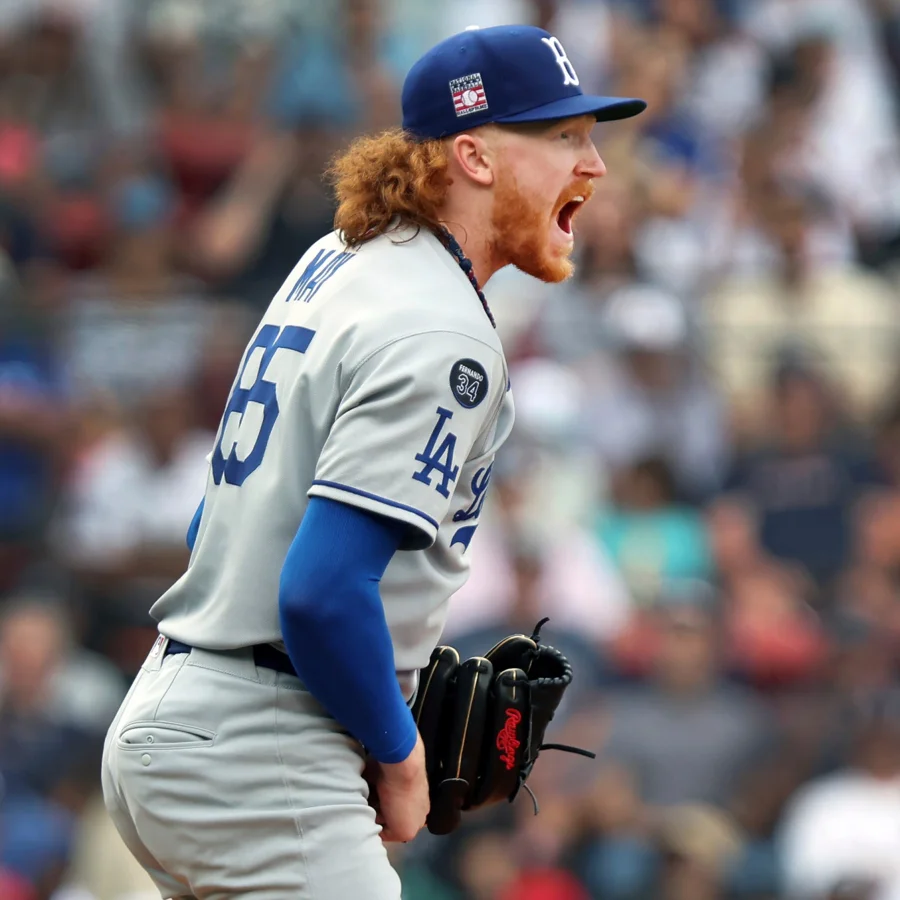

The Los Angeles Dodgers traded pitcher Dustin May to the Boston Red Sox on Thursday, acquiring two top outfield prospects in return, including second-generation player Zach Ehrhard, according to Christopher Smith of MassLive.com. This trade reflects the Dodgers’ strategic focus on building their future outfield talent through the Dustin May trade Dodgers prospect exchange.
Details on the Prospects Heading to Los Angeles
Zach Ehrhard, 22, was a fourth-round pick by the Red Sox in 2024 and has shown steady development as an outfielder. In 57 games with Double-A Portland, he recorded a .232 batting average with a .310 on-base percentage and a .420 slugging percentage. Ehrhard’s athleticism was especially evident during his time at Oklahoma State University, where he was a three-year starter for the Cowboys.
Adding to the pedigree, Ehrhard comes from a baseball family; his father, Rod Ehrhard, spent four years in the New York Yankees’ minor league system during the late 1980s. Zach’s older brother, Drew, who also played baseball at the University of Tampa, previously signed with the Red Sox, and both brothers were teammates in Portland before the trade.
Before the 2025 season, Ehrhard started strong at advanced Class-A Greenville, boasting a .342 batting average with a .471 on-base and .459 slugging in 31 games, earning a promotion to Double-A.
James Tibbs III: The Crown Jewel of the Trade
Alongside Ehrhard, the Dodgers are set to acquire James Tibbs III, a highly regarded outfielder reportedly obtained from the Red Sox. Tibbs was originally acquired by Boston from the San Francisco Giants as part of the Rafael Devers trade, and he was the 13th overall pick in last year’s draft. Considered Boston’s No. 5 prospect by MLB Pipeline, Tibbs represents a significant addition for Los Angeles, raising the stakes in this prospect-for-veteran deal.
The Los Angeles Dodgers are acquiring outfield prospect James Tibbs III from the Boston Red Sox, according to a source familiar with the deal. Tibbs was acquired by the Red Sox from the Giants in the Rafael Devers trade.—Robert Murray, Baseball Analyst
Although the trade has not been officially confirmed by either team, reports suggest that additional players could be involved beyond the three currently noted.
Implications for the Dodgers’ Current Roster and Strategy
The Dodgers surrendered May, who recorded a 6-7 record with a 4.85 ERA across 19 appearances (18 starts) this season. May was expected to transition into a bullpen role for the Dodgers as they prepare to activate Blake Snell from the injured list, who is optimistic to start Saturday in Tampa.
With a rotation boasting the health of Yoshinobu Yamamoto, Tyler Glasnow, Clayton Kershaw, and Shohei Ohtani, plus emerging arms like Emmet Sheehan, who has compiled a 2-2 record with a 3.60 ERA since returning from injury, the Dodgers’ pitching depth appears solid. This likely influenced their willingness to part with May in exchange for outfield prospects aimed at the long term.
The Dodgers’ decision to part with May also reflects the player’s impending free agency at the season’s end and his anticipated diminished role for the remainder of 2025, making the investment in Tibbs and Ehrhard a calculated move to bolster the organization’s future potential.
Prospects Face High Expectations Moving Forward
Though enthusiastic about their acquisitions, the Dodgers acknowledge that both Tibbs and Ehrhard may require several years of development before reaching the majors, if at all. The trade underscores the balance Los Angeles is striking between current pitching needs and fostering promising talent for upcoming seasons.
Given the Dodgers had received interest from multiple teams regarding May over the years, and had backed him through fluctuating performance and injuries, the return they secured adds tangible hope that this trade will pay dividends down the line.
The pressure on Tibbs and Ehrhard to justify the Dodgers’ confidence in this deal is significant, and their progression will be closely watched as the season advances.
Looking Ahead: What the Trade Means for the Dodgers
This trade marks a strategic pivot as the Dodgers prioritize nurturing future outfield stars over maintaining a veteran pitcher whose role was evolving. It could reshape the organization’s prospects’ depth chart and influence roster decisions in the coming years.
With the presence of seasoned pitchers already healthy and the prospect pipeline now enriched, Los Angeles appears poised to focus more on long-term competitive sustainability.
J.P. Hoornstra, an experienced reporter with two decades covering MLB and the Dodgers, notes the significance of these changes in the context of the Dodgers’ broader team-building approach.