
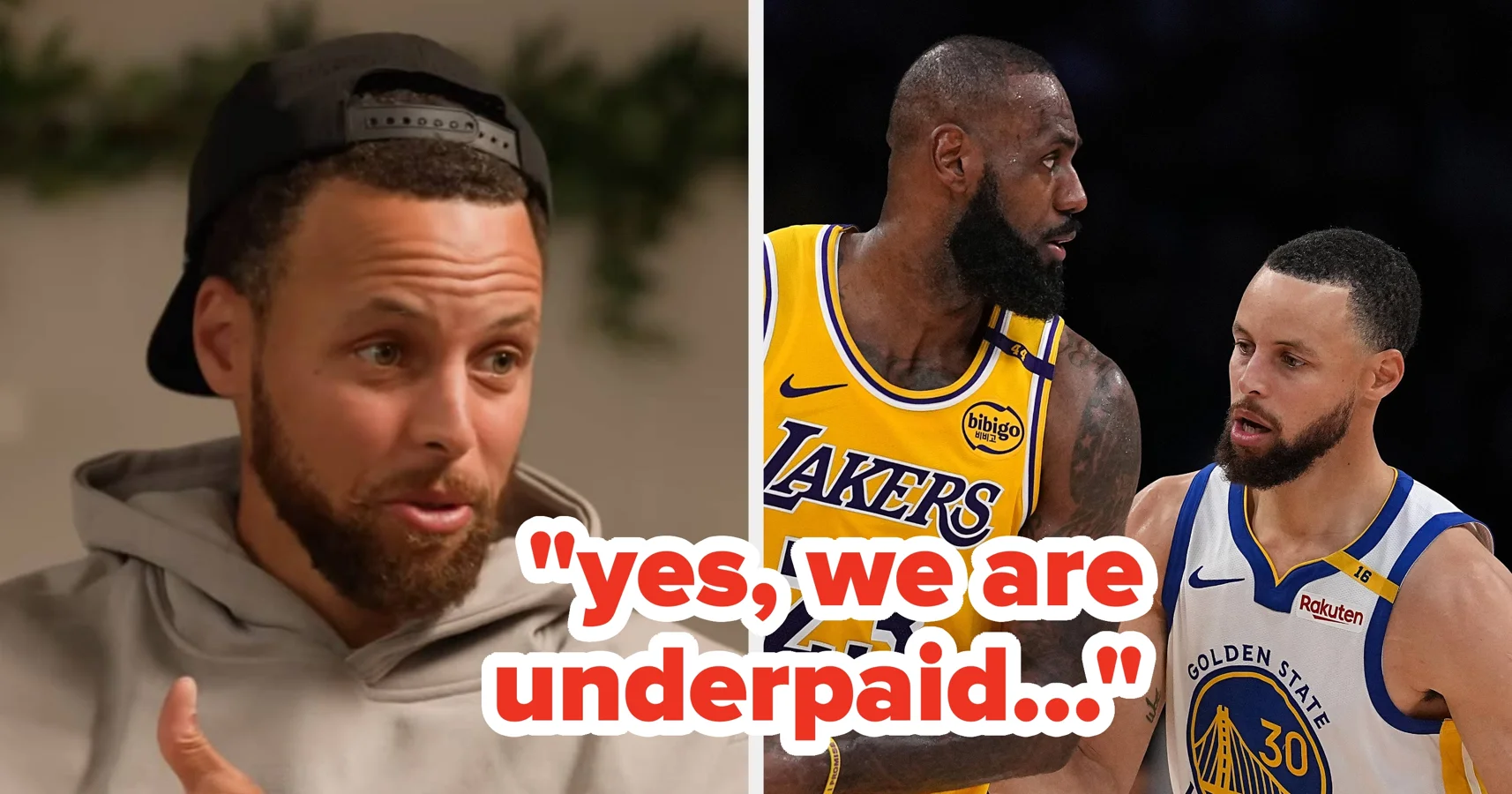

Stephen Curry, widely regarded as one of the greatest NBA players in history and a key figure in the three-point shooting era, recently voiced concerns about player compensation. Despite his immense earnings and the league‘s financial growth, Curry explained that current restrictions on equity ownership prevent players from fully benefiting from the NBA’s rising valuations.
Over the past decade, the NBA’s value has surged dramatically, largely influenced by stars like Curry and franchises such as the Golden State Warriors. The Warriors alone were purchased by Joe Lacob in 2010 for $450 million and are now valued at approximately $9.4 billion, reflecting the league’s expanding financial landscape.
NBA Franchise Values Skyrocket Over the Past Decade
The tremendous increase in franchise valuations illustrates the league’s growth. In 2011, top franchises were valued at amounts under $700 million, while projections for 2025 show multiple teams valued in the billions. For example, the Toronto Raptors were worth just under $400 million in 2011 but have grown substantially alongside others like the Dallas Mavericks, Miami Heat, and New York Knicks, each surpassing multi-billion dollar valuations.
The rise has not been limited to just one team, with notable franchises such as the Boston Celtics, Houston Rockets, and Chicago Bulls following the same trajectory, reinforcing the immense commercial success and popularity the league has enjoyed.
Curry Calls for Greater Player Participation in Team Equity
While players’ salaries have increased alongside the league’s growth, Curry argues that the current collective bargaining agreement (CBA) restricts players’ ability to share in the league’s financial upside through equity ownership. During an interview with Complex journalist Speedy Morman, Curry explained that these restrictions result in players being undercompensated relative to the league’s expansion.
He said,
“I think, because of the way the CBA is structured right now, we can’t participate in equity. And that’s a big deal because it is a partnership with ownership. It’s a partnership with the league, and we’re on the short term of that revenue. Those [contract] numbers sound crazy, but what the league is doing, from whatever era you want to compare it to, to now, is probably 10x that.”
—Stephen Curry, NBA Player
He continued,
“The idea that we can’t participate in equity while we’re playing is part of why I would say yes, we are underpaid, because we want to be able to participate in that rise. Hopefully, sooner than later, those rules change a little bit so that players can participate more in the upside of team equity, the league, valuations, and all that type of stuff. Just because I think we deserve it.”
—Stephen Curry, NBA Player
These comments emphasize Curry’s belief that players should have a stake in the financial growth generated by their efforts on and off the court, highlighting a gap in the current player compensation structure.
Current CBA Restrictions Limit Player Equity Stakes Until 2030
The NBA and the National Basketball Players’ Association recently negotiated a new CBA to run through 2030. While this agreement allows players to own minority shares in teams, it places strict limitations on these stakes. According to the terms, any equity ownership cannot exceed 5 percent and must be held through NBA-approved investment funds, severely limiting direct ownership opportunities for players.
These rules are at the core of Curry’s concerns, as they restrict how players can share in the financial upside from growing franchise valuations, thereby limiting additional income opportunities beyond salaries and endorsements.
Financial Growth of the NBA Supports Calls for Increased Player Earnings
Despite some drops in viewership, the NBA remains on a strong financial footing, with franchise values and league revenues expanding rapidly. This growth suggests ample room for players to negotiate for a larger portion of the league’s increasing wealth, particularly as teams continue to appreciate in value.
The debate over player compensation and equity participation is likely to gain momentum as the current CBA approaches its expiration in 2030, potentially leading to new negotiations focusing on expanding players’ financial rights within the league’s business model.