
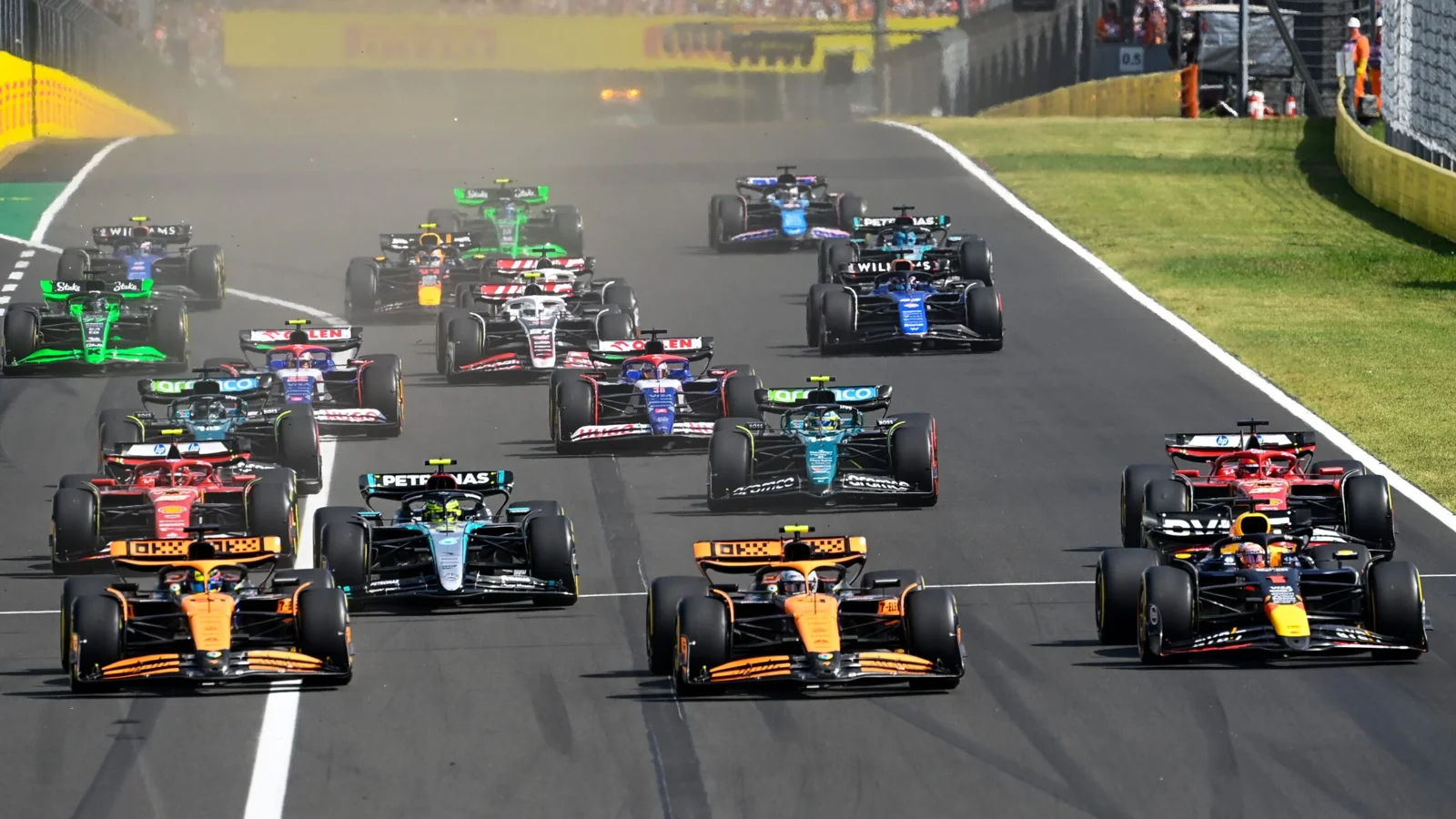

Red Bull, Racing Bulls, and Aston Martin are the only Formula 1 teams to submit new updates for the 2023 Hungarian Grand Prix, as the pace of developing 2025-spec cars has slowed ahead of the summer break. The upgrades specifically address the unique requirements of the Hungaroring circuit, which demands high downforce due to its collection of slow to medium-speed corners.
At Hungaroring, teams prioritize aerodynamic modifications to maximize grip and balance in corners, as the nature of the track requires more downforce than many other venues on the F1 calendar.
Red Bull Enhances Front Wing and Brake Cooling
Red Bull has introduced a new upper front wing element with an extended chord length, which increases aerodynamic load on the car’s front end more efficiently. This is balanced by the team’s already planned higher-downforce rear wing to maintain overall car stability.
Additionally, Red Bull has expanded the front brake cooling ducts to address the anticipated rise in brake temperatures throughout the race weekend, a key consideration given the harsh thermal conditions expected at Hungaroring.
Aston Martin Advances Front Wing Design Ahead of Hungarian GP
Aston Martin has developed a more aggressive front wing flap design to complement the version launched at the Belgian Grand Prix. This adjustment aims to improve front-end downforce and aerodynamic balance around the demanding corners of the Hungaroring.
On the topic of the team’s preparations, notable race weekend moments have included changes such as driver substitutions, with Drugovich stepping in during practice sessions, reflecting ongoing adaptations within the team setup.
Racing Bulls Prioritize Cooling and Surface Flow Adjustments
Racing Bulls opted not to alter their front wing but instead focused on revising the surfaces around the front brake drums to enhance airflow in that area. This revision is designed to optimize cooling performance specific to Hungaroring’s lower average speeds.
The Italian squad also introduced new engine cover panels with expanded cooling louvres, allowing improved heat extraction when air mass flow is reduced during slower laps.
Other Teams Manage Wing Settings and Suspension Configurations
Most other teams, including Mercedes, are expected to adapt existing aerodynamic packages, starting from downforce levels similar to their Monaco setups before fine-tuning for the Hungaroring demands. Mercedes is stepping back from the new suspension package deployed at Imola, reverting to earlier configurations used at Monaco and Barcelona before switching back to the newer setup in Canada.
Expectations for Race Weekend Conditions and Car Performance
Temperatures on race weekend are forecast to surpass 30 degrees Celsius, encouraging teams to run wider cooling panels to maintain component reliability under heat stress. These environmental demands reinforce the necessity of the high downforce updates that teams have brought to the Hungarian GP, emphasizing the challenge of balancing aerodynamic efficiency with thermal management for optimal race performance.