
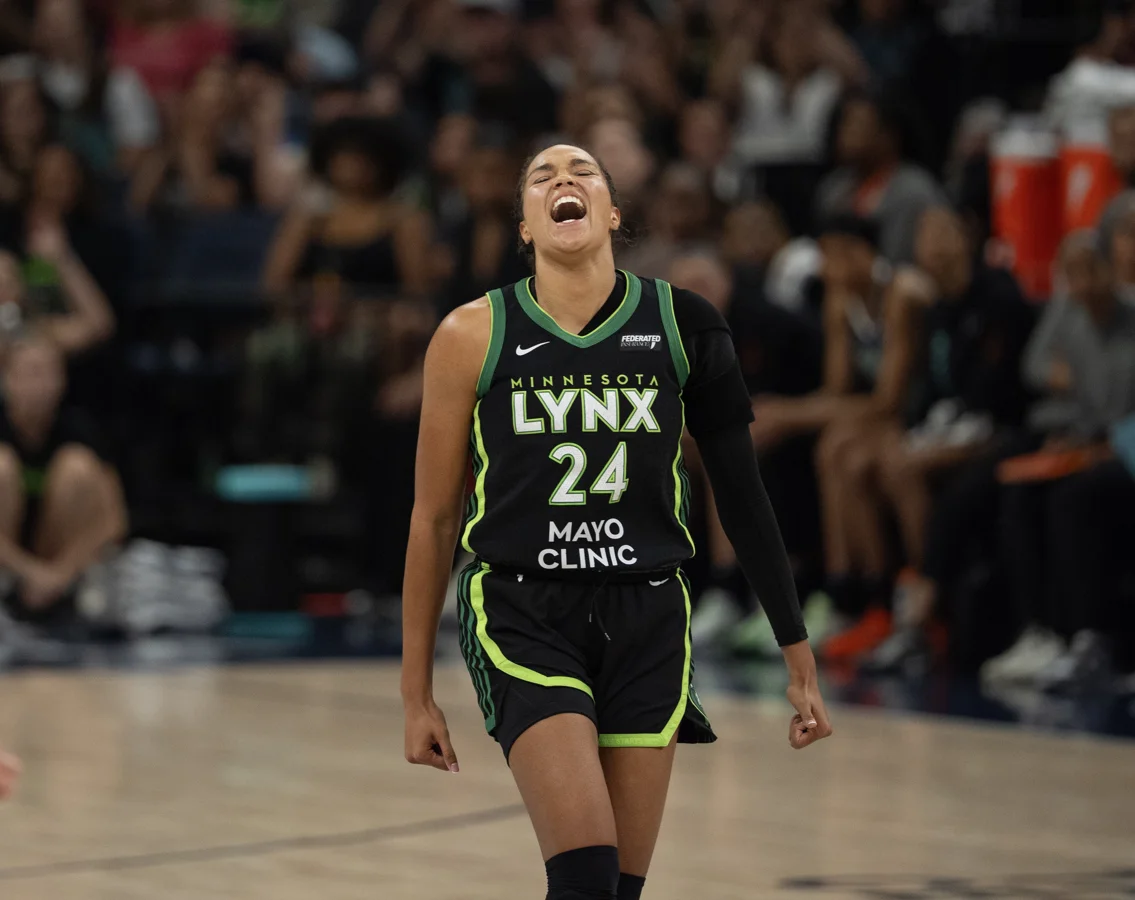

On July 14, 2025, during a game between the Minnesota Lynx and Las Vegas Aces at Wintrust Arena in Chicago, Napheesa Collier sustained a right foot or ankle sprain. Despite the injury occurring while the Lynx held a commanding lead, Collier remained on the court before eventually leaving the game slowly and with assistance. The incident has raised questions about player safety and coaching decisions in the WNBA.
Details of Collier’s Injury and On-Court Movement
Although Napheesa Collier was not carried off the court, observers noted that she appeared uncomfortable while walking. According to sports reporter Kendra Andrews, Collier made her way to the locker room “very slowly and gingerly” after the injury. Camera footage captured her moving with clear caution, which sparked concern about the severity of the sprain and potential long-term effects.
“Napheesa Collier walks off the court under her own power — but with assistance — after an apparent right foot/ankle sprain. Camera shots show her moving back to the locker room very slowly and gingerly.”
—Kendra Andrews, Reporter
Coaching Decisions Under Scrutiny Following Injury
The decision by Minnesota Lynx head coach Cheryl Reeves to allow Collier to stay in the game despite holding a lead of more than 40 points has drawn criticism. Fans and analysts argue that the substantial point difference at the time of the injury made it unnecessary to risk the health of a star player, especially one considered an MVP candidate. The issue has ignited a broader debate about prioritizing player welfare over competitive advantage in professional women’s basketball.
Implications for Collier and Team Moving Forward
As of now, the exact prognosis for Napheesa Collier’s foot or ankle injury remains undetermined. The Minnesota Lynx, who rely heavily on Collier’s performance, face potential challenges if she is sidelined. Given the ongoing evaluation of her condition, the team and coaching staff will need to balance recovery time with competitive goals as the season progresses.
Concerns over how this injury occurred and the timing of Collier’s continued play may lead to increased scrutiny of coaching strategies in the WNBA. Ensuring player safety during games, especially during uneventful leads, is likely to become a focal point in discussions about league policies and team protocols.