
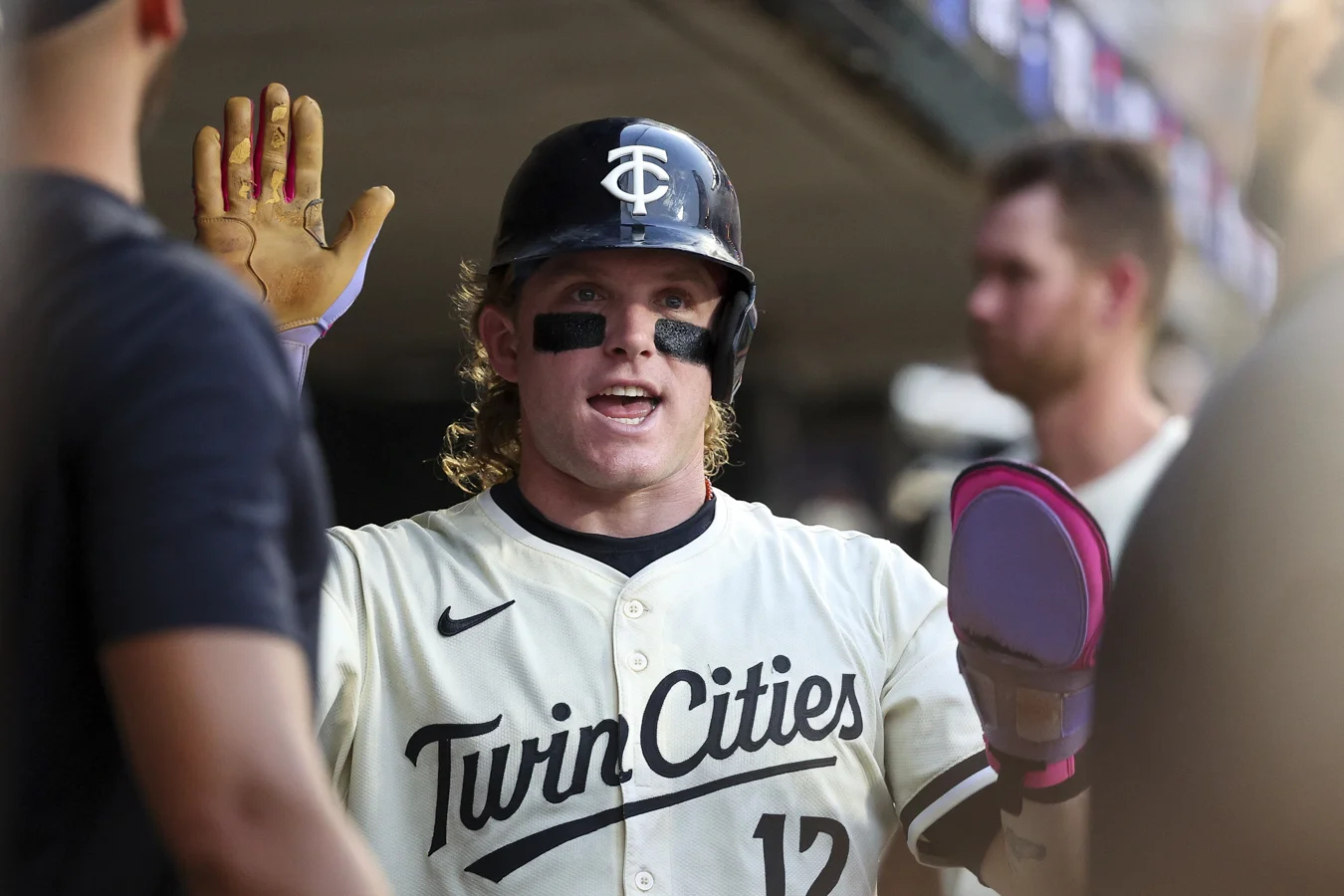

In a surprising move just before the MLB trade deadline, the Houston Astros reacquired three-time All-Star infielder Carlos Correa from the Minnesota Twins, the team where Correa spent the first seven seasons of his career. The trade sent pitching prospect Matt Mikulski to Minnesota, with the Twins agreeing to retain $33 million of the $103.4 million left on Correa’s contract. This trade, pegged as a salary dump by the Twins, was detailed further by USA Today’s Bob Nightengale.
Earlier Discussions Included Christian Walker in Trade Negotiations
Before finalizing the deal involving Mikulski, the Astros and Twins reportedly discussed including veteran first baseman Christian Walker as part of the players heading to Minnesota in exchange for Correa. However, the Twins declined the offer to take on Walker’s sizable contract, which includes two remaining years and about $40 million in salary. Given the Twins’ financial struggles, including a reported loss of $40 million this year and debt exceeding $400 million, taking on Walker’s contract was viewed as an impractical move.
Financial Considerations Behind the Twins’ Decision
The financial burden of Walker’s contract likely deterred the Twins, despite his veteran status and possible on-field contributions. Walker’s 2025 season performance, featuring a 96 wRC+ and 0.6 fWAR, showed just average output, which combined with his age of 34 made the contract unattractive for a team entering a rebuilding phase. The Twins appear to prefer shedding salary rather than absorbing larger financial commitments amid their effort to restructure the roster.
First Base Position Challenges for the Twins
While Walker’s addition could have addressed a pressing need in Minnesota, the first base position remains uncertain for the club. Currently, Kody Clemens holds the role and has shown power with 12 homers in 65 games, but his overall career wRC+ of 82 suggests he may struggle to sustain such production long term. Other options like Edouard Julien and Jose Miranda have had major league success but largely spent 2025 in the minors due to inconsistent performance. The Twins’ lack of a stable, long-term solution at first base highlights why Walker, despite his limitations and cost, might have been seen as a steady veteran presence.
Balance Between Veteran Leadership and Upside Prospects
Walker’s experience might have also provided the Twins with leadership after losing Correa and other clubhouse veterans, leaving Byron Buxton as one of the few remaining leaders. However, Walker’s upside remains limited; even at his peak with the Diamondbacks, his wRC+ hovered around 120. The Twins appear more inclined to explore younger, less expensive options during their rebuild, hoping for a more dynamic middle-of-the-order player to emerge in coming seasons rather than commit to Walker’s aging profile.
Potential Future Moves for Christian Walker with the Astros
Though the Twins passed on Walker, reports suggest the Astros may shop him during the upcoming offseason to clear space for infielder Isaac Paredes at first base in 2026. The Astros’ roster situation plays a major role in this decision. Previously considered for second base, Paredes’s defensive capabilities beyond first base have drawn skepticism, and the signing of Correa to play third base alongside Jeremy Pena crowds the infield, leaving limited options for Paredes elsewhere on the left side.
Isaac Paredes Expected to Move to First Base
Paredes brings valuable offense, hitting .259/.359/.470 with 19 home runs and 15 doubles in 96 games for Houston this year. Despite a probable end to his 2025 season due to injury, his bat remains significant to the Astros’ lineup. Given his control through 2027 and the addition of Correa at third base, the move to first base appears logical for Paredes in 2026, creating a need for roster adjustments that could render Walker expendable.
Christian Walker’s Performance and Contract Implications
Walker’s time in Houston has not met expectations since signing a three-year, $60 million contract before the 2025 season. Early struggles were noted by MLBTR’s Mark Polishuk, though the player showed improvement more recently with a .288/.352/.466 slash line and 129 wRC+ over 186 plate appearances. Nonetheless, Walker’s age and expensive contract continue to make his trade appeal limited, especially as signs of decline emerge.
Offseason Trade Prospects and Roster Options for the Astros
Finding a trade partner for Walker could be difficult, but teams seeking help at first base might enter discussions if the Astros agree to retain part of his salary. Walker’s performance down the stretch and into the postseason will heavily influence his market value and potential trade feasibility.
If suitable offers fail to materialize, the Astros face several less ideal alternatives. Paredes might see some time at second base despite defensive concerns, or Walker might fill DH duties when Yordan Alvarez is in the outfield. Another possibility includes trading Paredes for a controllable outfielder, though such options remain speculative. The Astros have previously cut loose veterans who no longer fit team plans, as seen with Jose Abreu, but Walker would likely need to experience a significant downturn for Houston to consider that approach.