
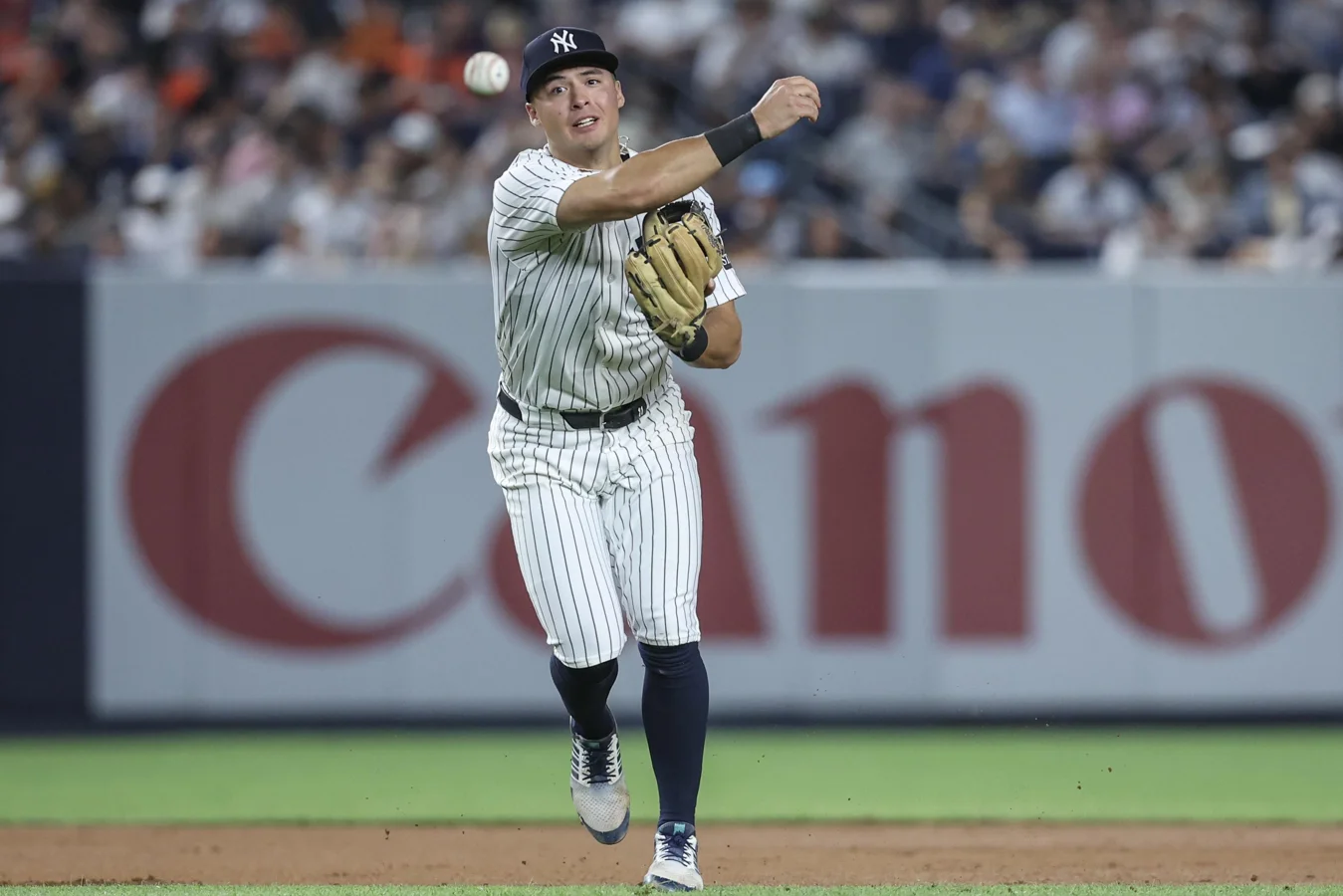

On May 9, 2024, New York Yankees shortstop Anthony Volpe made headlines at Yankee Stadium by hitting a single against the Houston Astros, amidst a season that has become a critical point for the team. Volpe, notable this season for leading key home run statistics over high-profile players such as Bryce Harper and Vladimir Guerrero Jr., remains under intense scrutiny despite his notable power numbers. The Anthony Volpe <a href=”https://www.buzzineintl.com/category/baseball/mlb/”>MLB key stat of 17 home runs has not been enough to shift fan sentiment in his favor amid broader concerns about his overall performance.
Yankees’ Season at a Crossroads Amid Volpe’s Mixed Performance
The New York Yankees find themselves grappling with a difficult phase this season after suffering an unprecedented sweep by the Miami Marlins, a first in the franchise history of the Florida-based team. The loss came over three games marked by a wild 13-12 defeat, a 2-0 shutout, and a 7-3 final game setback. Despite the team’s struggles, Anthony Volpe stood out by going 4-for-5 with a home run in the opening game of the series, marking his 17th homer of the season. Nonetheless, the Yankees hold a 60-52 record and trail the division leader by 4.5 games, fighting to stay competitive in the Wild Card race.
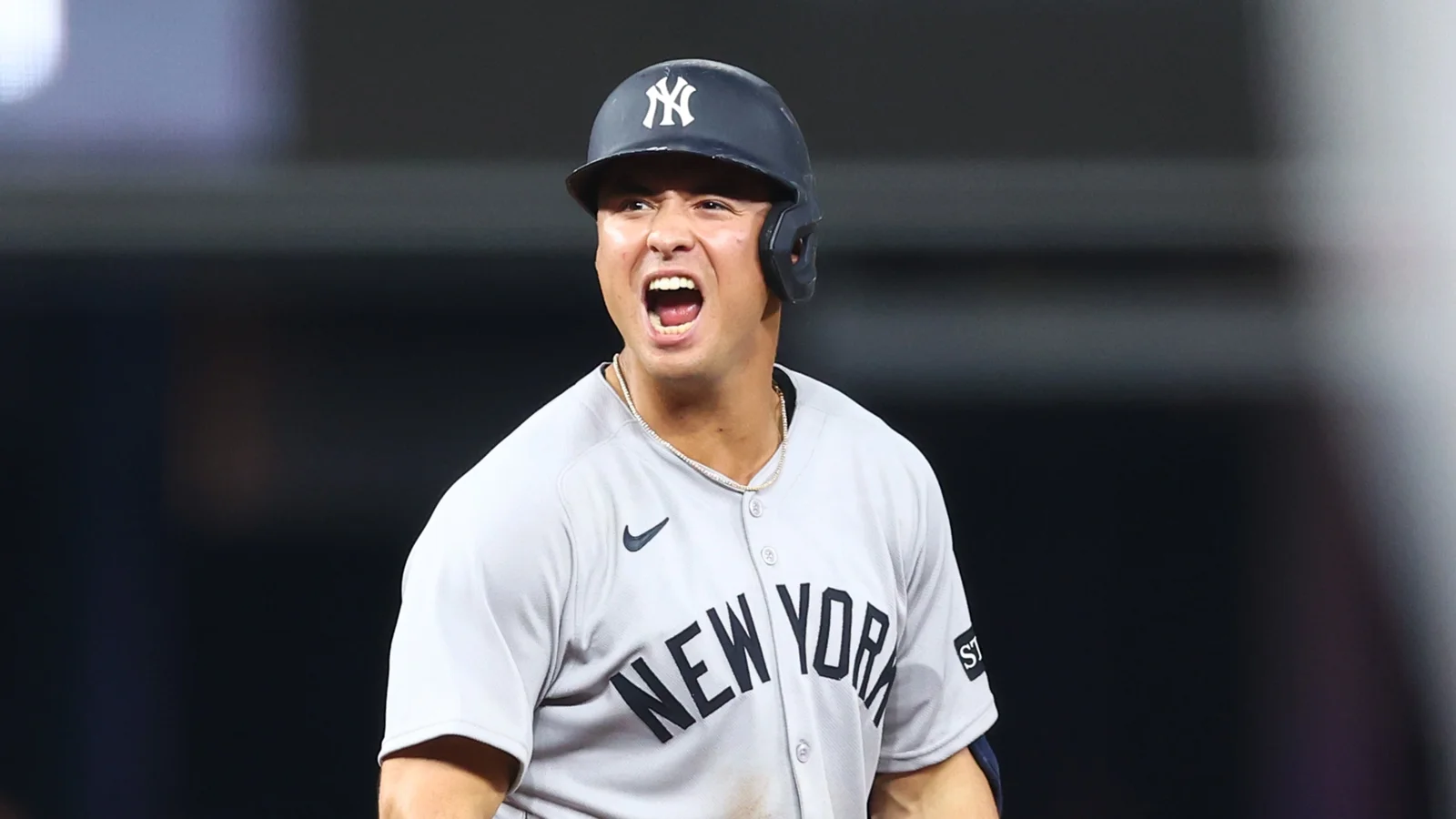
While Volpe’s home run tally is impressive on the surface, it has not quelled the concerns over his overall contribution to the team this season. His batting average sits at a low .221, accompanied by a subpar .289 on-base percentage, reflecting a dip in offensive consistency. More alarming to fans and analysts is his defensive slide; Volpe, once known for Gold Glove-quality fielding, now leads all MLB shortstops with 16 errors – a drastic fall-off from his previous standards that has further unsettled the fanbase and coaching staff.
Examining the Home Run Numbers in Context
A social media post by The Yankee Report highlighted Volpe’s home run advantage over noted power hitters Vladimir Guerrero Jr., Bobby Witt Jr., Teoscar Hernandez, Bryce Harper, and Marcel Ozuna, underscoring his 17 homers compared to their totals. However, followers quickly pointed out that home run counts alone do not capture a player’s overall effectiveness on the field.
For example, Guerrero Jr. and Harper, with 16 home runs each, outperform Volpe significantly in batting average and on-base percentage. Guerrero Jr. boasts a .292 batting average and a .397 OBP, while Harper follows with a .269 average and a .375 OBP. Both are far more productive in generating runs and sustaining offensive pressure. Volpe’s OPS+ (On-base Plus Slugging Plus) of 96 falls below the league average of 100, signaling that despite leading in home runs among shortstops, his overall offensive output is less than average. In contrast, Guerrero Jr. and Harper demonstrate OPS+ figures of 140 and 138 respectively, highlighting their substantial contribution to run creation.
Fan Reactions Reflect Frustration Beyond Home Run Stats
The fans’ reactions to Volpe’s home run lead have been largely indifferent or critical, as many dismiss 17 homers in a league where players are posting record-breaking numbers. One fan pointed to Seattle Mariners catcher Cal Raleigh’s MVP-caliber season, with 42 home runs, diminishing the impression made by Volpe’s power display. The conversation quickly shifted toward Volpe’s defensive frailty, where his 16 errors stand out as a glaring shortfall.
Moreover, some fans have voiced skepticism about the Yankees’ focus on home runs as a dominant measure of player value. One commenter encapsulated this by asking,
“Of those 5, plus volpe, who has the highest BA, OBP, RBI, OPS etc? This post is what I feel is the Yankees problem. There’s more to the game than HRs but that’s all they care about.”
—Fan Commentator
This sentiment aligns with statistical evidence showing Volpe’s metrics lag behind his power-hitting contemporaries, further fueling disappointment within the Yankees’ fanbase.
The critique extends to comparisons with former players who displayed similar traits but failed to deliver sustained success. Another fan reflected on Joey Gallo’s trajectory:
“Joey gallo hit more homers than a lot of people too. Where’s he at right now??”
—Fan Commentator
Gallo’s tenure with the Yankees was marked by an impressive home run count but a notoriously low batting average of .159, contributing to a career downturn and an eventual shift to pitching attempts. This historic context has caused fans to view Volpe’s home run achievement with caution and skepticism.
A final portion of the fanbase questioned the logic of comparing Volpe with established stars, highlighting the rarity and financial implications of such players:
“If you could trade Tony Volpe for any of the players you listed, would you do it?”
—Fan Commentator
The answer, practically unanimous, is yes—yet no such trade is feasible due to the massive salary differences. Volpe is earning near-minimum wages, while stars like Harper, Guerrero Jr., and others negotiate contracts worth hundreds of millions, making any direct swap unrealistic.
Implications for the Yankees and Volpe’s Future
Anthony Volpe’s combination of leading MLB shortstops in home runs while simultaneously displaying defensive challenges highlights a complex situation for the Yankees. His power hitting provides some offensive sparks but does not compensate for his regression in areas that once defined him as a valuable player. With the team struggling to maintain playoff positioning, the ongoing tension between his statistical home run success and overall contribution remains a focal point of debate.
As the season progresses, Volpe’s ability to correct his defensive mistakes and improve his batting consistency will likely determine his value to the Yankees and impact the club’s chances in the postseason. Fans and analysts alike are monitoring whether Volpe can translate his raw power into consistent production without sacrificing the fielding skills that once made him a standout.
Meanwhile, the Yankees face mounting pressure on multiple fronts, including leadership decisions and financial commitments, as they eye their ambitions in a challenging MLB landscape. The evolving narrative around Anthony Volpe MLB key stat reflects broader questions about how value is measured in baseball, balancing power numbers against all-around performance and reliability.