
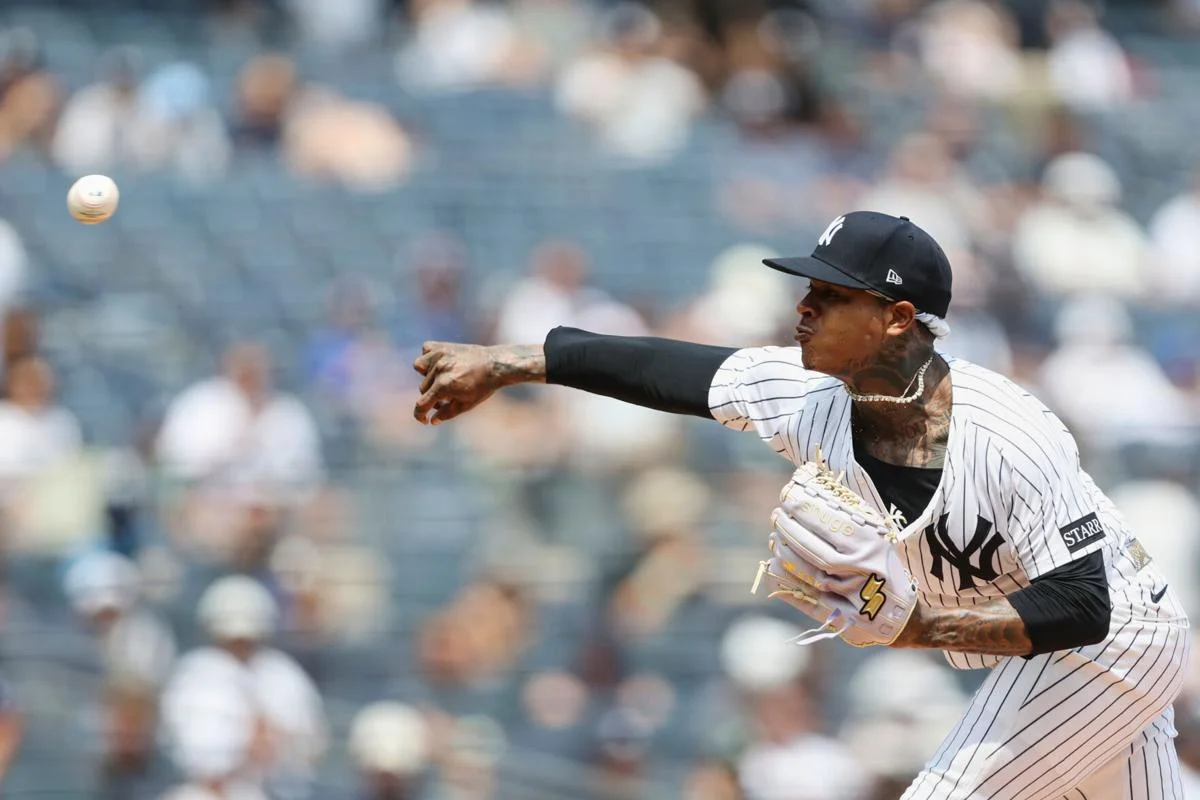

The New York Yankees decisively ended their relationship with right-handed pitcher Marcus Stroman shortly after the July 31 trade deadline, opting to remove him from the roster as they restructure their pitching staff. This move comes amid the team‘s active efforts to improve various positions, particularly their bullpen and infield, but notably without adding a new starting pitcher. The Marcus Stroman Yankees release signals a strategic pivot toward younger, developing arms in the rotation behind veterans Max Fried and Carlos Rodón.
Stroman, 34, struggled to regain form during his season-and-a-half run with the Yankees. Despite 38 starts and one relief appearance totaling nearly 194 innings since early 2024, his performance reflected a decline, hindered further by an 11-week injury absence due to left knee inflammation. His 6.23 ERA and 5.15 FIP in 39 innings this year, coupled with only one quality start in nine appearances, showed a sharp downturn from expectations at the contract signing.
Performance Decline and Injury Challenges Led to Stroman’s Exit
Marcus Stroman’s diminished role in the Yankees’ rotation was a direct result of both underperformance and roster competition from returning prospect Luis Gil. Gil, who earned AL Rookie of the Year last season but missed months due to a high-grade lat strain, reclaimed his place in the rotation upon returning in mid-July. Although his first start back against the Miami Marlins was rocky, with command issues and multiple runs allowed, the Yankees prioritized fresh, high-upside arms over Stroman’s diminishing returns.
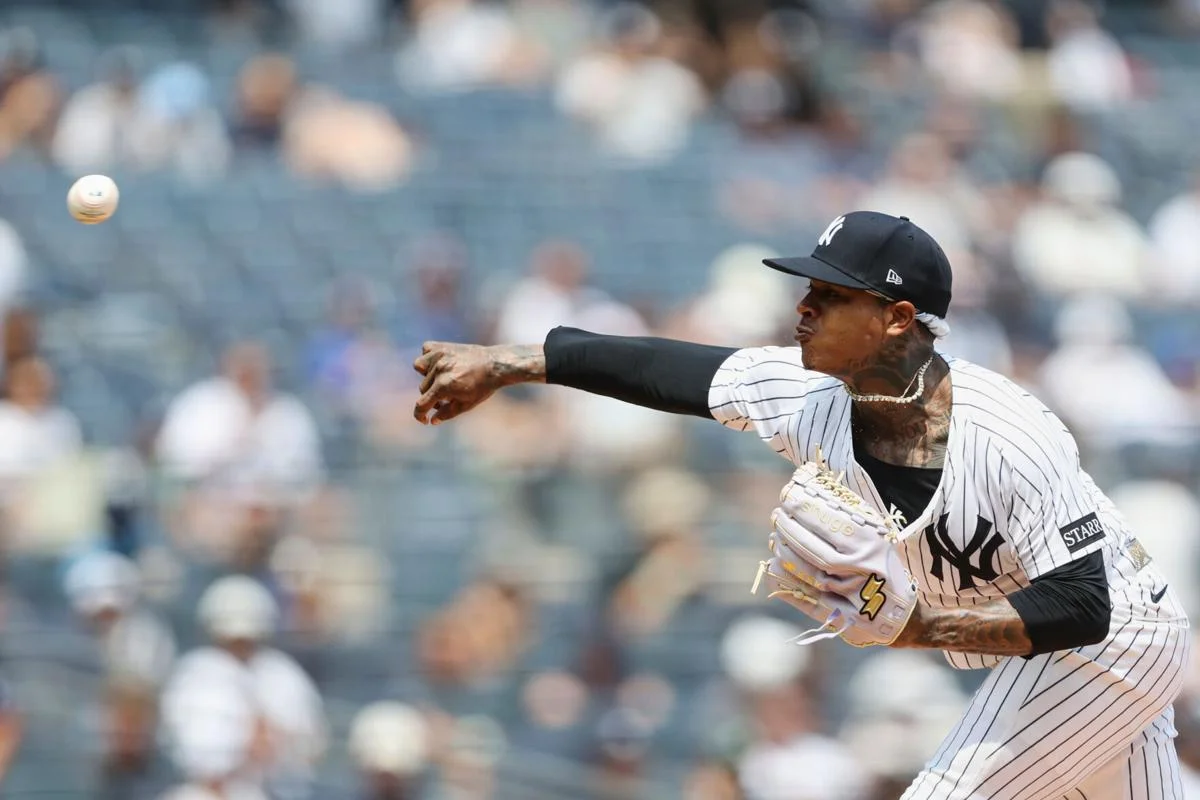
Stroman’s struggles trace back to his signing in January 2024, when the Yankees inked him to a two-year, $37 million deal after losing out on Yoshinobu Yamamoto, who committed to the Dodgers. Stroman entered the Yankees’ rotation coming off an uneven 2023 season with the Cubs, which included All-Star honors in the first half but was marred by injury and a severe drop in second-half effectiveness. With the Yankees, Stroman’s metrics worsened—his strikeout rate dropped to 16.7%, he allowed more home runs than any prior season, and his ERA remained below league average.
Through the start of this season, Stroman registered a 14.9% strikeout rate and a troubling 9.1% walk rate, alongside an increased homer rate. His inability to limit hard contact intensified, with his barrel rate rising significantly from the previous season, indicating batters were connecting more solidly against his pitches. This deterioration coincided with persistent velocity loss—his sinker velocity sank steadily from the mid-90s earlier in his career down to under 90 mph this season—contributing to the declining quality of his repertoire.
Young Pitchers Step Up as Yankees Shift Focus
With Stroman released and Carlos Carrasco traded for cash considerations, the Yankees are turning to younger pitching prospects to fill gaps exacerbated by injuries to Gerrit Cole and Clarke Schmidt, both sidelined by Tommy John surgery. Luis Gil, returning from injury, showed flashes of his potential despite an uneven comeback, maintaining a fastball velocity around 96 mph, close to his last healthy season’s pace.
Rookie right-handers Will Warren and Cam Schlittler are also key components of the Yankees’ hope for revitalizing their rotation and relief corps. Warren, ranked 65th among prospects with a 50 FV, has struggled with consistency, posting a 5.34 ERA and six home runs allowed in July, potentially indicating fatigue. Schlittler, a tall righty who has progressed rapidly in velocity, averaged nearly 98 mph on his fastball but has had control issues, as shown by his 5.95 FIP and slugging percentages against his secondary pitches. While raw talent is evident in both, their execution still requires refinement to stabilize the pitching staff.
Current Starting Rotation and Bullpen Makeover Underway
The Yankees’ 40-man pitching roster currently features few starting options beyond the young arms, Allan Winans, who has struggled to maintain effectiveness, and Ryan Yarbrough, rehabbing an oblique injury. Despite a lower velocity fastball, Yarbrough remains effective at suppressing hard contact, thanks to exceptional control, positioning him as a valuable bullpen asset once healthy.
General manager Brian Cashman’s aggressive approach at the trade deadline focused heavily on relievers, acquiring David Bednar, Jake Bird, and Camilo Doval to shore up a bullpen that ranked last in the American League in June across key pitching metrics. However, the bullpen’s initial performances after the deadline underwhelmed, with costly control lapses and defensive miscues contributing to defeats and raising concerns about the unit’s stability heading into an intense stretch of the season.
Manager Aaron Boone called upon the new bullpen additions promptly, but all three relievers struggled in their debuts, surrendering multiple runs and allowing game-tying and go-ahead hits. Defensive errors in critical moments further compounded the bullpen’s struggles, underscoring the challenges of integrating new personnel during a playoff push.
Strategic Considerations and Future Outlook for the Yankees
The Yankees’ decision to release Marcus Stroman and rely on younger arms reflects a high-stakes gamble as the team confronts declining pitching depth and mounting injuries. While the current standings show New York trailing the Toronto Blue Jays in the AL East and holding a narrow Wild Card lead, their remaining schedule is among the easiest in the league, providing potential relief if the pitching staff regains form.
Stroman’s release carries financial implications, as the Yankees will absorb the remainder of his $5.61 million salary, offset partially if another club claims him. His career achievements include carving out a 12-year tenure in the major leagues despite being one of the shortest pitchers to record a 1.0 WAR since the expansion era, a distinction shared only with Bobby Shantz. For Stroman to continue his career, improvements in velocity and pitching effectiveness are essential, especially given his recent decline with New York.
Looking ahead, the burden falls on the Yankees’ young pitchers like Gil, Warren, and Schlittler to develop swiftly, while the revamped bullpen must stabilize to support the team’s playoff ambitions. General manager Brian Cashman’s reluctance to acquire a starting pitcher at the deadline stems partly from past unsuccessful deadline trades and the broader scarcity of impactful starters available, emphasizing reliance on internal development and bullpen reinforcement. The unfolding months will test the wisdom of these strategic moves as the Yankees strive to reverse their midseason slump and secure a postseason berth.