
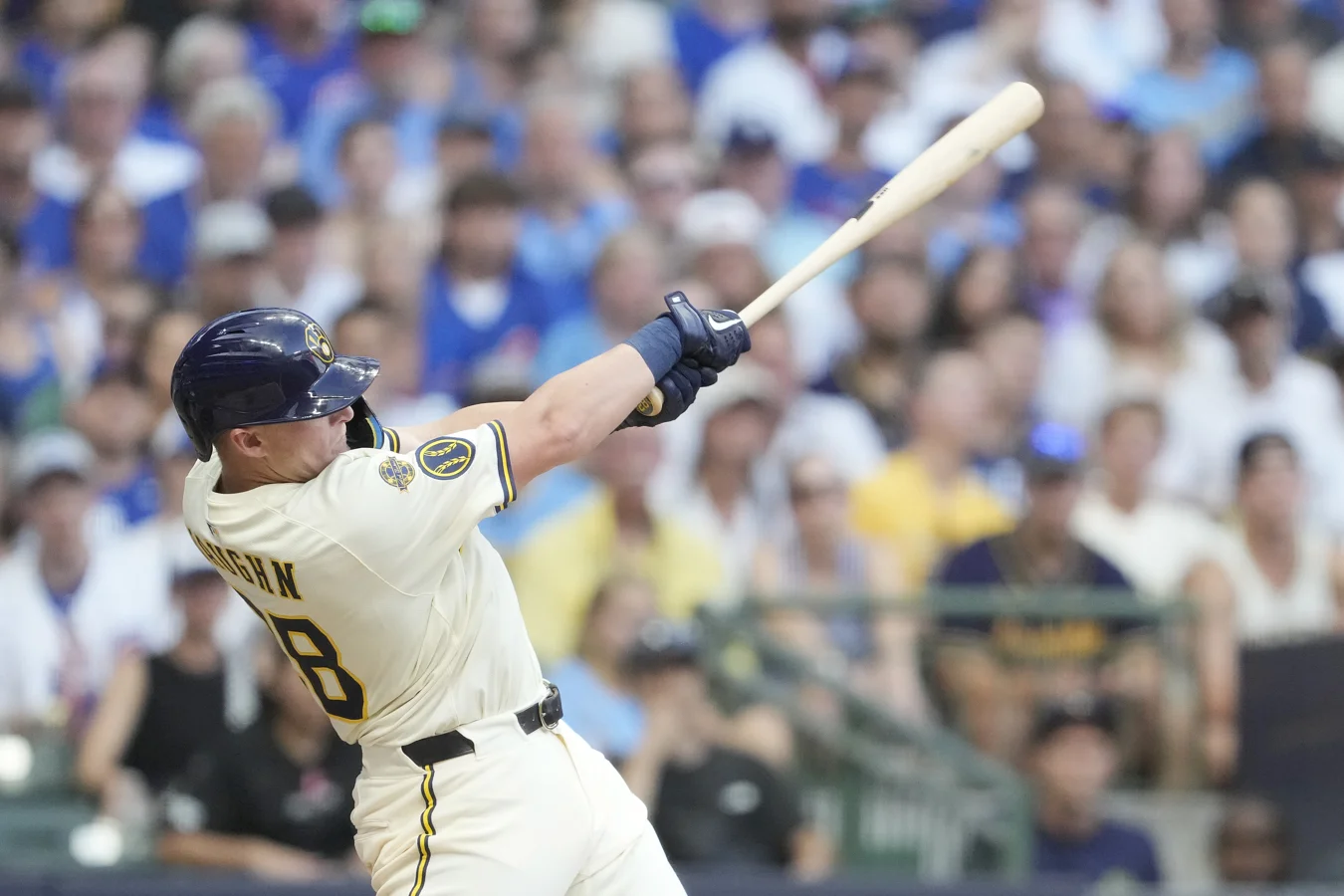

Andrew Vaughn’s recent performance with the Milwaukee Brewers has caught the attention of the fantasy baseball community, sparking debates about his true breakout potential. After a modest 1-for-3 game with a walk on Monday—disappointing only by his recent standards—Vaughn’s upward trajectory stands out, especially considering his Chicago tenure. This surge in production has placed him on the radar as a possible game-changer in fantasy leagues, where he remains available in about one-third of CBS Fantasy contests.
Though it’s early, this shift raises important questions about whether a change of scenery and adjustments to Vaughn’s approach are unlocking the former No. 3 overall draft pick’s long-recognized upside during the fantasy season’s critical stretch run.
Performance Metrics: Beyond the Surface
Vaughn’s move to Milwaukee is still represented by a small sample size, totaling just 20 major-league games, which account for slightly more than 3% of his professional <a href=”https://www.buzzineintl.com/category/baseball/mlb/”>MLB career. Expanding the view to his entire Brewers organization stint, which includes 16 Triple-A games where Vaughn posted a .259/.338/.500 line, the numbers were respectable but not exceptional enough to anticipate such rapid improvement. That minor-league slash line includes three home runs but remained fairly average for a 27-year-old with Vaughn’s major-league track record.
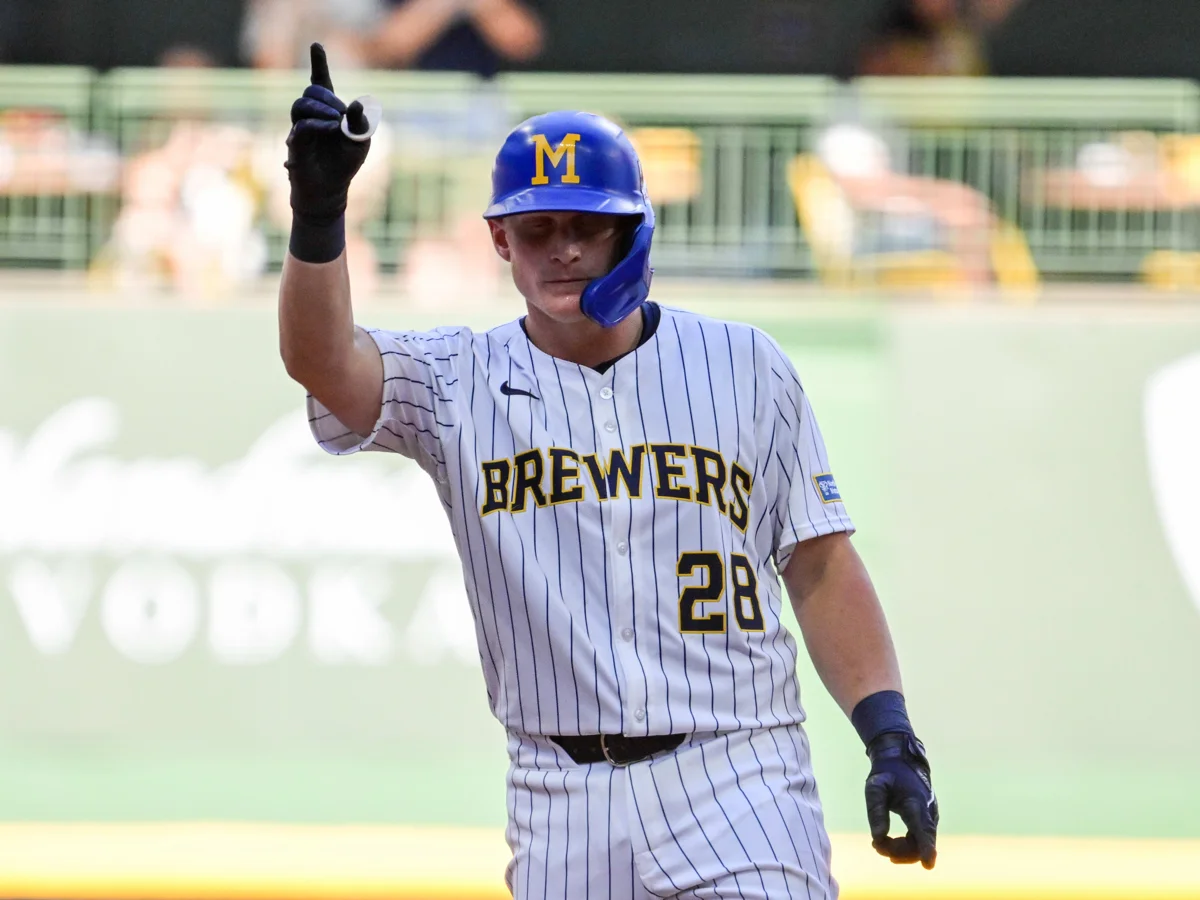
Yet, since officially joining the Brewers’ MLB roster, Vaughn has hit an impressive .371/.432/.686. This performance is supported by his expected weighted on-base average (xwOBA) sitting at .439, closely matching his actual output. In fact, this rate would rank as the second-best full-season mark in MLB this year. Such alignment between expected and realized statistics reduces the likelihood that his streak is merely temporary luck, positioning Vaughn as genuinely earning his surge.
Key Changes Explaining Vaughn’s Offensive Revival
The Milwaukee Journal-Sentinel sought input from Brewers insiders regarding Vaughn’s sudden upswing, although the feedback was often vague. Manager Pat Murphy attributed it to the player’s maturity and freedom with the team:
“The game has humbled him and he’s taken his opportunity and found a freedom here,”
—Pat Murphy, Milwaukee Brewers Manager
Despite limited explicit details, some clues center on a mechanical shift in Vaughn’s swing. Since his Milwaukee arrival, Vaughn’s bat speed has increased to approximately 71.8 mph from about 70 mph with Chicago. Counterintuitively, while his swing speed rose, his swing length decreased, defying the usual correlation where faster swings tend to be longer.
This refined swing enables Vaughn to make contact earlier and more efficiently out in front of the plate, increasing his pull-side flyball rate to 23%, compared to a 15% career mark. Historically, Vaughn struggled to fully capitalize on his raw power, but this alteration appears to have unlocked more consistent power production.
Additionally, Vaughn’s strikeout rate has dropped markedly—from 22.3% to 13%—while his walk rate has climbed above 10%. Although these stats come from a limited data set, they consistently indicate improved plate discipline and smarter swing decisions, further contributing to his offensive explosion.
Weighing Long-Term Viability Against Past Patterns
Despite this promising stretch, optimism should be measured. Vaughn’s current 20-game run is the best of his career, yet he’s previously demonstrated similar short-term excellence. In 2022, he posted a .441 wOBA over a 20-game span, and a .414 wOBA over another 20-game stretch as recently as last May and June. Neither earlier run led to lasting major-league success, complicating judgments about whether this time will be different.
Another pivotal question is how opposing pitchers will adjust to enhanced versions of Vaughn’s swing, and in turn, how Vaughn might respond to those counterstrategies. Until these dynamics play out over a larger timeframe, certainty remains elusive.
Nonetheless, with tangible swing improvements and confidence reportedly elevated by a new environment, Vaughn’s current surge demands serious consideration in fantasy baseball decisions. Fantasy managers should consider rostering him aggressively, balancing enthusiasm with cautious skepticism given the limited sample size and Vaughn’s historical inconsistency.
Additional MLB Players to Watch from Recent Games
Beyond Vaughn’s situation, Tuesday’s waiver wire featured several notable players worth considering for fantasy teams grappling with the season’s final months.
Emerging Talent Among Waiver Wire Options
Luke Keaschall, 2B, Twins (37% rostered) – Expected back from a fractured forearm, Keaschall’s return has sparked excitement. His minor league performance included a .294/.411/.458 line in 162 games, with 19 homers and 45 stolen bases, and he made a strong seven-game major league debut before his injury. His ongoing rehab games reinforce his base-stealing threat, with seven steals in 14 rehab outings. As a daily option on a rebuilding Twins team, Keaschall presents an attractive roster addition in category leagues and points formats alike.
David Bednar, RP, Yankees (60%) – After the Yankees’ trade deadline added new bullpen options, Devin Williams struggled to hold the closer role, allowing a crucial home run in his first save opportunity. Meanwhile, Bednar, despite some previous inconsistency, has solidified himself as a valuable candidate for closing duties. He’s performed well in high-leverage situations and may receive the opportunity to secure the job, making him a strong pickup over options like Luke Weaver and Camilo Doval.
JoJo Romero, RP, Cardinals (40%) – Romero appears to have stepped into the closer role following Ryan Helsley’s trade. He secured his second save in as many tries against the Dodgers Monday, despite some tense moments. Though not dominant, the role’s significance on a competitive Cardinals team enhances Romero’s value for those seeking closer depth among waiver wire pitchers.
Daulton Varsho, OF, Blue Jays (42%) – After surgery and time on the injured list, Varsho has returned with a power surge, homering nine times this season. His performance Monday featured multiple hard-hit balls, some exceeding 106 mph, signaling a career-high in exit velocity. While batting average consistency remains a concern, his power upside and improved hard-hit metrics provide valuable fantasy potential.
Josh Jung, 3B, Rangers (41%) – After a challenging post-breakout period, Jung is displaying signs of revival with three homers in 10 games following a minor league stint. His recent walk-off home run against the Yankees and a 1.094 OPS highlight his power resurgence, making him a worthwhile target for fantasy managers seeking late-season power boosts.
Implications for Fantasy Baseball and What’s Ahead
Andrew Vaughn’s current trajectory with the Brewers offers a clear lesson in fantasy baseball’s unpredictability and opportunity. His improved swing mechanics and plate approach suggest that his breakout potential may be more than a fleeting hot streak, compelling managers to reconsider their assessments and rosters. Simultaneously, the evolving roles of relief pitchers and the resurgence of emerging players like Keaschall and Jung emphasize the importance of active waiver wire management heading into the fantasy season’s final weeks.
While the long-term sustainability of Vaughn’s success remains to be seen, his case exemplifies how adjustments and mental approach can revive a player’s value, making him—and comparable waiver wire opportunities—essential considerations for those vying to improve their fantasy prospects in a critical period.