
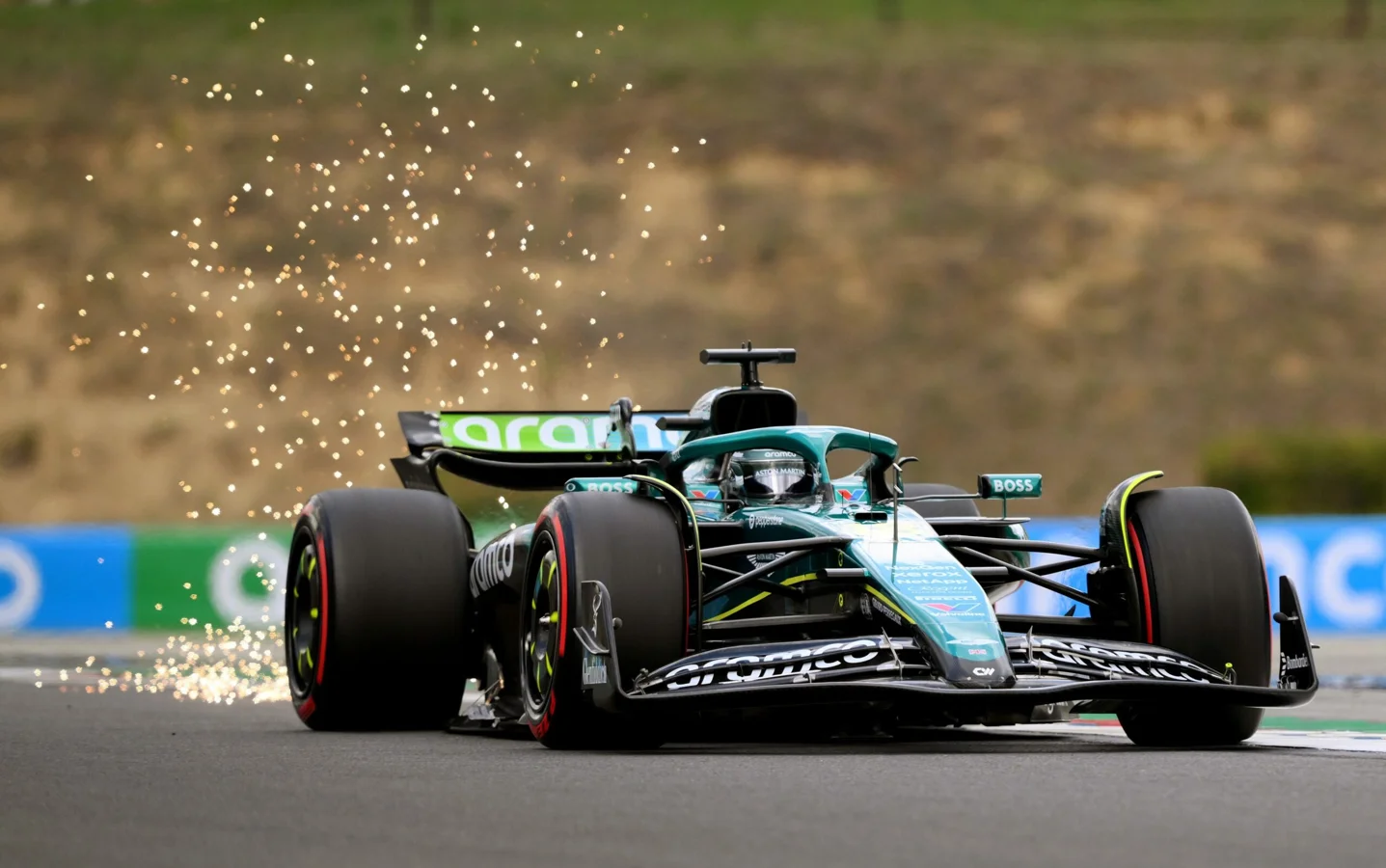

Aston Martin produced its strongest performance of the 2025 Formula 1 season during the Hungarian Grand Prix, raising eyebrows across the paddock with an unexpected leap in pace. After struggling just one week earlier at Spa-Francorchamps, where Fernando Alonso and Lance Stroll started from the back row, the team claimed impressive fifth and sixth positions on the grid at the Hungaroring. This marked their best qualifying outcome since the 2023 Brazilian Grand Prix, when they secured fourth and third spots, respectively, and the pair were less than a tenth of a second off pole position.
The strong qualifying performances translated into solid race finishes, with Aston Martin securing fifth and seventh places, their top results since Sao Paulo 2023. Despite these gains, the team remains unclear about the precise factors that contributed to the remarkable progress.
Uncertainty Surrounds Factors Behind Performance Improvement
Fernando Alonso expressed both surprise and puzzlement at the turnaround.
“It is a surprise, definitely it is a surprise. It’s a nice surprise,”
he commented, reflecting on the team‘s competitiveness and speed. However, Alonso acknowledged the underlying issue:
“The concerning thing is that we don’t know why.”
He emphasized the importance of reviewing the differences between their performance at Spa and Hungary, particularly focusing on car setup and aerodynamic changes during the mandatory summer factory shutdown.
A key upgrade for the Hungarian weekend was the introduction of a new high-downforce front wing, expected to enhance the car’s performance on the twisty and slow circuit. Alonso observed,
“Obviously, the main theme for us was the front wing that was new this weekend. If that front wing gives us that much performance, that’s very good news, but I think that has to be understood at the moment.”
Aside from the front wing, Aston Martin reverted to the former Imola-spec floor. Alonso praised the accurate feedback from their simulator data, stating,
“Everything that we brought to the track is delivering exactly what the wind tunnel was saying. Whatever we want to fit in any weekend, we know what the car will deliver.”
The Spanish driver suggested that the contrasting characteristics of the Hungaroring compared to Spa might be a major factor behind the performance swing. Spa-Francorchamps is known for its long straights and high-speed corners, whereas the Hungaroring features predominantly medium and slow-speed turns, making it the second slowest track on the calendar.
Boosted Team Morale Following Breakthrough Weekend
The positive results at the Belgian Grand Prix the previous week helped Aston Martin leap from eighth to sixth in the constructors’ championship, adding 16 points compared to the 36 accumulated over the opening 13 races. Beyond the points haul, the unexpected upswing significantly elevated team morale, which had been a concern heading into the second half of the season.
Alonso admitted his earlier worries about Aston Martin’s midseason performance slump.
“I would not lie, I was worried, I was concerned for the second part of the year,”
he said candidly, a rare glimpse into the mindset within the team.
“We were a little bit down in terms of motivation, everyone in the team, and these seven days, I think it changes 180 degrees.”
Despite the lifted spirits, Aston Martin’s leadership remains cautious. Team bosses recognize the need to sustain competitiveness and avoid regressing to the back of the midfield, especially as development priorities shift toward the 2026 car. The team’s new chief aerodynamicist Adrian Newey has reportedly paused work on the current AMR25, focusing on next year’s technical overhaul instead.
Mike Krack, the team’s chief trackside officer, highlighted the challenge of replicating a sudden improvement.
“You cannot jump, normally, from the back of the midfield to the front of the midfield within seven days,”
he said, urging realistic expectations.
“We had very difficult races before, not only Spa. It does not mean that we have managed a complete turnaround. I think it’s probably also a bit circumstantial. The fight in the midfield will continue, I’m sure.”
Upcoming Dutch Grand Prix Tests Aston Martin’s Momentum
The next key event for Aston Martin will be the Dutch Grand Prix at Zandvoort, known for its fast yet twisty and narrow layout. This circuit will provide a crucial benchmark for evaluating the AMR25’s performance on a track that demands high levels of downforce, similar to the Hungaroring but with greater speed.
Alonso emphasized the significance of Zandvoort as a test of consistency for the team.
“The first test will be Zandvoort. Again, maximum downforce in Zandvoort,”
he noted, adding,
“We performed well in the last few years there, so hopefully we have both cars in the points again.”
While Alonso finished second at Zandvoort in 2023, expectations are tempered for this year’s race given the team’s current form and ongoing development challenges.
Strategic Outlook and Team’s Future Challenges
Aston Martin’s sudden resurgence in qualifying and race pace at the Hungarian Grand Prix has reignited interest in their potential to climb the highly competitive midfield battle. Achieving pace gains through targeted aerodynamic upgrades, such as the new front wing and floor specifications, reveals that technical progress is possible within a season of struggle.
However, the unexplained nature of the surge means the team must work swiftly during the summer shutdown to pinpoint key improvements to replicate and build upon this success. The midfield, crowded with ambitious teams, will continue to test Aston Martin’s mettle as they balance developing the current AMR25 with preparing for the 2026 regulations.
The upcoming races, starting with the Dutch Grand Prix, will be critical in confirming whether the performance gains at Hungary represent a genuine step forward or a circumstantial peak amid a challenging campaign.