
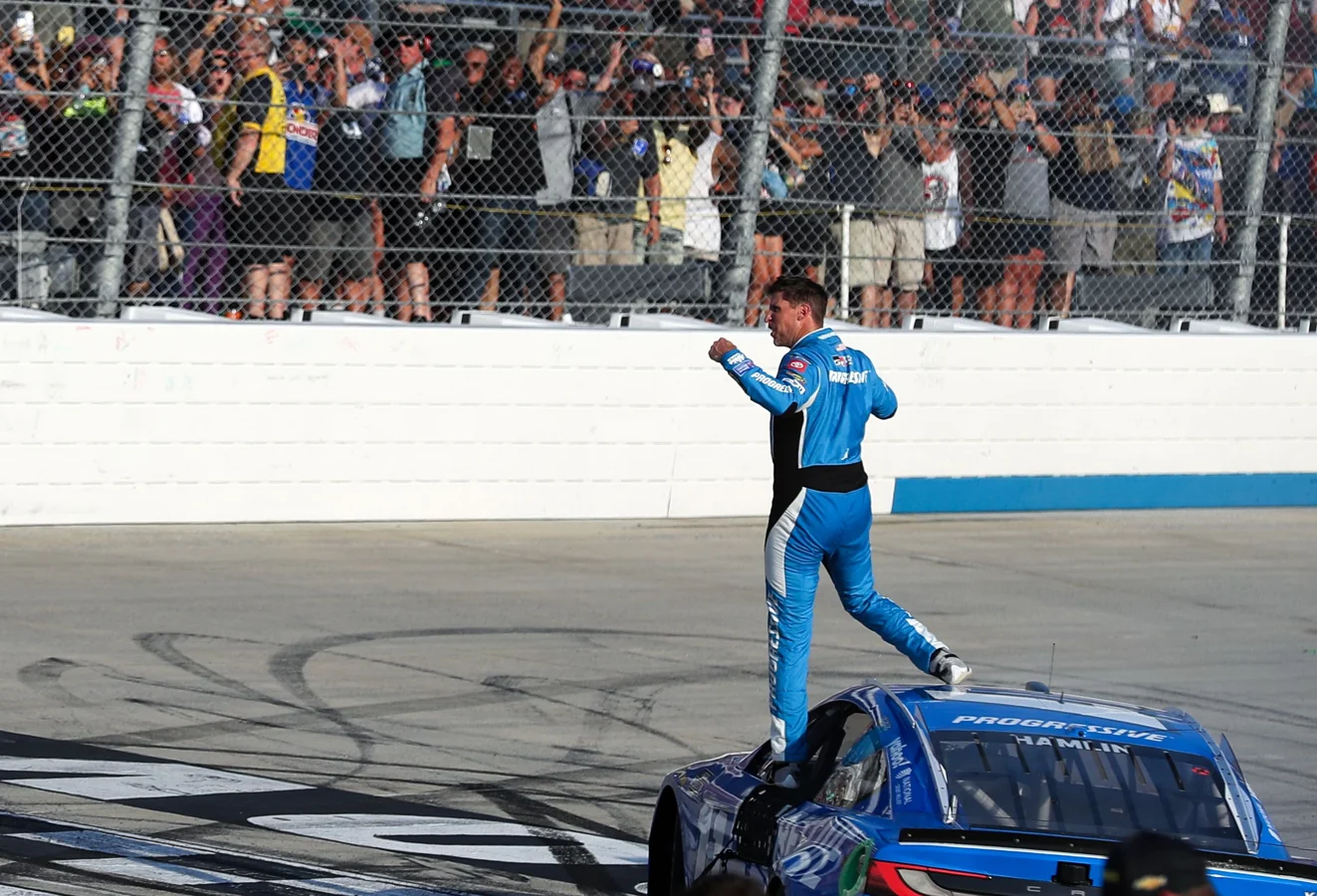

The NASCAR NextGen car has sparked intense debate since its introduction, dividing opinion among drivers, analysts, and fans. Denny Hamlin has been particularly outspoken, defending the criticism from fans regarding the car’s racing issues as valid and worthy of attention.
Hamlin’s concerns focus on how the NextGen car affects competition, especially the difficulty in passing other cars during races, a major factor impacting the excitement and quality of NASCAR events.
Reasons Behind Denny Hamlin’s Support for Fan Complaints
When NASCAR revealed the NextGen car in 2021, excitement was high. Chase Elliott, the 2020 NASCAR Cup Series champion, expressed optimism about the new design and its potential to enhance racing.
After so long talking about it and working on it, it’s a little surreal to see it actually sitting there, isn’t it? This is a racy-looking car. Now let’s hope it races as good as it looks,
Elliott said during the unveiling.
The sleek styling and advanced technology suggested a new era for NASCAR, promising closer competition across manufacturers. However, after several seasons, enthusiasm has waned as the car has failed to deliver the expected on-track action.
Hamlin has consistently highlighted fundamental design flaws in the NextGen car that limit overtaking and reduce competitiveness. Discussing a recent race at Iowa, he emphasized how the leader’s advantage creates significant challenges for drivers attempting to make passes.
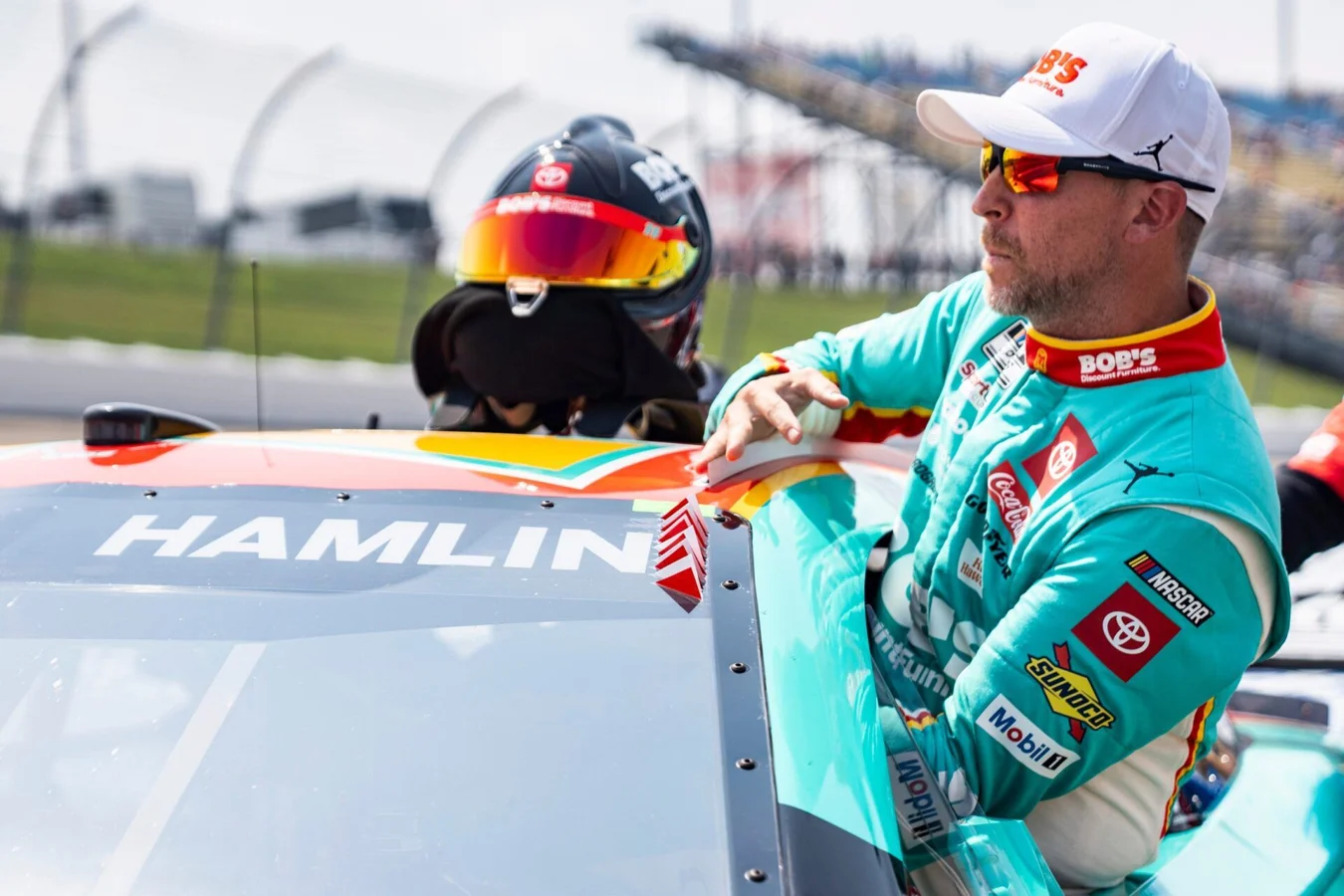
You can make passes if you’re in the middle of the pack when everyone has disturbed air. It’s just challenging the leader in this car, is such a tough ask, because the leader has such an advantage,
Hamlin explained.
Understanding Why Passing Is So Challenging with NextGen Cars
Hamlin used race timing data to illustrate the problem, revealing how minimal speed differences between cars hurt overtaking efforts.
If you look at the times, the difference between the first place, the fastest race car on the racetrack, and the 30th place speed car is 3.10. We talked about at Indy where you had to be 1.2 seconds faster than someone to actually overtake them,
he said.
The number at Iowa, I don’t know, I think it probably is at least 3.10. So, that’s why you saw when the leader catches the 30th place car, he can’t, it just takes him forever to work them over because there’s not enough difference in speed from that car to that car.
This creates a difficult paradox: although the speed gap between the fastest and slowest cars is relatively small, drivers still need a large advantage to complete passes. This leads to processional racing, where track positions hold excessive importance and limit dynamic battles.
Beyond aerodynamics and speed, Hamlin criticized the tire selection at Iowa, arguing the Goodyear compound failed to introduce much-needed variability in tire performance during races.
And then when you look at the course of the run, I sent Dale Jr. a screenshot of this on Saturday night, I said, ‘Can you believe that we tire tested here?’ Not we, the 11 car, but NASCAR and Goodyear tire tested here, and this is the tire that they came up with, is the one that zero fall-off after 50 laps,
he said.
How on the world do you expect us to put on a good race when everyone’s going to run the same speed, and they’re gonna run the same speed from the beginning of the run to the end of the run?
The absence of tire fall-off removes a critical element of strategy and performance differentiation. Without degradation, cars maintain consistent lap times throughout stints, further reducing chances for drivers to gain an edge during races.
Hamlin Condemns Dismissals of Fan and Driver Feedback on the NextGen Car
Hamlin’s strongest criticism is aimed at those who trivialize or label fan criticisms as baseless negativity. He stresses that the concerns raised by spectators are reflections of what drivers are experiencing firsthand on the track.
I think that some of the fans are really getting labeled as just people that are negative all the time by the NASCAR shields, and that’s just not true. They’re regurgitating what we are saying, and it’s just incredibly difficult out there.
This statement highlights a growing tension between NASCAR’s governing bodies and the racing community. When even established drivers like Hamlin validate fan frustrations, dismissing those complaints not only alienates the audience but also ignores critical feedback necessary for the sport’s improvement.
As NASCAR continues the NextGen car’s evolution, addressing these criticisms will be pivotal. Stakeholders will have to balance technological advances with the core elements that make NASCAR racing exciting—close competition, frequent passing, and strategic variability.
Denny Hamlin’s outspoken stance underlines a broader call for NASCAR to listen more closely to fans and competitors alike, who seek a better racing product and an engaging experience on every lap.