
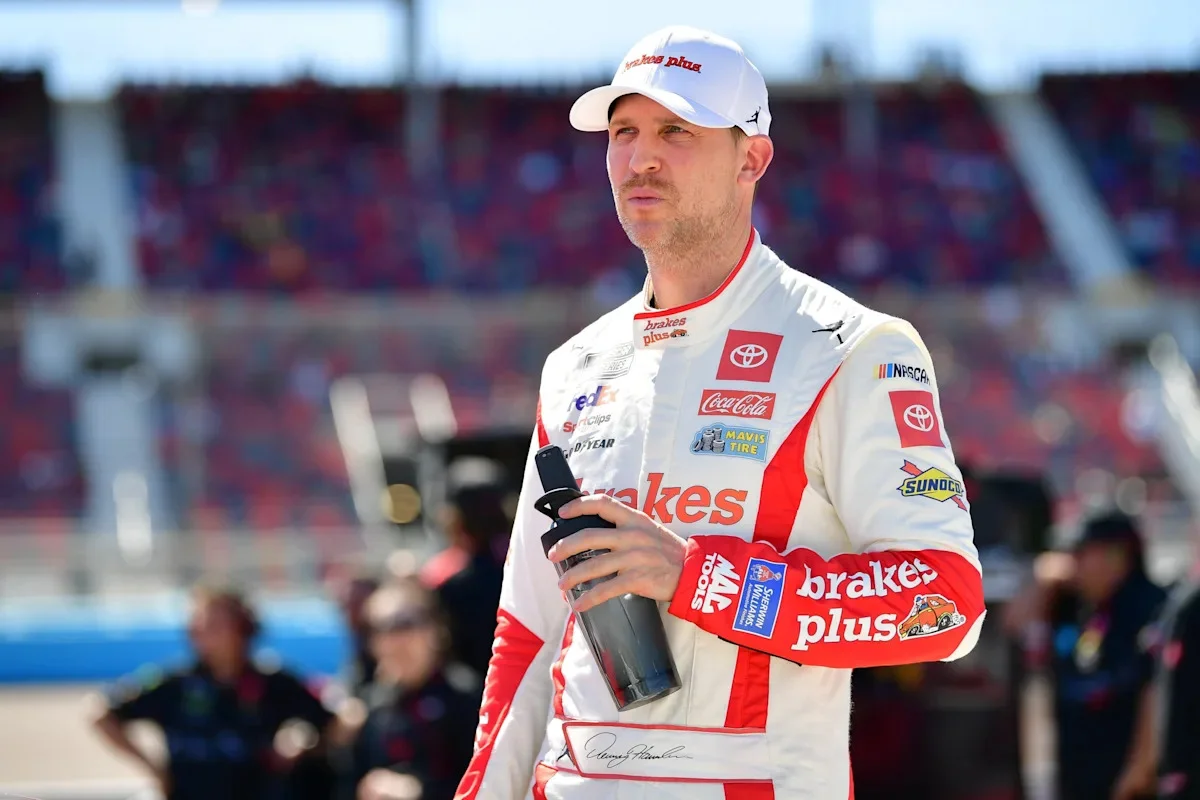

During a recent episode of his podcast, Denny Hamlin issued a firm warning to Spire Motorsports driver Carson Hocevar, highlighting how Hocevar’s actions at Iowa may provoke retaliation similar to the intense feuds in NASCAR history. Hamlin’s analysis draws a direct line between Hocevar’s behavior and past conflicts involving Joey Logano, suggesting that Hocevar’s approach could lead to serious consequences on the track.
Hamlin broke down the Lap 229 collision between Hocevar and Zane Smith with exacting detail, clarifying that the contact did not come from deliberate aggression.
I can tell you without a doubt 100% he did not purposely hit Zane Smith,
Hamlin stated on the Actions Detrimental podcast. He explained the incident was caused by Hocevar’s car becoming unstable and loose in the turn.
However, Hamlin expressed strong criticism over Hocevar’s defiant refusal to acknowledge fault publicly. Instead of issuing a straightforward apology, Hocevar chose a confrontational tone post-race.
Instead of saying, ‘Hey, sorry about that. I f***ed up. I got loose. I went in the corner. I shook the right rear out, and I got into you. I apologize,’
Hamlin explained, he says, ‘Take a number.’ This attitude mirrors the early career provocations of Joey Logano during his fiery rivalry with Matt Kenseth at Martinsville.
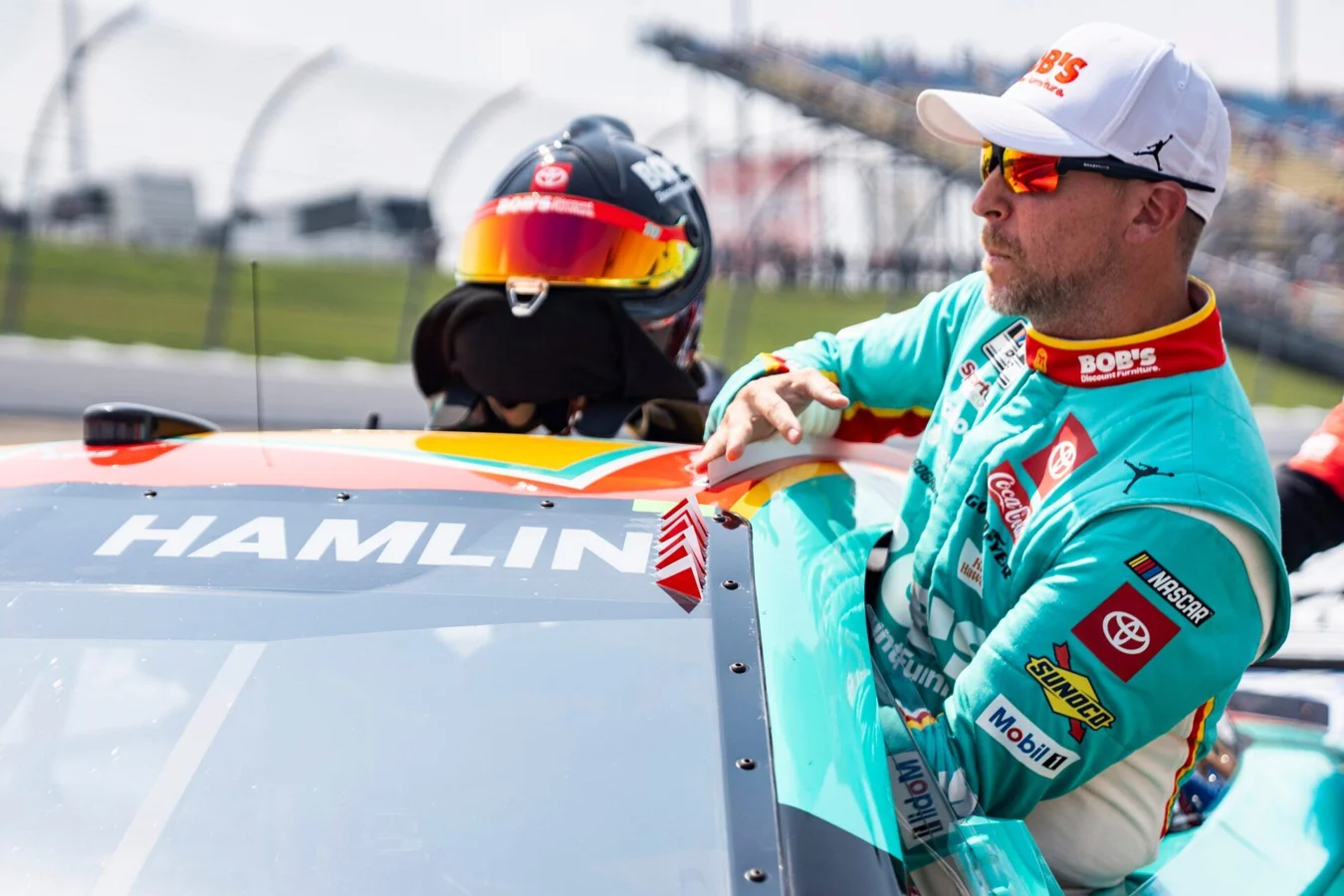
Hamlin warned,
It’s what got Joey Logano destroyed at Martinsville,
and added that Logano initially failed to confront the issue directly with Kenseth. Co-host Jared Allen acknowledged Logano’s growth since then.
I understand that, but at the end of the day, that’s partly what’s made Joey Logano who Joey Logano is nowadays.
Hamlin agreed, noting,
Even Joey Logano has matured in that sense of knowing when to do it.
Consequences Loom Over Hocevar’s Aggressive Tactics
Hamlin predicted that Hocevar’s brash stance would lead to payback from fellow drivers, warning that the NASCAR community often remembers these grudges on the track.
Your social media post, it’s good for clicks, bad for results,
he commented, emphasizing that public provocations can backfire during races.
He distinguished between aggressive driving done to compete for victory and reckless moves that risk mid-pack positions.
When you’re doing it for a win versus when you’re running, you know, when he whacked out Ricky [Stenhouse Jr.] for 15th or 20th, wherever they were,
Hamlin noted, that’s just not the time.
Producer Travis Rockhold spoke in defense of Hocevar’s reaction, pointing out the tense circumstances after the incident.
He didn’t even get a chance to apologize before Zane Smith’s crew chief came after him.
Despite this, Hamlin remained skeptical about Hocevar’s intentions.
I think he’s after the clicks right now,
he speculated, warning that such a pursuit of attention could have serious consequences.
You’re gonna be in contention and someone is gonna clean you out,
Hamlin cautioned,
and they’re gonna say, ‘I took a number.’
The collision occurred as Hocevar’s No. 77 Chevrolet slid into Smith’s No. 38 Ford on Lap 229, sending Smith into the outside wall, while Hocevar finished the race in eighth. The incident sparked a heated confrontation when Smith’s crew chief, Ryan Bergenty, confronted Hocevar during a post-race interview.
Hocevar’s season-long aggressive reputation compounds concerns over his conduct. Known as Hurricane Hocevar, the 22-year-old driver has been involved in multiple disputes with top competitors, including Shane van Gisbergen and Ross Chastain, making him a figure of repeated on-track turbulence.
The Importance of Accountability in NASCAR’s Competitive Landscape
Hamlin underscored the critical role of accountability in maintaining respect and safety in the sport, drawing parallels to Joey Logano’s earlier growing pains.
We’ve been talking about the same thing for years about the same guy,
he said, hinting at a necessary learning process for Hocevar.
Let him learn it the hard way.
This process could involve harsh lessons similar to the payback Matt Kenseth delivered to Logano at Martinsville in 2015, illustrating how unresolved conflicts often escalate to physical retribution in NASCAR’s highly competitive environment.
As the NASCAR Cup Series prepares for the upcoming Watkins Glen race, tension is mounting among drivers. Hamlin’s statement serves as a clear notice: if Hocevar continues down this defiant path, his social media provocations and on-track incidents may prompt retribution from fellow competitors, threatening his standing and safety in future events.