
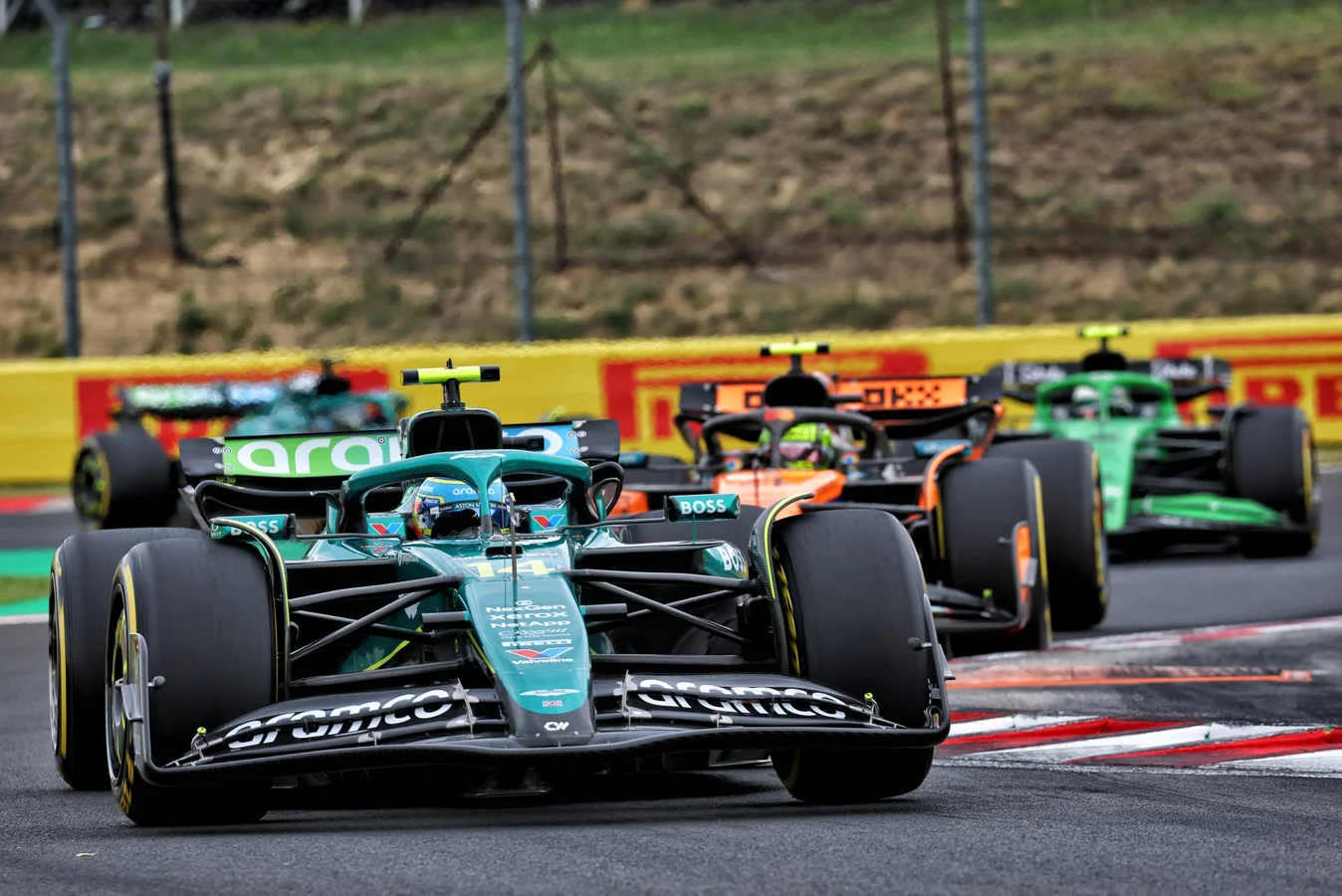

The 2025 F1 season has reached its midpoint, offering a clear view of the standout performers and those facing challenges. McLaren has emerged as the dominant force so far, while Lewis Hamilton continues to grapple with difficulties at Ferrari, and Red Bull Racing finds itself in internal unrest despite some successes. This review highlights the notable winners and losers shaping the championship’s narrative in this intense season.
McLaren’s Rise to the Forefront in 2025
Once on the brink of financial collapse, McLaren has surged to become the foremost championship contender in 2025, showcasing remarkable performance despite utilizing Mercedes power units. The team leads the field with victories in 11 of the 14 races held so far, with Lando Norris and Oscar Piastri sharing the spoils nearly evenly—Norris securing five wins, Piastri six.
Importantly, McLaren has managed its driver dynamics by encouraging respectful competition rather than imposing strict team orders. This approach has generally fostered harmony, marred only by a single clash during the Canadian Grand Prix. The team’s resurgence is credited to a combination of effective leadership from CEO Zak Brown, strategic management by team principal Andrea Stella, significant funding from the Kingdom of Bahrain, and lucrative sponsorships from major global brands such as Google, Mastercard, Cisco, Dell, Monster, Jack Daniel’s, LEGO, Hilton, Salesforce, CNBC, and eBay.
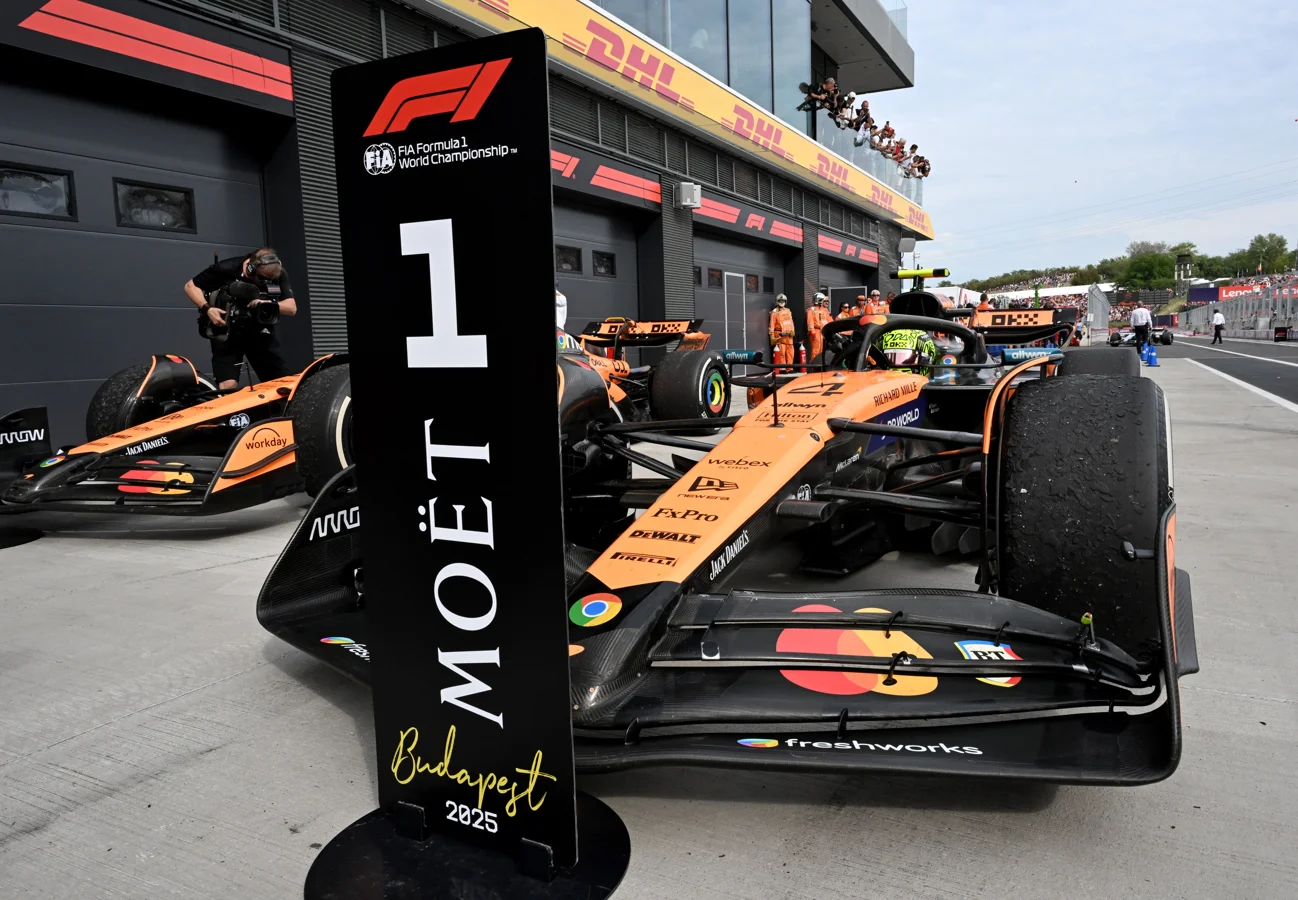
As the season progresses toward new regulations set for 2026, McLaren’s consistency and ability to maximize their car’s strengths position them strongly for the World Constructors’ Championship—an outcome that appears increasingly likely. The remaining question centers on who will claim the drivers’ championship between Norris and Piastri, intensifying interest in the team’s internal competition.
Lewis Hamilton’s Difficult Transition to Ferrari
Lewis Hamilton’s highly anticipated switch to Ferrari has not unfolded as expected, with the 2025 season proving challenging for the seven-time World Champion. Much of his difficulty arises from Ferrari’s current car, the SF-25, which has struggled with handling issues after design alterations prompted by disqualification from the Chinese Grand Prix due to excessive skid plank wear. Adjusting the car’s ride height led to balance problems in corners, adversely affecting performance.
Hamilton has also failed to match the pace of his teammate Charles Leclerc, and his public comments suggest growing dissatisfaction and possible regret regarding his move to the Scuderia. While Hamilton has consistently finished in the points in all but one classified race—the Hungarian Grand Prix—the broader expectations for his impact at Ferrari remain unmet.
Though improvement is possible, particularly as Hamilton gains more influence over the development of Ferrari’s 2026 car, the current period represents a significant test for his legacy. His results so far do not reflect the dominance typically associated with his career, marking this stage as a notable struggle.
George Russell’s Emergent Threat to McLaren
Despite setbacks from a suspension upgrade that hindered performance for Mercedes earlier in the season, George Russell remains one of 2025’s prominent success stories. Initially considered a “dark horse” rather than a front-runner, Russell has proven to be a genuine contender, highlighted by his landmark victory in the Canadian Grand Prix and a tally of six additional podium finishes.
Accumulating 172 points, Russell is currently positioned to overtake Max Verstappen for third place in the World Drivers’ Championship, needing just 15 more points to do so. His consistent presence at the front reinforces Mercedes as a formidable challenger amid McLaren’s dominance.
Challenges Mounting for Red Bull Racing
Red Bull Racing’s difficulties first became apparent in 2024, and those issues have expanded into a turbulent 2025 campaign. The RB21 car has proven difficult for its drivers to control, contributing to inconsistent on-track results.
More significant has been internal instability, underscored by the mid-season dismissal of long-standing team principal Christian Horner. Several key figures, including Adrian Newey, Jonathan Wheatley, Will Courtenay, and Rob Marshall, have left the team, further disrupting organizational continuity. Additionally, driver line-up changes—such as the early demotion of Liam Lawson and the promotion of Yuki Tsunoda—highlight the unsettled team environment.
Although Max Verstappen has secured two victories and holds third place in the drivers’ standings, the gap behind McLaren and Mercedes is wide. These struggles suggest Red Bull Racing is still seeking the stability and performance needed to reclaim its former championship dominance.
Sauber’s Remarkable Turnaround
Sauber has dramatically reversed its fortunes this season following a critical floor upgrade introduced in Barcelona. Veteran driver Nico Hulkenberg leveraged his extensive experience to quickly place the car into points finishes, climaxing with a historic podium result at Silverstone.
Rookie Gabriel Bortoleto broke his points drought in Austria and has since demonstrated strong performances, occasionally outperforming Hulkenberg. These results have propelled Sauber to seventh in the Constructors’ standings with 51 points—just a single point behind sixth place Aston Martin.
By contrast, Sauber’s 2024 season saw points scored only in Las Vegas late in the year, which was insufficient to lift the team from the bottom of the championship. This marked turnaround not only boosts morale but also promises increased prize money as Sauber transitions to Audi ahead of the 2026 season.
Jack Doohan’s Struggles and Demotion
Jack Doohan has experienced a difficult start to the 2025 season, slipping out of the spotlight due to underwhelming performances during the opening six races. Following the Miami Grand Prix, he was replaced by Argentinian Franco Colapinto at Williams.
Colapinto, who showed promise in his 2024 debut, has yet to deliver notable results and remains similarly off the pace in scoring points. While his future in the team is somewhat uncertain, Alpine appears committed to retaining him for the remainder of the season.
An additional blow to Doohan’s prospects was the ascendancy of his manager, Flavio Briatore, to the position of Alpine’s de facto team principal after the Miami race. This move indicated a loss of confidence from Briatore, signaling further difficulties for Doohan within the alpine framework.
Formula 1’s Expanding Global Momentum
Beyond individual teams and drivers, Formula 1 itself is experiencing significant growth and success in 2025. The full-field season launch at London’s O2 Arena set an impressive tone, complemented by major commercial agreements with influential brands including Disney and PepsiCo. Expanding viewership across diverse demographics underscores the sport’s broadening appeal worldwide.
The championship remains compelling with a heated title contest unfolding between teammates at a legacy team, while anticipation builds around a new American team preparing to announce its driver lineup. Upcoming major races in Italy, the Americas, and the Middle East promise further excitement as the sport approaches the introduction of new technical regulations for 2026, which will attract additional automaker involvement.
These developments indicate that regardless of individual season outcomes, Formula 1 as a sport is advancing strongly, cementing its status as a major global sporting spectacle.