
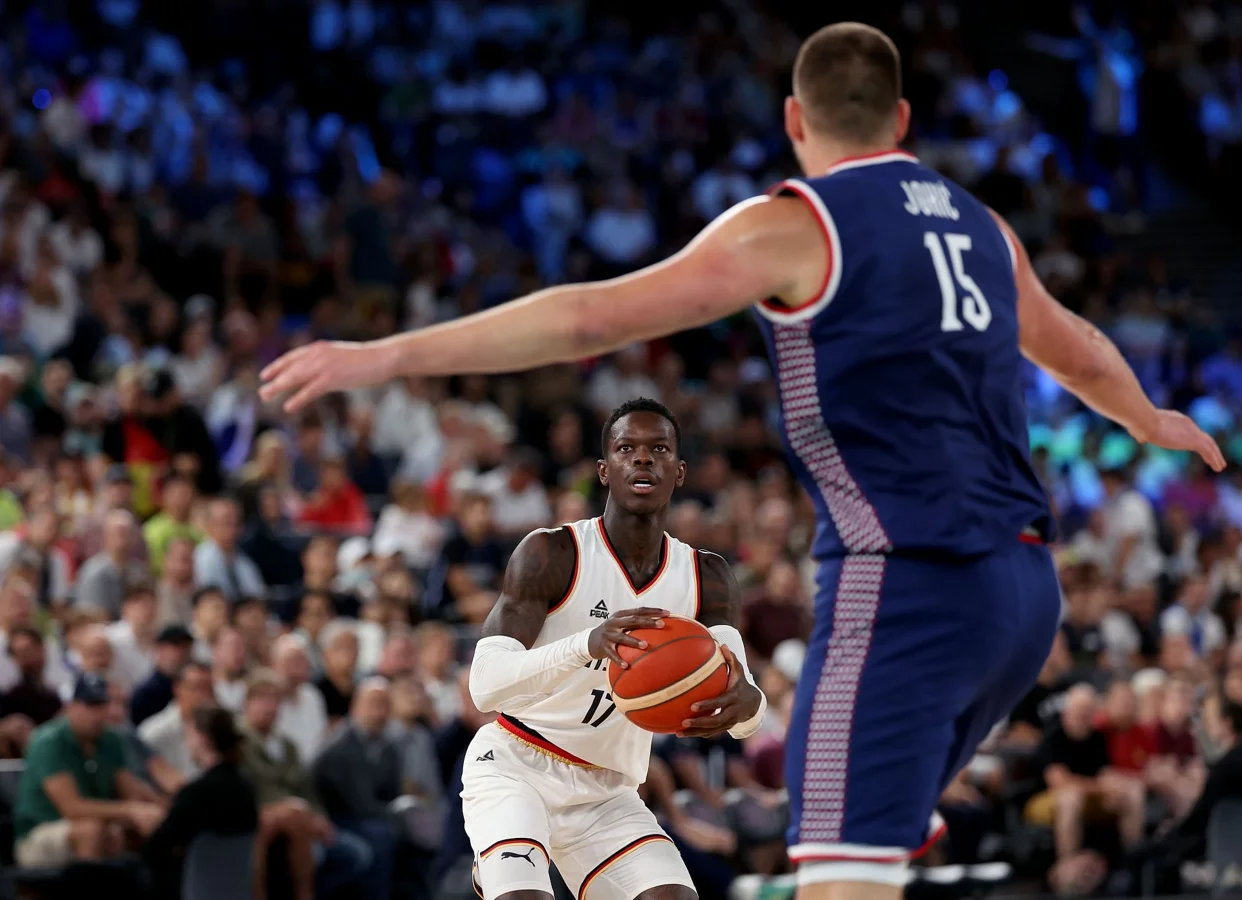

Jeff Teague addressed the common perception that European NBA players exhibit limited emotion after victories, explaining that this attitude stems from their unique relationship with the league. Teague cited Dennis Schroder’s perspective to shed light on why stars like Nikola Jokic and Luka Doncic might appear emotionally reserved despite their achievements.
In a recent episode of the Club 520 Podcast, Teague explained that many European players maintain a professional distance from their NBA careers because they do not live permanently in the United States.
“It’s different for people like Luka and Jokic and all them. It don’t bother them,” Teague said. “Like, European players, if they don’t win, once they leave, they don’t even live here. Nobody even cares.” —Jeff Teague, NBA Player
Using Dennis Schroder as an example, Teague described how the German guard approaches his NBA tenure as a temporary business arrangement. Schroder plans to return to Europe after his NBA career, focusing on maximizing his earnings while in the league.
“They do not care about nothing,” Teague added. “I learned that from Dennis Schroder. He literally did not, not saying he don’t care about America, but he just be like, ‘When I’m done playing here, I’ll go play back home. I’m gonna get all the money I can here, go home. Then go play back home.’ Like, they do not care.” —Jeff Teague, NBA Player
Currently, many European NBA players have joined their national teams for training camps as they prepare for the 2025 EuroBasket tournament, which is scheduled to begin in late August.
The Emotional Side of Nikola Jokic During a Horse Race Victory
Nikola Jokic, often known for maintaining a composed demeanor on the basketball court, displayed unexpected emotion following a personal victory outside of the NBA. Despite winning three MVP awards, an NBA championship, and a Finals MVP, Jokic rarely shows expressive celebrations during basketball games.
However, in the final week of July at the Duzijanac 2025 horse race in Subotica, Serbia, Jokic revealed a different side of himself when his horse, Demon Dell’Est, claimed victory.

Teague commented on this rare outpouring of feeling during the same podcast episode, emphasizing that the moment was about deep personal connection rather than any financial gain.
“He won a championship. Said, ‘Yeah, I’m ready to go home,’” Teague said. “Bro, he started crying. He put his hands in the air… Bro, that’s how you crawl and hit the lottery, bro. That has nothing to do with the money, bro. He just turned down a filthy ticket, bro. … Bro, he hugged the horse.” —Jeff Teague, NBA Player
This reaction highlighted a stark contrast to Jokic’s usual restrained attitude in basketball, showing how different contexts can bring out varied emotional expressions.
The Business Mindset of European Players and What’s Next
Teague’s observations underline how European NBA stars like Dennis Schroder and Nikola Jokic view their careers overseas primarily as professional opportunities rather than lifelong commitments. This explains why their emotional displays on the court might seem subdued compared to American players.
These players focus on securing their financial futures in the NBA before returning to their native countries, where basketball careers and personal lives continue. With the 2025 EuroBasket approaching, many have already shifted their focus back to their national teams, demonstrating the dual role they juggle between club and country.
Meanwhile, Jokic’s decision earlier this summer to pass on a three-year, $212 million contract extension and potentially pursue a larger $292 million deal next year will be closely watched as a strategic career move. How these financial and professional choices impact their emotional engagement with NBA successes remains a fascinating dynamic in international basketball culture.