
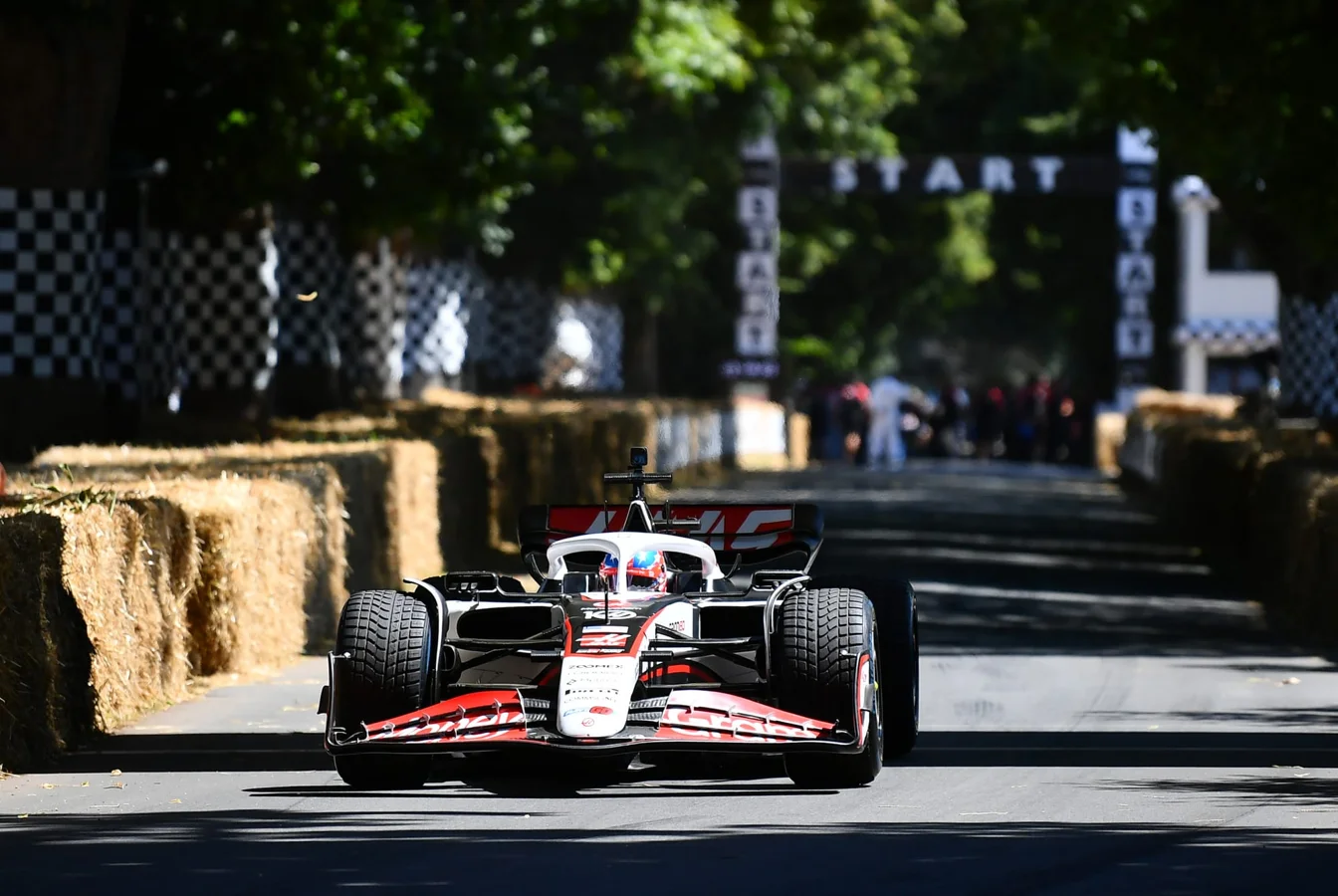

Haas is running its 2023-spec VF-23 car at Fuji Speedway this week through the Testing of Previous Cars (TPC) program, marking a rare public Formula 1 appearance at the circuit for the first time since 2008. This test, held in Japan’s home of motorsport, reflects Haas’s deepening partnership with Toyota and offers valuable track time for both established and emerging Japanese drivers.
Japanese Drivers Lead the Wheel at Fuji Test
Reserve driver Ryo Hirakawa took the wheel on the first day of testing, with multiple Super GT champion Sho Tsuboi set to make his Formula 1 debut on Thursday. Hirakawa has steadily increased his role with Haas this year, having already participated in multiple FP1 sessions and previous TPC tests, while Tsuboi’s appearance marks his first time driving an F1 car, highlighting Haas’s support of promising Japanese talent.
Significance of Testing at Toyota’s Home Circuit
Haas Team Principal Ayao Komatsu emphasized the special nature of running the team’s car at Fuji Speedway, the home circuit of Toyota, with whom Haas has formed a strong technical partnership. Komatsu said,
“I’m naturally very excited that in our first season running the team’s TPC program we’re able to enjoy two days running at Fuji Speedway in Japan,”
—Ayao Komatsu, Haas Team Principal
He further stressed,
“The significance of running our car at Toyota’s home circuit – where we first announced our partnership with TOYOTA GAZOO Racing last October, it’s quite special.”
—Ayao Komatsu, Haas Team Principal
Building Expertise for Both Drivers and Engineers
This test also serves as a learning opportunity for Toyota engineers and mechanics to gain hands-on experience with Formula 1 technology. Masaya Kaji, Director of TGR Global Motorsport, highlighted the broader goals of the partnership, stating,
“We’ve formed a technical partnership aimed at honing the three essential elements of car manufacturing – ‘People, Pipeline and Product’,”
—Masaya Kaji, Director of TGR Global Motorsport
He added,
“This TPC is part of our efforts related to ‘People’, which focuses on developing human resources.”
—Masaya Kaji, Director of TGR Global Motorsport
Growing Formula 1’s Fanbase in Japan with Public Access
Opening this testing event to the public was a deliberate effort by Haas and Toyota to nurture Formula 1’s following in Japan. The test offers an accessible way for casual fans to engage with the sport without the commitment of attending a full Grand Prix weekend. Komatsu explained,
“We know the passion Japanese fans have for Formula 1, so to get a second run in the country there this year after April’s Japanese Grand Prix is fantastic,”
—Ayao Komatsu, Haas Team Principal
Tickets are reasonably priced at 1200 yen for adults and 900 yen for high school students, with free entry for junior high students and younger. Komatsu told The Race,
“Unless you are really into it, you’re not going to make that commitment. But, testing, hopefully it’s a much more easier one to get into it. If we can make some people who are just a general sports fan by just having a passing interest [think], ‘It’s only an hour away, I might just see what it’s like for a few hours’, that level. If we can get people in for that, I think it’s good for Formula 1.”
—Ayao Komatsu, Haas Team Principal
Fan Experience Enhancements During the Test
Fans attending the test receive free pit lane access, allowing them to view the Haas garage and get close to the cars and team personnel. The event will also feature autograph sessions and a Q&A with drivers and Komatsu after each day’s track activity. For those seeking a premium experience, an upgrade ticket provides access to a special grandstand with superior views, typically reserved for VIP guests. Attendees can additionally pay for the unique chance to drive their own road cars on the 4.563-kilometer Fuji circuit during the lunch break.
Context and Ongoing Japan-Centered Testing Approach by Haas
This Fuji test is Haas’s second on-track event in Japan this year, following the Japanese Grand Prix at Suzuka in April, which attracted the highest attendance there in nearly twenty years. Haas’s Japan-focused testing program is unique in Formula 1 and has featured appearances by former F1 drivers Kamui Kobayashi and Kazuki Nakajima. Even team owner Gene Haas and Ayao Komatsu have driven the VF-23, notably at the Goodwood Festival of Speed earlier this year.
Fuji Speedway last hosted a Formula 1 race in 2008, where Fernando Alonso emerged victorious ahead of Robert Kubica and Kimi Raikkonen. This current testing initiative revives F1 activity at the historic circuit, reinforcing its significance for both Japanese motorsport and the global F1 calendar.
Implications of the Haas Fuji Speedway F1 Fan Test for Future Motorsport Engagement
The Haas Fuji Speedway F1 fan test represents a strategic blend of technical development, talent cultivation, and fan engagement. By involving Japanese drivers like Hirakawa and Tsuboi, the program supports the growth of local talent within the highest tiers of motorsport. Simultaneously, the open-access format lays groundwork for expanding Formula 1’s fanbase in Japan, providing a low-barrier entry point for new audiences.
The partnership with Toyota not only strengthens Haas competitively but also equips Japanese engineers and mechanics with critical experience in F1 operations, ensuring broader benefits across the motorsport ecosystem. This approach may influence how teams blend testing, outreach, and technical development in future seasons, especially in markets with strong motorsport traditions like Japan.