
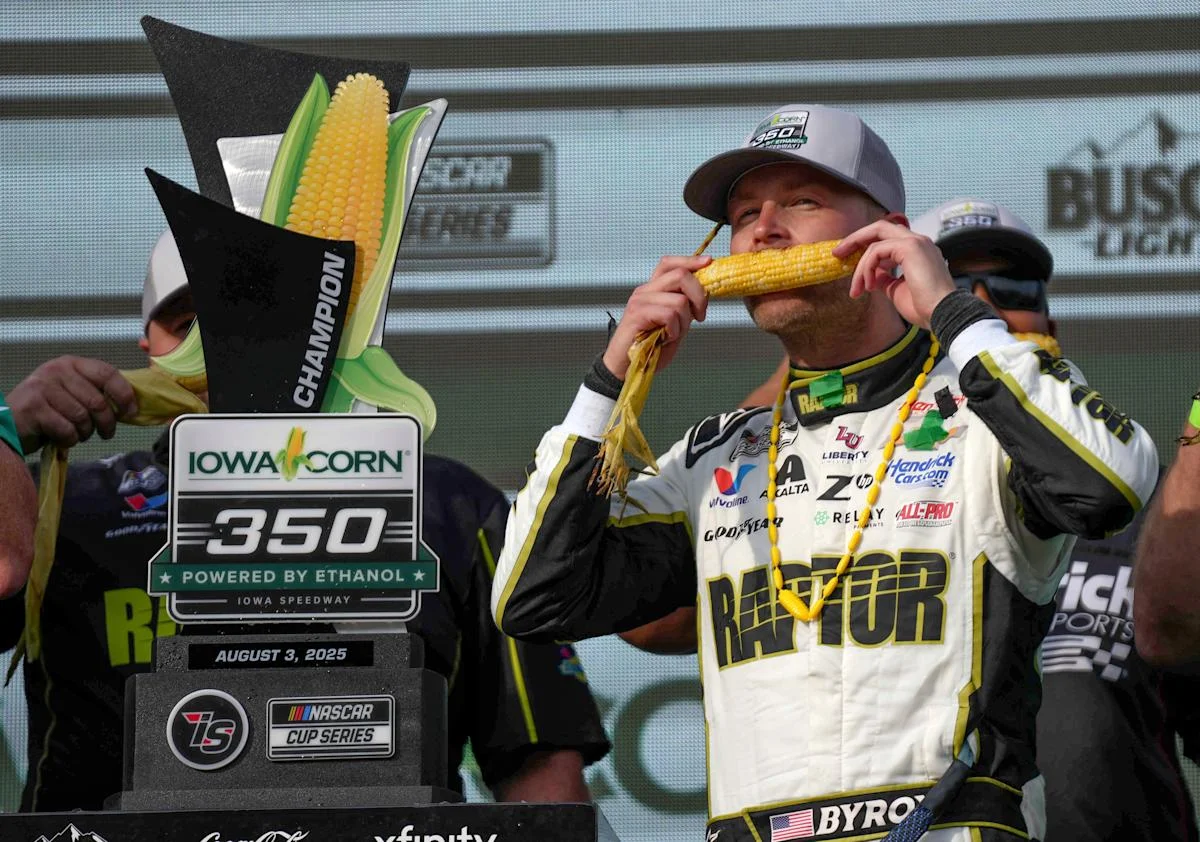

Kyle Larson, a prominent NASCAR driver, recently discussed the impact of the 2006 comedy film Talladega Nights: The Ballad of Ricky Bobby during a podcast appearance. While Larson admitted to enjoying the movie, he also criticized how it affected the public’s perception of the sport.
Talladega Nights, starring Will Ferrell as the arrogant and often clueless NASCAR star Ricky Bobby, humorously exaggerates many aspects of NASCAR culture. The film mocks various elements such as the intense commercial sponsorship, the camaraderie and rivalry among drivers, and Southern stock car racing lifestyle. Supporting characters, including a sidekick and a flamboyant European rival played by John C. Reilly and Sacha Baron Cohen, further satirize common NASCAR stereotypes.
The film lampoons NASCAR’s commercialism through outrageous product placements on Ricky Bobby’s car and a recurring catchphrase, “Shake and Bake,” which ridicules forced slogans and mechanized teamwork. It also parodies the sport’s emphasis on family, sponsorship obligations, pre-race traditions, and patriotic displays, all contributing to its comedic, over-the-top portrayal.
Addressing these issues in a conversation with Julian Edelman on the Games with Names Podcast, Larson remarked:
“I like the movie. I think it did not do anything good for our sport. I think it turned our sport into a joke.” —Kyle Larson, NASCAR Driver
Despite its exaggerations, Talladega Nights became a cult hit, partly because it connected with real NASCAR fans and drivers. References to the film often surface during actual races, influencing car paint schemes and sponsorship messaging, showing how its legacy has woven into the NASCAR community.
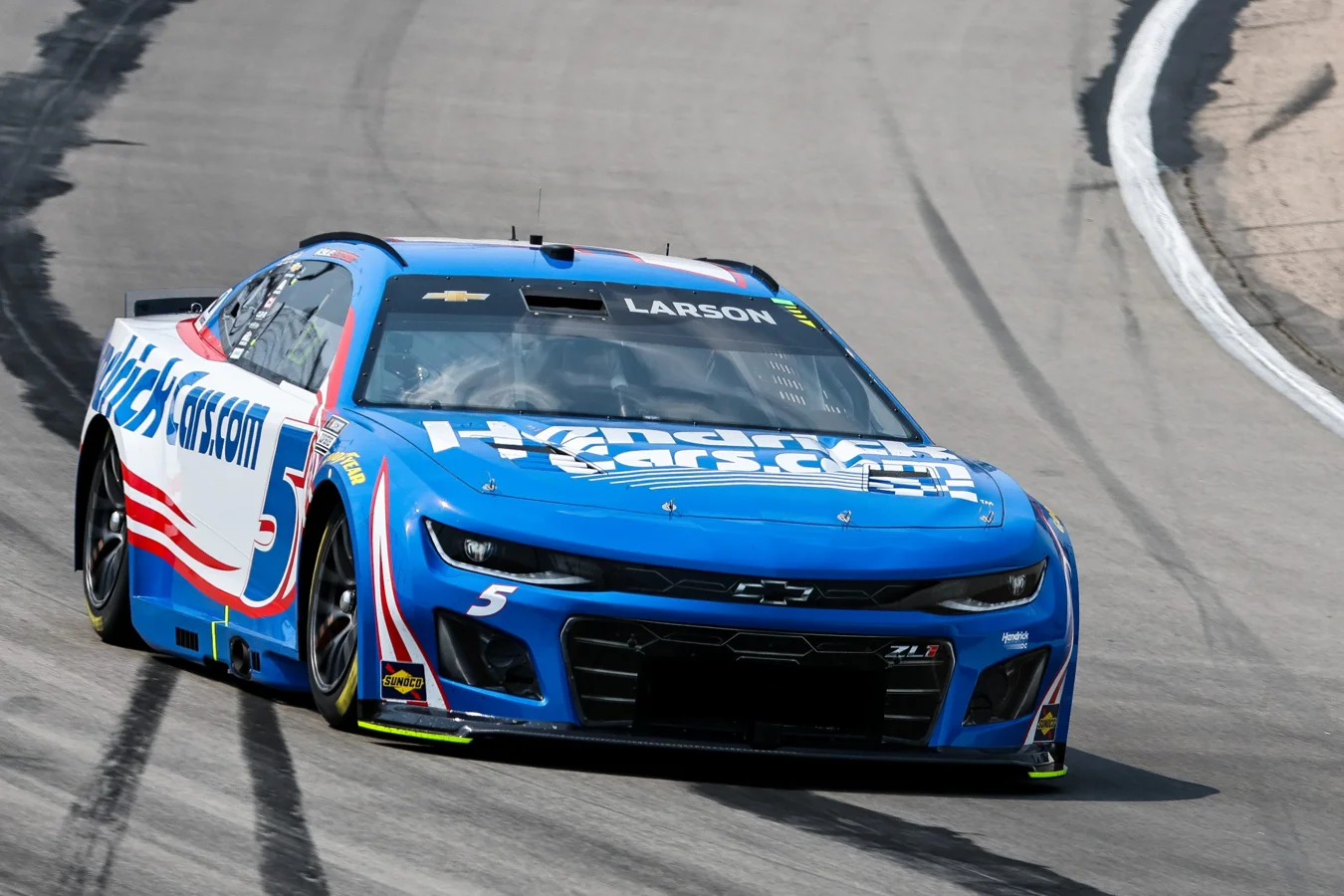
Kyle Larson voices frustration over NASCAR’s Next Gen car and race competitiveness
Beyond films, Larson has been vocal about current NASCAR racing challenges, especially concerning the Next Gen car introduced in 2022. Designed to standardize parts and cut costs, the Gen 7 car aimed to create a more competitive field. However, Larson has expressed concerns about how the new design has impacted the quality of racing.
Following events like the Brickyard 400 at Indianapolis and races at Talladega in 2025, Larson highlighted difficulties in passing and overtaking due to the car’s aerodynamic design and tighter performance margins. He shared his reaction to surprising statistics about race winners during a recent interview:
“I mean that’s a surprising stat, so I’m not sure I have a great answer other than, you know, the field’s just tighter now. So, there’s more probably teams that have an opportunity to win if, you know, things go right and then, next gen races are a little bit more chaotic and stuff, but I would have thought that a pole sitter had won, you know, in that amount of time….So, I don’t know. That’s wild.” —Kyle Larson, NASCAR Driver
Since the Next Gen car’s debut, 27 different drivers have claimed race victories, reflecting increased parity across teams. However, Larson‘s comments suggest that despite more winners, the challenge of moving through the field and the overall race dynamics remain pressing issues.
The enduring influence of Talladega Nights and the ongoing evolution of NASCAR racing
Kyle Larson’s perspectives reveal a tension between appreciating NASCAR’s culture—as captured humorously by Talladega Nights—and concerns about how the sport is perceived and evolving. The film’s portrayal has left a lasting imprint, shaping both fan engagement and driver identities, even as it attracted criticism for trivializing the sport.
Simultaneously, Larson’s critique of the Next Gen car points to broader conversations within NASCAR about maintaining competitive racing and satisfying fans. As NASCAR continues to adapt its technology and race formats, input from top drivers like Larson plays a crucial role in shaping the sport’s future direction and addressing challenges linked to race quality and entertainment value.