
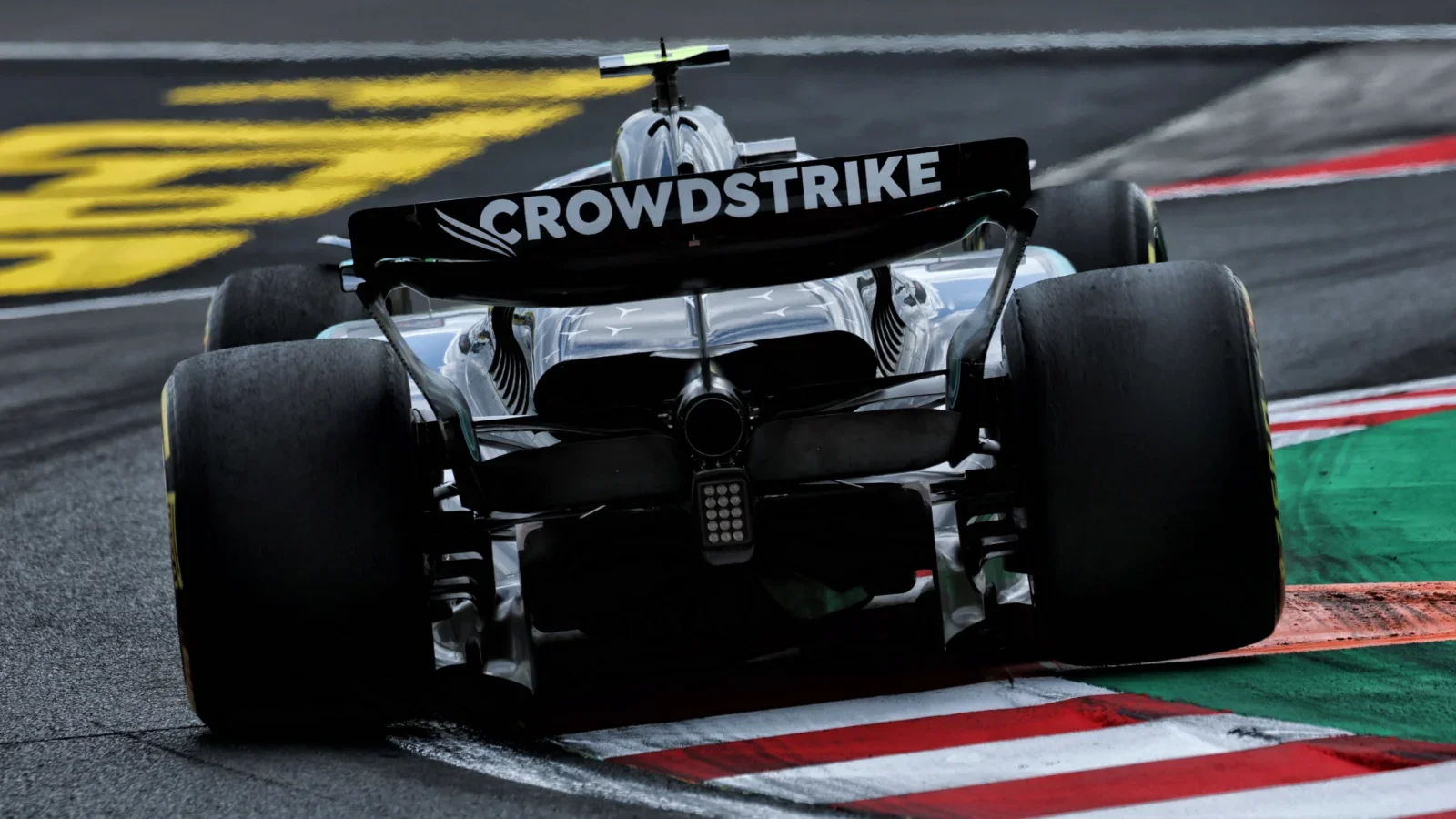

Mercedes’ Formula 1 team has been grappling with persistent difficulties linked to rear suspension upgrades throughout the 2023 season, leading to inconsistent performance and ultimately forcing the team to abandon a key design mid-season. The issues, highlighted by team principal Toto Wolff shortly after the Hungarian Grand Prix, have had a direct impact on race outcomes and driver confidence.
Mercedes F1 rear suspension issues have been at the heart of the team’s challenges since the new configuration was introduced at Imola and reintroduced in Montreal, affecting both qualifying and race pace across several rounds. Despite some bright moments, such as George Russell’s win in Canada, the overall stability and performance of the car have suffered considerably.
Timeline of the Rear Suspension Troubles and Team Decisions
Earlier in the season, George Russell secured four podium finishes in the first six races, including an impressive second place in Bahrain, even while driving a car that was struggling. However, after introducing the new rear suspension setup at Imola, Mercedes faced a decline in overall competitiveness. This upgrade was designed to improve the rear axle by increasing its anti-lift characteristics during braking, aiming to create a more stable aerodynamic platform and reduce rear wheel lock-up.
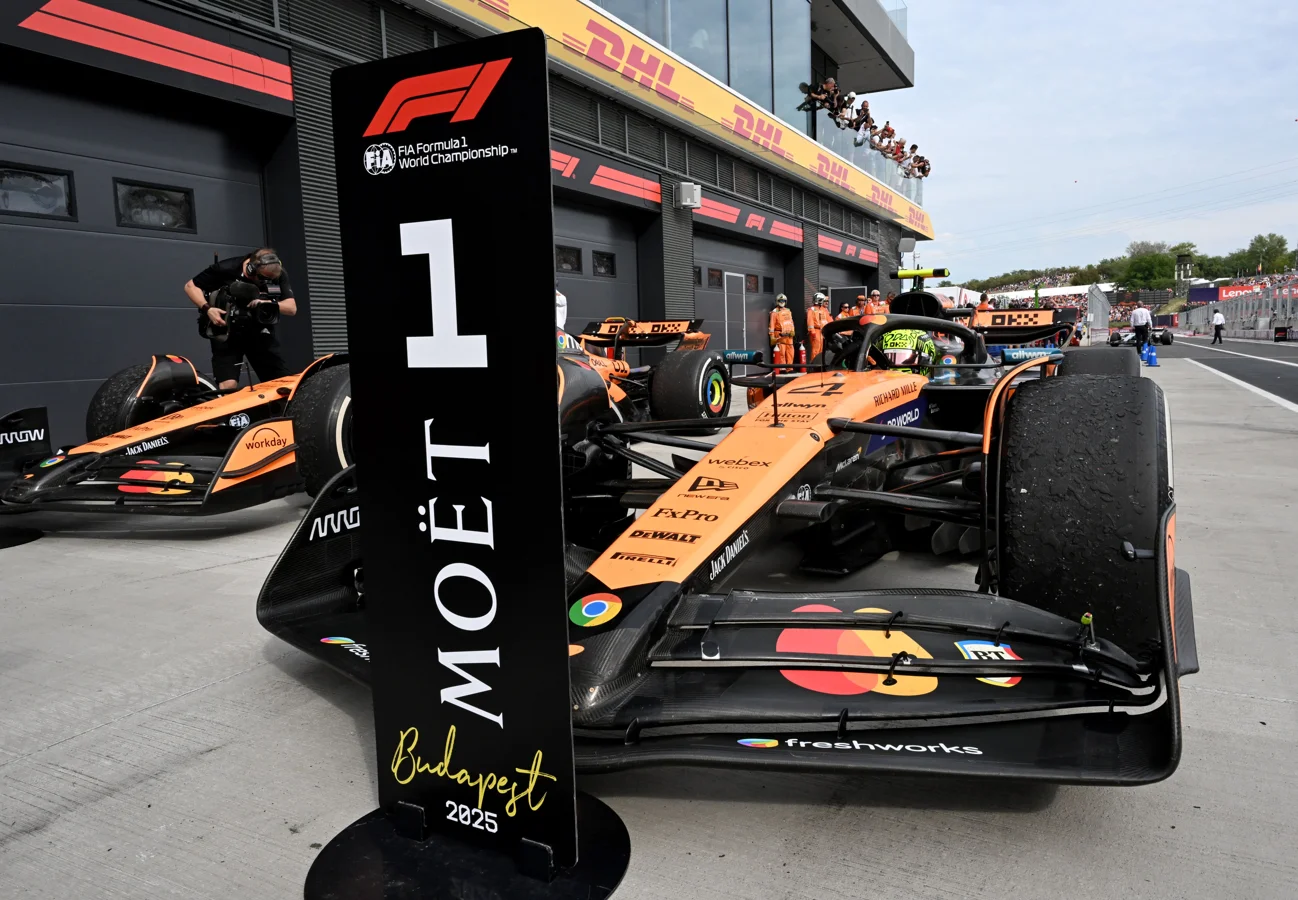
Despite the theoretical benefits of this design, the actual on-track results were mixed. After initially adopting the upgrade, Mercedes reverted to the previous suspension configuration for Hungary following a poor performance in Belgium. Both Russell and teammate Lewis Hamilton expressed greater confidence with the prior specification, though only Russell managed to score points at the Hungarian Grand Prix.
Wolff acknowledged the complexity in diagnosing and resolving the problem, citing simulation tools that failed to accurately replicate real-world effects as a significant barrier. Additionally, the varied nature of different circuits and weather conditions made it difficult to isolate the cause of instability.
Challenges in Simulation and Engineering Culture
Wolff reflected on the disconnect between simulation results and actual car behavior, stating,
“Upgrades are here to bring performance, and there’s a lot of simulations and analysis that goes into putting parts in the car, and then they’re just utterly wrong,”
highlighting how Mercedes’ digital predictions did not match reality. He added,
“You need to go back to the analogue world and put it in the car and see what it does, and if it doesn’t do what it should do… and that’s a tricky bit, I guess, for everyone in Formula 1.”
He described the rear suspension upgrade as
“the [latest] example of how it tripped us over.”
This upgrade was meant to increase stability, but in practice it reduced driver feedback and made the car less stable, a problem that was complicated further by the differing demands of tracks like Canada, Austria, Britain, and Belgium.
How Track Characteristics Masked the Suspension Flaws
The team was misled to some extent by the Montreal race, where braking occurs mostly in a straight line and high-speed corners are minimal. The car’s stability in these conditions disguised the underlying issues, causing Mercedes to continue using the flawed rear end setup for too long.
Wolff explained,
“We tried to solve a problem with the Imola upgrade, a mechanical upgrade,”
but in doing so,
“it let something else creep into the car, and that was an instability that basically took all confidence from the drivers, and it took us a few races to figure that out. Obviously, [we were] also misled a little bit by Montreal; you think maybe that’s not so bad.”
Once the team accepted the severity of the problem, the new design was dropped, and the car returned to a more reliable form by the Hungarian Grand Prix. Russell confirmed this, saying,
“And we came to the conclusion that it needs to go off, it went off, and the car is back to solid form.”
Engineering Perspectives on the Difficulties
Given Mercedes’ extensive resources, the delay in identifying the rear suspension’s shortcomings seems surprising. Engineering director Andrew Shovlin noted that the team‘s approach involved testing multiple setups over several races, which required consistent conditions to understand the effects clearly. The team had to balance experimentation with maintaining competitive form.
Veteran engineer Pat Symonds has previously commented on the challenges of new design directions, noting the difficulty of interpreting sparse data and the psychological investment engineers develop in their concepts. He explained,
“Performance optimisation is a multi-dimensional problem and not an easy one to understand, particularly if the data you have is sparse,”
and that engineers may continue pursuing a design despite failures, hoping improvements emerge in future iterations.
“You may feel responsible for a particular direction that has been taken – or you might firmly believe that, in spite of repeated failures, success will appear with the next design iteration.”
Looking Ahead as Mercedes Shifts Focus to Future Projects
With the 2023 season challenges mounting, Mercedes has now halted further upgrades to the current car and has shifted its full attention to the development of the 2026 race car. Wolff stated clearly, “There’s no more upgrades,” emphasizing a strategic decision to prioritize next year’s platform over attempting further fixes.
He added,
“Now we know that we have a more stable platform that’s going to give us some goodness. I think let’s see how we can optimise checks and engineering in terms of finding the right set-ups that suit it. And aim to be as competitive as we can.”
The lessons learned from this rear suspension saga are expected to play an important role in shaping Mercedes’ future projects, as the team aims to avoid similar pitfalls and regain competitiveness in the highly demanding field of Formula 1 engineering.