
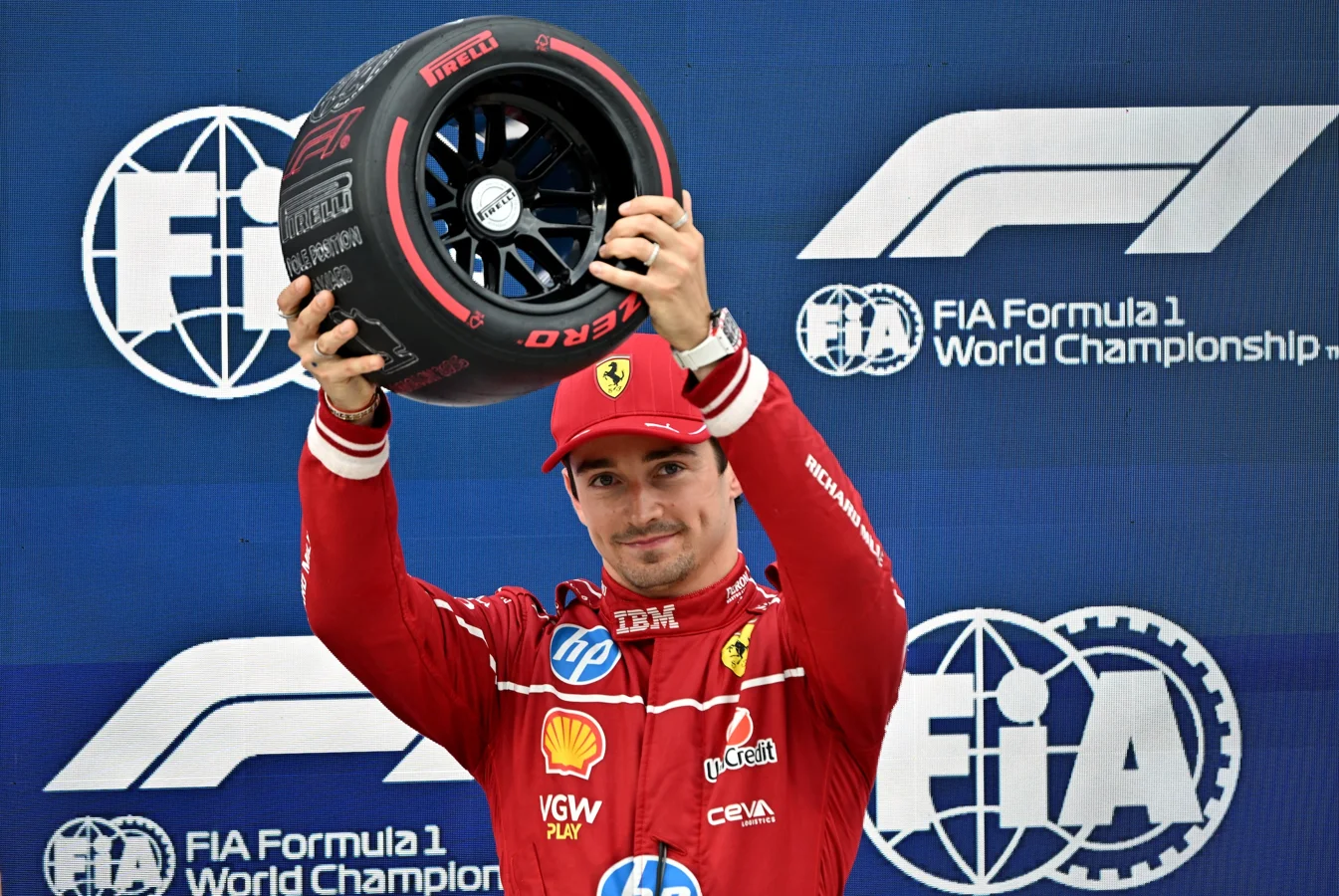

Formula 1 statistics reveal that out of 487 grands prix in history, 43.2% of winners started from pole position. Since Charles Leclerc entered the sport in 2018, however, the overall percentage of races won from pole has risen to 50.3% (82 wins in 163 races). Despite securing 27 pole positions—more than legends like Mika Hakkinen, Niki Lauda, and Nelson Piquet—Leclerc has only converted five of these poles into victories. This striking disparity reflects a unique challenge in Leclerc’s ability to translate his qualifying success into race wins.
Instances when pole position did not lead to victory
Leclerc’s career features multiple races where starting from pole did not result in a win, often due to a mix of mechanical troubles, strategic missteps, or on-track battles. For example, in the 2019 Bahrain Grand Prix, after leading from pole, he dropped to third behind Mercedes drivers due to engine issues. Similarly, at the 2019 Austrian Grand Prix, a strong race was nearly won until Max Verstappen overtook him on lap 69.
In some cases, mechanical failures ended his races prematurely: during the 2022 Spanish GP, Leclerc was leading by 12 seconds before a turbo failure forced his retirement. The 2022 Azerbaijan GP saw him briefly regain the lead after a virtual safety car stop, only to retire soon after with engine failure. An unfortunate driveshaft problem prevented him from even starting the 2021 Monaco GP after securing pole position.
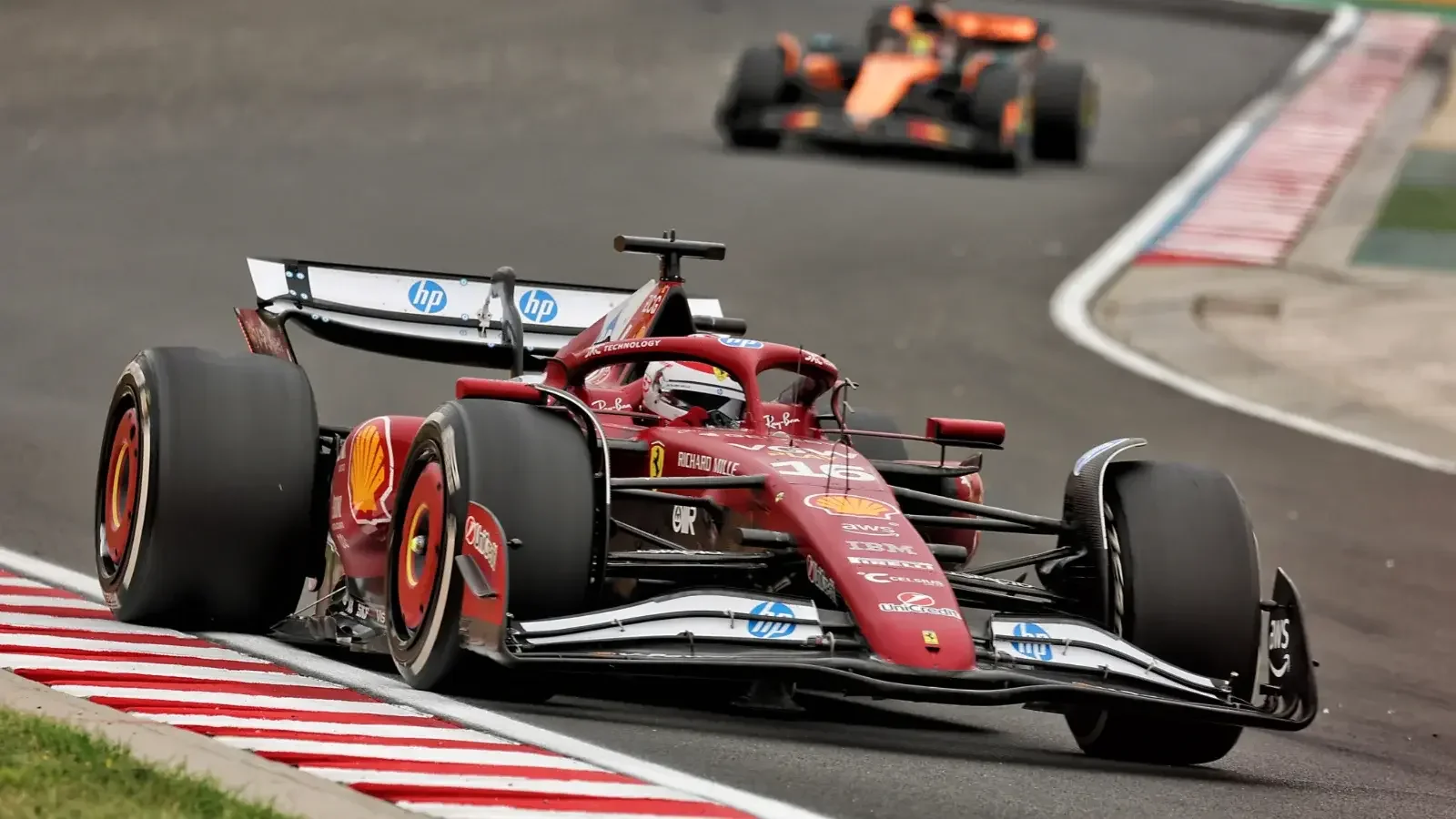
Strategy also played a significant role in limiting his conversions. At the 2022 Monaco GP, on a wet track, Ferrari’s double pit stop and a mistimed switch to slick tires left Leclerc fourth, unable to reclaim top position. The 2022 Italian GP featured an unsuccessful two-stop strategy that resulted in second place behind Verstappen.
Successful conversions from pole position
Amid these challenges, Leclerc has secured five wins from poles, including several impressive performances. He claimed his first victory at the 2019 Belgian GP, holding off teammate Lewis Hamilton just a day after the tragic death of Anthoine Hubert. His second came at Ferrari’s home race in Monza the same year, where he fended off Valtteri Bottas.
Leclerc’s 2022 Bahrain GP victory was remarkable, achieving pole, fastest lap, and leading all but two laps, nearly completing a grand chelem. Shortly after, he repeated this dominant performance at the 2022 Australian GP, winning with a significant margin over second-placed Sergio Perez.
More recently, Leclerc ended his long-standing home curse by winning the 2024 Monaco GP without major opposition, a meaningful achievement on the streets where he grew up.
Notable races where Leclerc narrowly missed winning from pole
Several races show Leclerc’s competitiveness despite not winning from pole position. At the 2019 Singapore GP, he lost the lead to teammate Sebastian Vettel and could not regain it. The 2019 Russian GP ended with Leclerc finishing third after a safety car period allowed Mercedes to gain a 1-2 finish. Similarly, in the 2019 Mexican GP, a slow second pitstop and a two-stop strategy saw him drop to fourth, just six seconds shy of victory.
In 2023, Leclerc saw mixed results: a third place at the Azerbaijan GP after leading briefly, a third in Belgium after losing the lead early, and a disqualification in the United States Grand Prix despite starting from pole. His 2023 Las Vegas GP run was a close battle where he reclaimed the lead mid-race but eventually finished second behind Max Verstappen.
Other notable instances include the 2023 Mexico City GP, where a collision and DRS overtakes dropped him from second to third, and the 2024 Belgian GP, where Leclerc started well but was passed by Lewis Hamilton and Oscar Piastri, finishing third after Piastri’s outside-passing maneuver.
Reasons behind Leclerc’s difficulty turning poles into wins
The breakdown of Leclerc’s 27 pole position starts reveals why so few have translated into victories. Mechanical failures beyond his control caused 4 of the losses, while 5 were affected by strategy errors or unfortunate safety car timings. Two races were lost due to driver mistakes, and in 11 cases, Leclerc was beaten fairly on track by rivals.
This mix highlights the complex and multifaceted nature of Formula 1 racing, where a strong qualifying performance alone is not sufficient. Mechanical reliability, race strategies, and tactical on-track decisions all play vital roles in securing race wins, with any weakness impacting results despite an advantageous starting position.
Implications for Leclerc’s future race prospects
Charles Leclerc’s unique pole position record demonstrates both his raw speed and the challenges that prevent him from maximizing race day performance. While his qualifying prowess places him among Formula 1’s elite, improving reliability and race management will be essential to increase his win tally.
As teams refine strategies and resolve technical issues, especially within Ferrari, Leclerc’s ability to convert poles into victories could improve substantially. His recent win at the Monaco GP may signal a turning point, boosting his confidence and momentum ahead of upcoming races in the competitive field.
For fans and analysts, understanding the complexities behind these statistics adds depth to appreciating both Leclerc’s talent and the intricate nature of winning in modern Formula 1.