
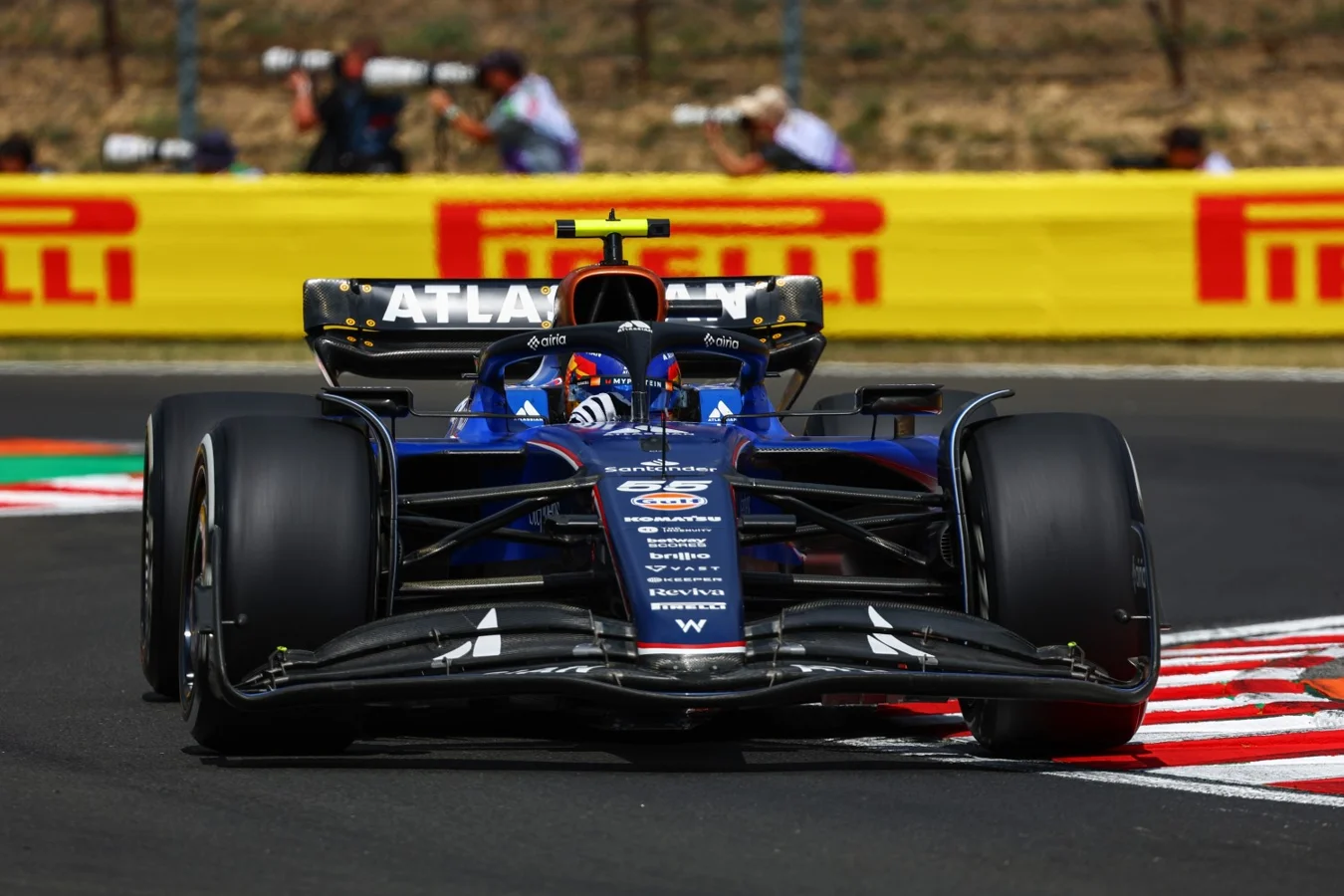

Carlos Sainz has called for a significant redesign of Williams’ Formula 1 car for the 2026 season after the team’s continued difficulties at varied circuits such as the Hungarian Grand Prix. Reflecting on Williams’ performance this year, Sainz pinpointed the necessity for a car that performs well across all types of tracks, rather than excelling only in fast straights with short corners.
Drawing from his experience in the first 14 rounds of the current Formula 1 campaign, Sainz explained that the FW47 struggles particularly with maintaining downforce in longer radius turns, a weakness clearly exposed on the Hungaroring. He stressed that this ongoing issue limits competitiveness on demanding circuits like Budapest, Barcelona, and Qatar.
Williams’ Current Package Shows Strengths and Limitations
The Williams FW47 has demonstrated competence by scoring points in ten of fourteen races this season, showing improved versatility compared to prior models. Despite this, some design traits trace back to its predecessors, such as the FW44 to FW46, which performed best on high-speed tracks but suffered from inconsistent downforce management. This has contributed to unpredictable results throughout recent seasons.
Sainz emphasized that while the current setup benefits from relatively strong straight-line speed, the car’s aero performance suffers in corners requiring sustained downforce, preventing the team from fully capitalizing on every circuit.
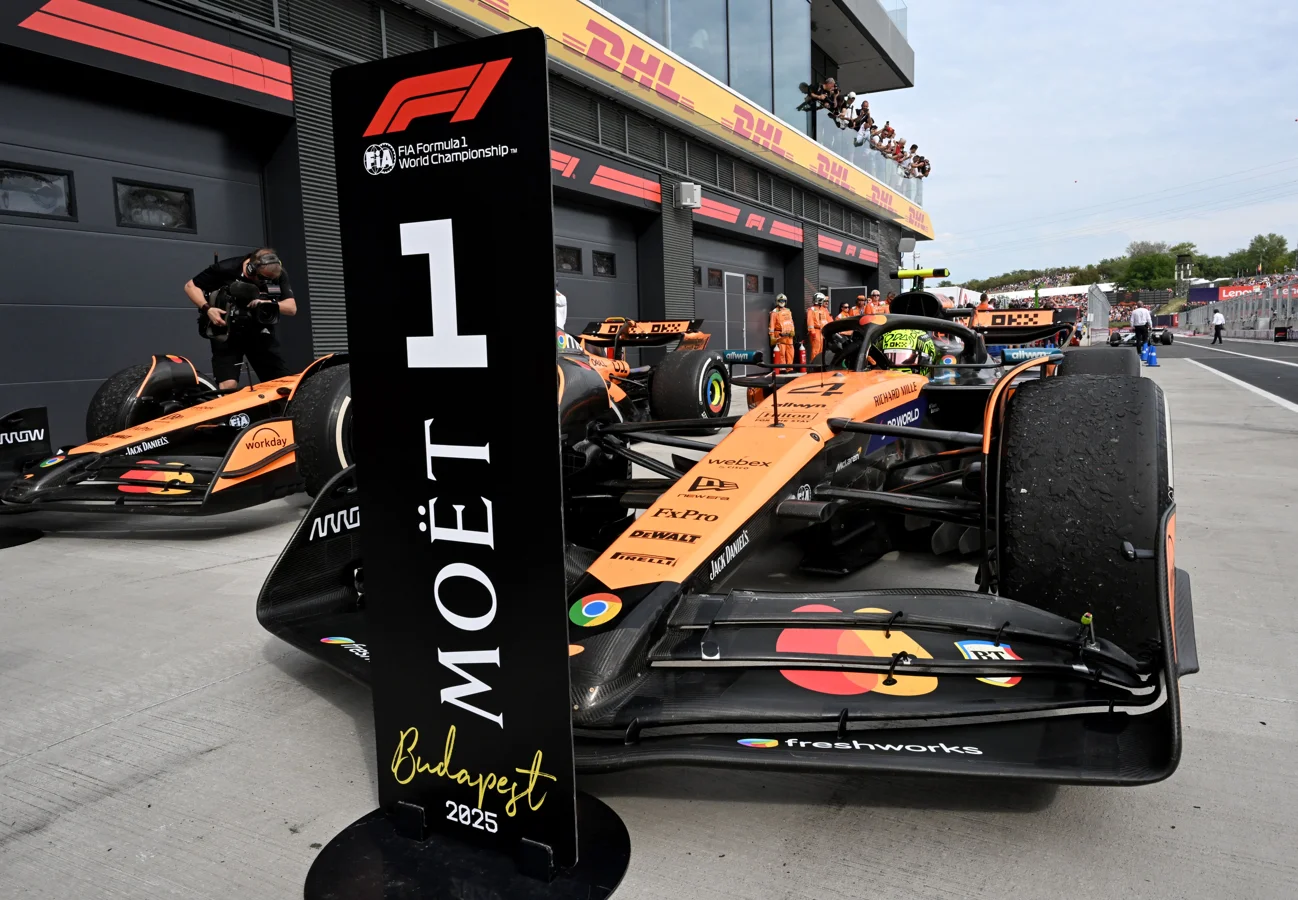
Sainz’s Insight on Performance Challenges and Future Expectations
Arriving this season from Ferrari, where he competed at the front of the grid, Sainz acknowledged the stark contrast in competitiveness. He provided detailed feedback after qualifying in Hungary, aiming to help the team understand the deficits in the FW47’s handling at technical venues.
“It’s [Hungaroring] always been a difficult track for the team,”
Sainz noted.
We had quite a long debrief after qualifying because obviously I’m coming from the team that was on pole going back to a team that was P13 with me. I could give them very strong feedback on why this car is lagging around a track like this. Obviously for this year we cannot do anything, but for the future hopefully it’s a very big learning curve for the team to know how we need to develop the Formula 1 car to be successful and competitive also in tracks like Budapest or Barcelona.
He further detailed aerodynamic shortcomings, particularly in corners demanding consistent downforce from entry through mid-corner phases. This persistent issue contributes to poor performance in combined corners, exemplified by struggles at circuits like Barcelona and Qatar. Sainz stressed that addressing these flaws requires a fundamental shift in design philosophy going into 2026.
“It needs a very big design philosophy change for the future. We’re trying to understand where and what to change to make sure that next year’s car is a bit more of an all-rounder and gives us a better platform to work in multiple tracks.”
Team Alignment on Development Goals Amid 2025 Resource Constraints
Although the 2025 car is no longer receiving major development, Williams remains focused on building a more competitive platform for the future. Sainz indicated that current improvements rely heavily on fine-tuning available setups rather than aero enhancements, which limits the team’s ability to respond dynamically during this season.
“It’s been a very strong start to our time together in terms of the way we want to develop the team, the car, the interaction with Alex, with James,”
Sainz said, referring to his collaboration with teammate Alexander Albon and key technical personnel such as James.
He added that driver feedback cannot yet be fully exploited as ongoing wind tunnel testing and aerodynamic development are paused until the next campaign begins.
This reality places pressure on Williams’ performance for the remainder of 2025, with Sainz aiming to maximize consistency through race weekends rather than attempting radical setup changes.
Sainz Aims for Consistency as Williams Prepares for Next Season’s Leap
Focusing on the near-term, Sainz shared his strategy for managing the challenges this year.
“The second half of the season, I will just seek consistency with set-up, consistency with the car, and just make sure we execute clean weekends.”
Despite trying multiple setups at Hungary, he ultimately reverted to the configuration that had previously delivered strong qualifying performances earlier in the year, acknowledging that the team is somewhat out-developed by midfield rivals who have advanced their packages more aggressively.
Looking ahead, the Williams squad sees the 2026 car as a crucial turning point, one that must overcome aerodynamic weaknesses that have persisted on several demanding circuits.
Sainz’s detailed input, coupled with aligned team efforts, positions Williams to address the shortcomings for an improved and more versatile Formula 1 car, targeting stronger competitiveness beyond high-speed tracks where they have traditionally excelled.