
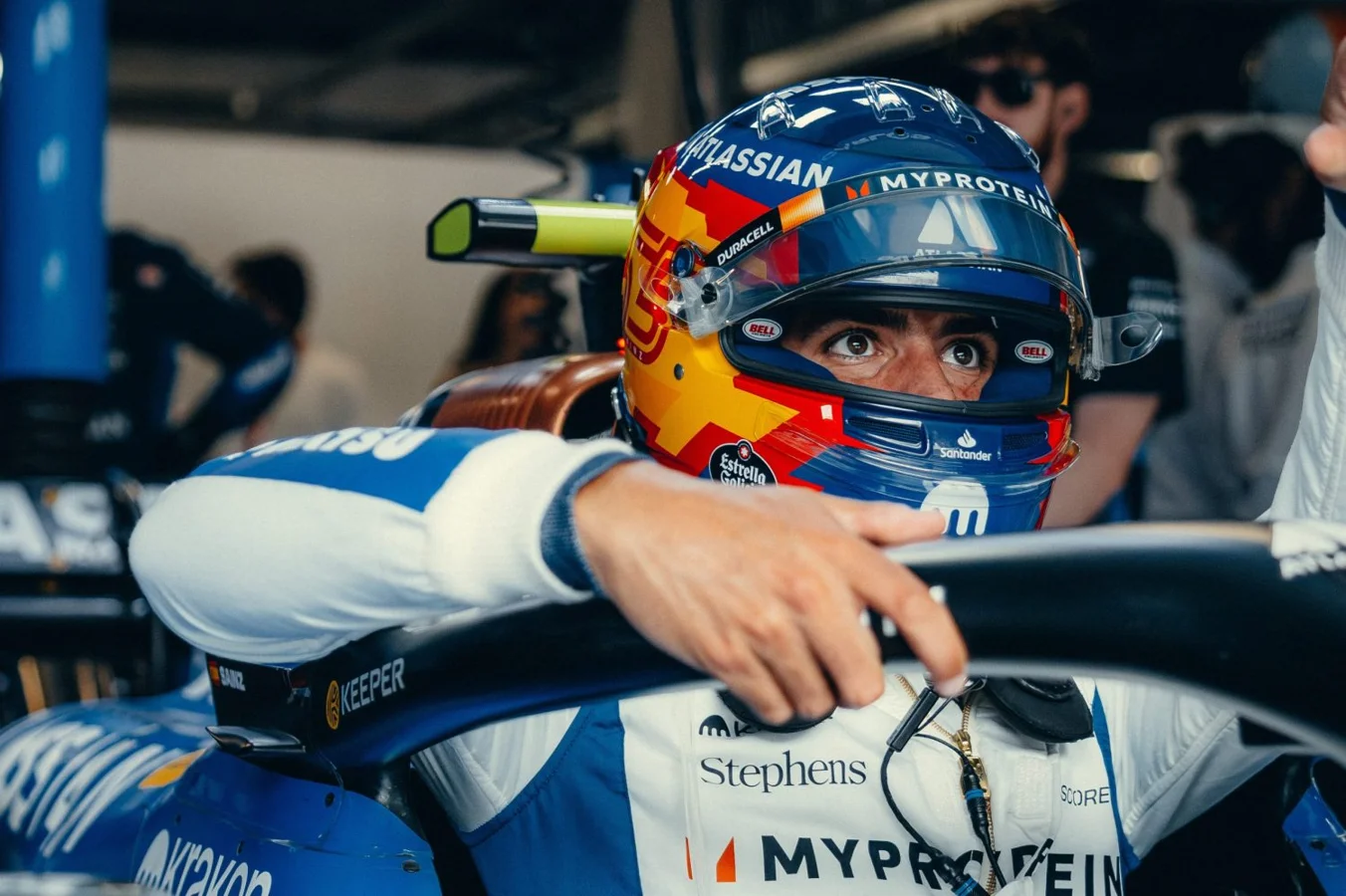

Carlos Sainz recently discussed Williams Racing‘s ambitions for future Formula 1 success, emphasizing their ongoing development efforts. Speaking after the Hungarian Grand Prix held at the Hungaroring, the Spanish driver explained how the race served primarily as a learning opportunity for the Grove-based team’s progression with forthcoming car designs.
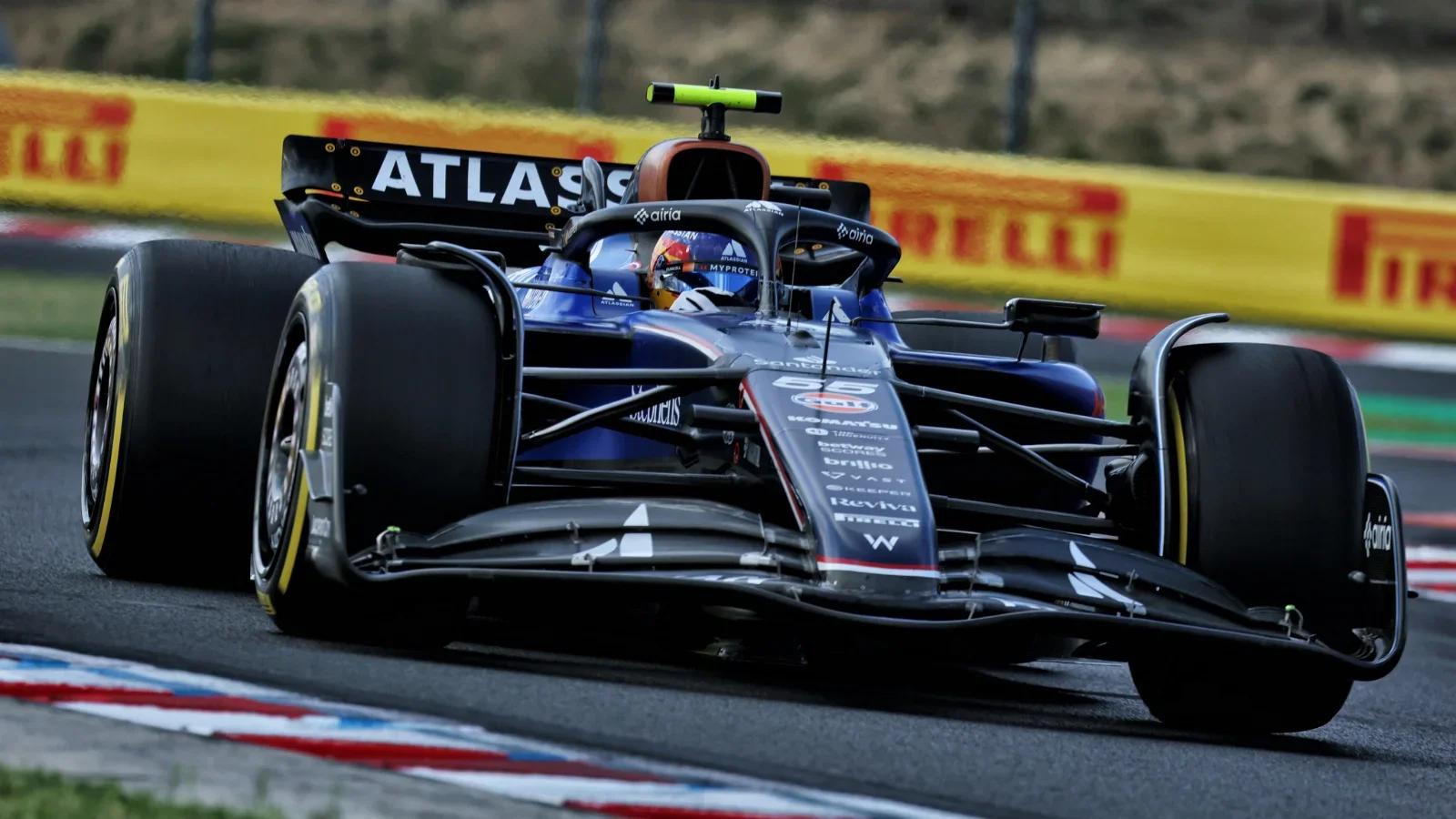
Starting 13th on the grid, Sainz faced challenges matching the pace of points contenders and ultimately finished the race in 14th position. After the event, he addressed questions about the Williams FW47’s performance difficulties, particularly on tracks like the Hungaroring that feature long, sweeping corners.
The Need to Address Williams’ Struggles on Tracks with Long Corners
Sainz attributed the FW47’s limited effectiveness to aerodynamic shortcomings impacting its handling through continuous bends. He commented on the difficulty of the Hungaroring track for the team, contrasting his experience coming from a front-running squad to Williams’ current standing mid-pack.
“It’s [Hungaroring] always been a difficult track for the team. We had quite a long debrief after qualifying because obviously, I’m coming from the team that was on pole, going back to a team that was P13 with me.”
—Carlos Sainz, Formula 1 driver
The four-time Grand Prix winner stressed that events like these provide valuable insights for shaping Williams’ future car development. Though immediate improvements are not feasible within this season’s constraints, Sainz expects significant learnings to influence upcoming designs.
“I could give them very strong feedback on why this car is lagging around a track like this. Obviously, for this year we cannot do anything, but for the future, hopefully it’s a very big learning curve for the team to know how we need to develop the Formula 1 car to be successful and competitive also in tracks like Budapest or Barcelona.”
—Carlos Sainz, Formula 1 driver
Calls for a Fundamental Shift in Williams’ Design Approach
<pSainz highlighted the necessity for a major overhaul in Williams’ design philosophy, particularly to counteract weaknesses noticed in aerodynamic performance through long corners—a recurring issue that has hindered the team over recent seasons. He explained that maintaining downforce from entry to mid-corner is critical but currently inadequate in the FW47’s configuration.
“We have relatively poor aero characteristics in long corners where you need to hold the downforce from entry to mid-corne…It needs a very big design philosophy change for the future. We’re trying to understand where and what to change to make sure that next year’s car is a bit more of an all-rounder and gives us a better platform to work in multiple tracks,”
—Carlos Sainz, Formula 1 driver
This sentiment is shared by others in the Williams team, including team principal James Vowles, who has acknowledged the challenge of optimizing the car’s performance at circuits with several slow corners. Vowles, who previously worked with Mercedes, has emphasized their goal of unlocking the car’s full potential on race tracks most compatible with its design strengths.
Looking Ahead to the 2026 Formula 1 Framework
With the FIA’s planned regulations overhaul coming in 2026, Williams aims to develop a Formula 1 car that performs consistently across a variety of tracks. The intention is to build a versatile vehicle more capable of handling diverse conditions found throughout the F1 calendar, including circuits like Budapest and Barcelona, which have posed particular challenges so far.
Carlos Sainz Williams future development will thus focus heavily on re-evaluating aerodynamic concepts and chassis balance to create a competitive platform that bridges current deficits. This strategic shift carries significance as Williams seeks to regain competitiveness within a highly demanding Formula 1 environment.