
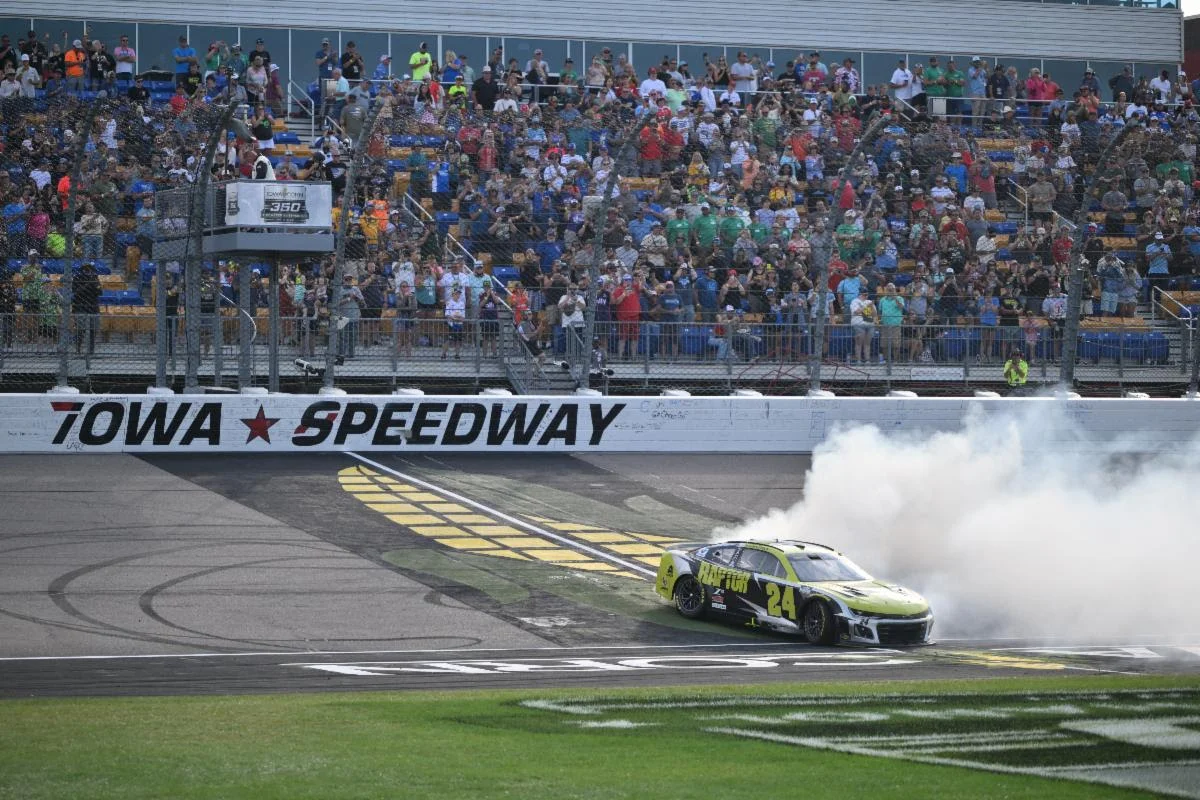

William Byron, the driver of the No. 24 Hendrick Motorsports Chevrolet, spoke with the media ahead of the NASCAR Cup Series practice and qualifying sessions at Watkins Glen International about the difficulties drivers face during this portion of the season. Byron highlighted distinct differences between the summer and fall races at Daytona, emphasizing how the dynamic nature of these events shapes driver strategies and race outcomes. His William Byron Watkins Glen quotes provide insight into his mindset and approach to handling the demanding schedule.
Byron noted that the fall race at Daytona tends to be more chaotic compared to the Daytona 500, despite his back-to-back wins in the latter. He explained that the track’s grip fluctuates, particularly gaining more at night, and the cars tend to feel more unstable. With the elevated desperation among competitors late in the season, pushing becomes more aggressive, increasing the likelihood of crashes. He recalled incidents from last year’s fall race, including a serious accident that occurred when drivers attempted risky maneuvers while battling for position.
“Yeah, it’s a lot different. I think the fall race is just very chaotic. I think the track is slick in some ways, but at nighttime, it gains some grip. I feel like the cars are edgier to drive in the fall race. Plus, in the Daytona 500, you have more time to dial in your setup and kind of dial in your handling for what you’re going to fight on Sunday. I think desperation is really high for a lot of people, so it just creates a lot of elements that create a lot of crashes. I also feel like the pushing gets more aggressive because of the desperation. The race feels really long, usually.”
He reflected on last year’s experience, where running near the front meant constantly navigating through variable conditions and sudden cautions. Byron emphasized the unpredictability of road course racing and the constant need to adjust strategy mid-race.
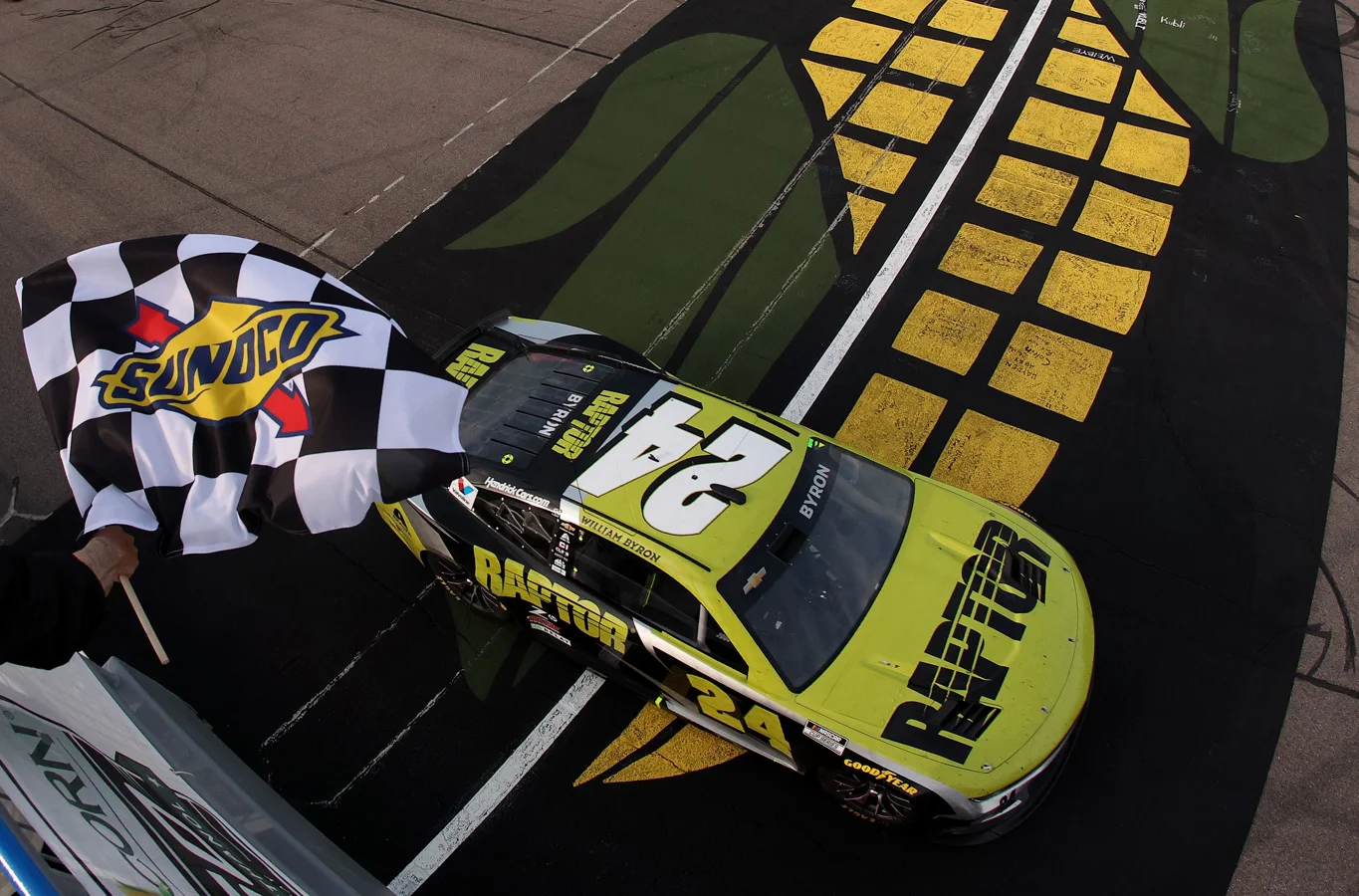
Insight Into Mental Resilience and Sports Therapy Impact
Byron opened up about his mental conditioning this season, which includes working with a sports therapist named Joanne. He credits this support, combined with personal life balance, for helping him maintain strong mental focus despite setbacks on the track. Through this approach, Byron has gained clarity on what he can control and the importance of perspective when dealing with the unpredictable nature of racing results.
“I feel like I’m mentally probably better than I’ve ever been, and it’s really just perspective and balance in my life. I think some of it definitely has to do with working with Joanne. We’ve worked together for a couple years, so really nothing different there. But I feel like just having a really good balance in my life and really good perspective on what I’m doing, what actually matters and what is in my control, right? Like, what aspects of driving the car do I feel like are going to enable me to win the next race? And a lot of times, that’s what keeps me going through the bad results that are due to just circumstances or something out of your control.”
He added that as he has matured, focusing on consistent, controllable factors has been key to staying competitive week after week.
Balancing Race Strategy and Championship Goals
When asked about the regular season championship chase, Byron confirmed that it remains a priority, but that his primary focus is on winning individual races. He described a routine of reviewing his points standing closely after races while balancing that knowledge with the committed race effort needed to secure strong finishes.
Byron explained that although points influence mindset around race weekends, they rarely dictate in-race decisions directly. He cited a recent example where his team chose an offensive strategy with fresh tires to compete for a high finish rather than settling for a conservative points-preserving result.
He also emphasized the strength of the current points system in rewarding consistent high performance and recalled how a modestly weak showing at Martinsville still resulted in a points gain. Byron views the math as a guide, but race execution remains paramount.
Yeah, I mean Daytona is definitely – like you’re hopeful that you get to a point there where you kind of know where you stand before you get to Daytona because you can have a 40-point swing at Daytona alone. We saw that at Atlanta — we crashed out in the first stage and we had almost a 40 or 50-point swing to the guys we were around. So yeah, you just hope that by the time you get there, you can kind of have some more certainty.
—William Byron, NASCAR Driver
Preparation and Expectations for Watkins Glen Practice
Ahead of practice sessions at Watkins Glen, Byron discussed his anticipation to observe competitors Shane van Gisbergen and Connor in the opening group, eager to learn from their approach and adapt his own performance. He acknowledged past struggles with new tires introduced last season but expressed confidence that experience gained has improved his team’s understanding of these conditions.
Byron highlighted how prior success at Watkins Glen and lessons learned from recent races position him well to capitalize on familiar terrain and tire performance. This preparation aims to build momentum for the rest of the challenging stretch in the NASCAR schedule.
Comparing Performance Across Different Tracks
On the topic of transitioning from tracks like Iowa to Richmond, Byron acknowledged the challenge of comparing races on surfaces and configurations that demand vastly different driving techniques. He described Richmond’s old, slick asphalt as a “beast” markedly different from recently repaved tracks such as Iowa, despite any hope that some skills might carry over.
Yeah, I mean you hope so, but they’re very different. Like Iowa, with the repave and just the conditions there versus Richmond being really slick old asphalt and slow mid-corner, it’s going to be a lot different at Richmond. So yeah, you hope some stuff translates, but Richmond’s kind of its own beast, really.
—William Byron, NASCAR Driver
Assessing Shane van Gisbergen’s Road Course Success
Byron shared his admiration for Shane van Gisbergen’s recent streak of victories on road courses, noting how the Trackhouse Racing driver displays remarkable comfort and control from the first lap. Byron attributed van Gisbergen’s success to his smooth driving style, repeatable lap times, and quick adaptation to NASCAR’s unique car setup compared to Australian Supercars.
He drew parallels between van Gisbergen’s approach and the way NASCAR oval racers approach their craft, reinforcing the value of confidence and consistency. Byron was impressed with how van Gisbergen mastered the nuances of the sport swiftly, maintaining car control without excessive sliding or loss of composure.
Challenges Preventing a Three-Race Winning Streak for Byron
Reflecting on his own pursuit of consecutive road course wins, Byron expressed humility regarding the talent pool and the constant competition from drivers who practice extensively in similar environments. He cited the Trackhouse Motorplex and the go-kart racing there as an example of where young drivers refine their skills daily, giving them an edge in raw speed and car feel.
Byron acknowledged that while he remains fast, limited practice time compared to others leads to occasional mistakes and less intimate car control. He recognized the diversity of driver backgrounds and how different experiences shape performance on various track types.
Approach to Points Standings and Playoff Preparation
When asked about the points buffer needed to feel secure heading into Daytona, Byron avoided specifying an exact number, preferring to focus on continuous improvement over the next few races. He views the current phase of the season as a critical three-race stretch that tests versatility and preparation across diverse tracks including Watkins Glen, Richmond, and Daytona.
I mean, I don’t know. I don’t want to put a number on it, but I would just like to see how these next couple weeks go. I look at it as this is kind of its own three-race round right here, so good preparation for us. As unpredictable as Watkins Glen, Richmond and Daytona can be, it’s honestly not much different than the Round of Eight. You’ve got Talladega in there this year, so it could be a lot like this stretch.
—William Byron, NASCAR Driver
Opinions on New Restart Zone and Its Effect on Racing
Byron offered positive feedback on the recently implemented restart zone changes, believing it has reduced crashes in key sections of the track while maintaining opportunities for side-by-side racing. He suggested that the new system represents an improvement over the previous year’s approach and enhances race safety without sacrificing competition for the lead.
Yeah, it looked fine. I think it’s a good improvement than how we were last year, just watching the race back and how many crashes there were up through the esses and into turn one. So I think it’s an improvement and it still puts on side-by-side racing for the lead.
—William Byron, NASCAR Driver
Racing Dynamics Among Hendrick Motorsports Teammates
Addressing questions about racing alongside fellow Hendrick Motorsports drivers in the regular season championship hunt, Byron stated that internal competition remains consistent with the past. He mentioned that racing against teammates during playoffs and championships has prepared them to handle weekly battles professionally while pushing harder to outmaneuver each other tactically.
No, I mean, we’ve all raced for wins and raced against each other in the playoffs and championships, so it doesn’t change for the regular season. It’s the same. We all race each other well and, if anything, you just get a little bit more crafty.
—William Byron, NASCAR Driver
Implications for the NASCAR Season Moving Forward
William Byron’s reflections reveal a driver focused not only on physical skill but also on mental preparation and strategic thinking in an intense NASCAR season. As the sport moves through a demanding stretch of road courses and short tracks leading up to Daytona, Byron’s balance of optimism and resilience could prove vital for maintaining his competitive edge.
His ability to adapt to diverse track conditions, capitalize on data from competitors like Shane van Gisbergen, and harness mental toughness will play critical roles as the Hendrick Motorsports driver pursues both race victories and the regular season championship. Fans and analysts alike will watch closely to see how his approach unfolds in the upcoming weeks at Watkins Glen, Richmond, and beyond.