
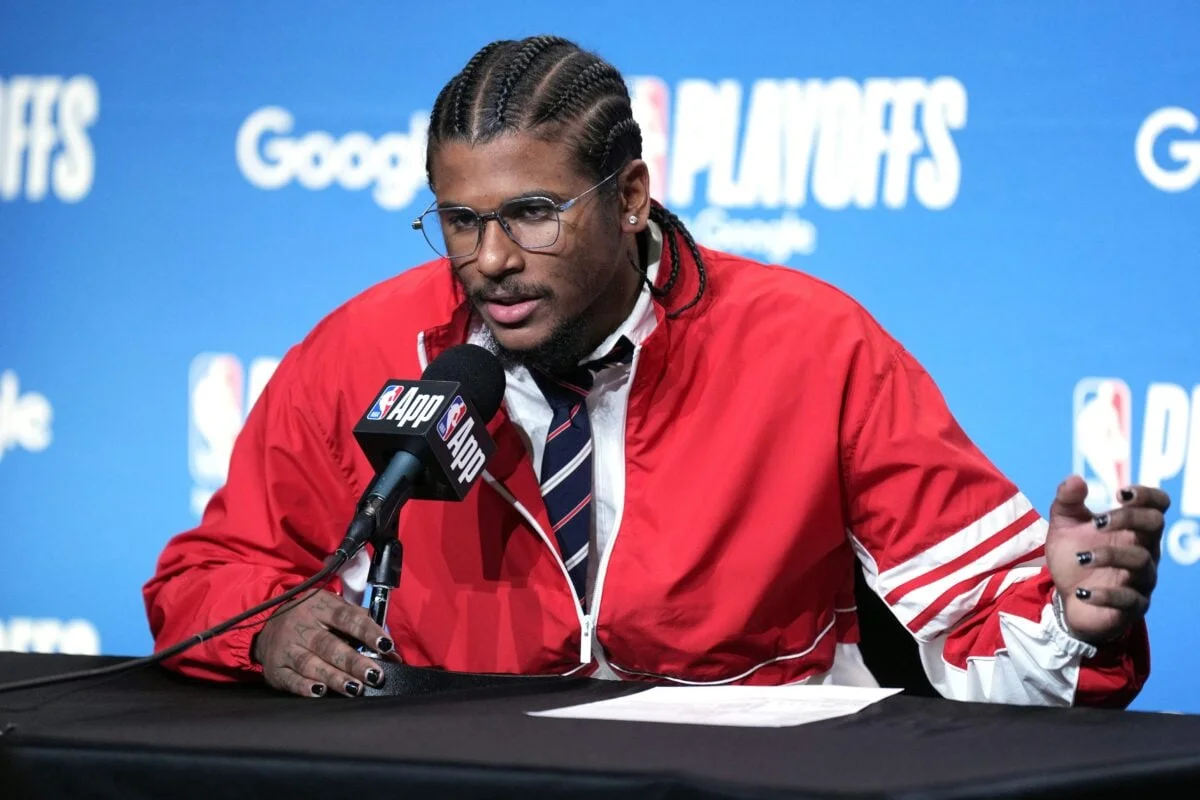

The Phoenix Suns are reportedly moving forward with a trade proposal that would send Jalen Green, Dillon Brooks, and prospect Khaman Maluach to the Atlanta Hawks in exchange for Trae Young and Onyeka Okongwu. This move aims to strengthen the backcourt around franchise star Devin Booker by pairing him with a proven playoff performer. After months of uncertainty surrounding Green’s fit alongside Booker, the Suns’ front office appears ready to pursue a more complementary backcourt dynamic that better supports their win-now ambitions.
Green’s playing style as an explosive creator who demands the ball conflicted with Booker‘s own scoring and playmaking role, leading Phoenix to reassess the “Jalen Green Suns trade proposal” as a way to improve team chemistry and offensive efficiency. The addition of Trae Young, known for his deep shooting range and playmaking gravity, promises to alleviate Booker’s burden of initiating offense on every possession.
Why the Jalen Green Experiment Failed to Deliver in Phoenix
Jalen Green’s time with the Suns has been characterized by high-risk potential but notable inefficiencies, especially regarding shooting accuracy and defense. Although Green offers athleticism and talented ball-handling, he struggles as a reliable shot maker from various areas on the court, which created challenges fitting him alongside Booker, another dominant creator. This backcourt overlap led to difficulties balancing offensive roles and defensive responsibilities.
Analysts like Gerald Bourguet have expressed skepticism about Green’s ability to thrive as an elite shot threat, highlighting issues in scoring efficiency and defensive ratings. As Bourguet remarked,
“He is not an elite shot maker from the rim, from the mid-range, from three-point range… Hopefully, we can build Jaylen Green’s value up and potentially move him, or it just works out somehow, and we have this backcourt of the future now. Um, but for me, I’m very skeptical about how it’s going to work out,”
—Gerald Bourguet, Basketball Analyst
Reports also indicated the Suns explored trade options for Green early on, suggesting doubts about his long-term fit. His style, which thrives with hefty ball control, clashed with Booker’s similar tendencies, making the backcourt crowded with “two alphas” competing for the same offensive space.
Trae Young’s Offensive Value and Defensive Role in Phoenix
Trae Young’s arrival in Phoenix could redefine Booker’s role and impact. Unlike Green, Young excels at stretching defenses with his shooting and creating offensive opportunities for teammates before even advancing past half-court. This skill set allows Booker to focus more on finishing plays and conserving energy for critical moments, typically in the fourth quarter.
Pairing Booker with Young means the Suns would field a backcourt duo that emphasizes spacing and offensive pressure, which fits the team‘s title aspirations. Okongwu’s inclusion also addresses some defensive concerns by adding a versatile rim protector capable of switching and guarding multiple positions, providing balance to a roster previously weighted toward offense.
The trade reflects a strategic move to mitigate the defensive vulnerabilities inherent in a smaller lineup by surrounding the backcourt with length and switchable defenders. This balance is vital given the physical and tactical demands of the Western Conference playoffs.
Devin Booker’s Quest for a Complementary Backcourt Partner
Since becoming Phoenix’s cornerstone in 2015, Devin Booker has consistently led the franchise in scoring and three-pointers, solidifying his role with a significant contract extension through 2030. Yet, the Suns have struggled to find a consistent backcourt partner who complements his style seamlessly. Past collaborations with players like Chris Paul, who provided experience and steadiness but declined with age, and Bradley Beal, who never fully meshed, fell short of expectations.
Jalen Green had the promise of youth and athleticism but lacked the refined off-ball skills necessary for a successful tandem with Booker, especially in a roster aiming for immediate championship contention alongside Kevin Durant. The Suns’ decision to pursue Young reflects a desire to maximize Booker’s effectiveness by pairing him with a guard whose offensive threat commands defensive attention and opens up the floor.
As a proven playoff performer, Young brings a level of experience and clutch capability that aligns with the Suns’ aspirations to compete deep into the postseason. Despite some defensive shortcomings, his offensive talents are seen as an immediate upgrade that could shift momentum in the team’s favor.
Potential Challenges and Stakes of the Booker-Young Backcourt
Although the proposed Booker-Young pairing projects greater offensive firepower, it comes with risks. The backcourt combination is relatively small, potentially exposing the Suns to defensive mismatches against physical opponents in the Western Conference. Success will depend heavily on surrounding them with supporting players who can provide defense, spacing, and versatility.
This move signals Phoenix’s recognition that the previous approach with Jalen Green did not meet expectations and that recalibrating the backcourt is essential for advancing their competitiveness. The trade would mark a decisive moment in the Suns’ roster construction, showcasing an urgent pivot to fit Booker with a partner whose strengths better align with his skill set and the team’s strategic goals.
Ultimately, the Suns acknowledge the need to act swiftly in their championship window, leveraging veteran performance and synergy over long-term experimentation. The outcome of this bold trade proposal will have significant implications for the franchise’s trajectory and Booker’s career legacy as the centerpiece of the team.