
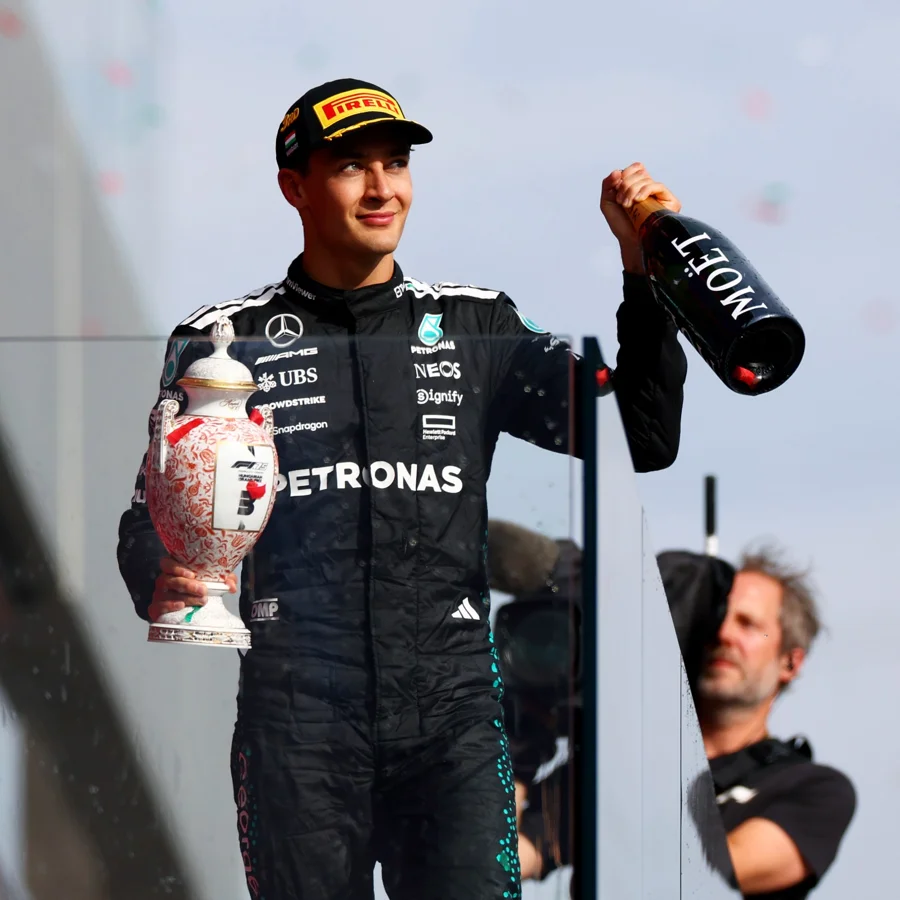

George Russell, now a key Mercedes driver and a leading voice for safety in Formula 1, has spoken candidly about the traumatic crashes that have shaped his determination to improve racing conditions. Halfway through his seventh F1 season in 2024, the 27-year-old Briton’s role as a safety advocate with the GPDA has become increasingly prominent as he pushes for a safer sport for all drivers.
Russell’s journey into safety advocacy began in 2021 when he joined the Grand Prix Drivers’ Association (GPDA) upon entering his third F1 season with Williams. After replacing Romain Grosjean, who retired from the drivers’ association, and following Sebastian Vettel’s departure from F1, Russell was for some time the sole active member until Carlos Sainz joined recently. Alongside the drivers, the GPDA includes former racer Alexander Wurz as chairman and legal expert Anastasia Fowle, collectively supporting efforts to advance driver safety.
How Tragic Crashes Inspired Russell’s Commitment to Safety
The GPDA has long advocated for protective measures, contributing to the adoption of innovations like the halo cockpit device despite early criticism. Russell emphasizes that his personal motivation stems from witnessing firsthand the severe crashes involving colleagues and friends. He recalls seeing incidents involving Billy Monger, who was severely injured in British F4, and Anthoine Hubert’s fatal crash at Spa in Formula 2 in 2019. The vivid memories of these moments intensified his resolve to advocate for change.
I’m not chasing to leave any legacy. That’s never been the intention. It’s just that if I see an opportunity to improve something, I want to speak about it, especially if it comes to track safety or car safety,
Russell explained.
He also recounts the 2020 Bahrain Grand Prix accident involving Romain Grosjean, a terrifying event Russell witnessed from just behind on the track. Seeing Grosjean’s car engulfed in flames left a lasting impression.
That could have happened to anyone. It could have happened to the greatest driver in the world. That’s just the danger we face. So, I think that’s probably why I wanted to be more involved than not.
These experiences have crystallized Russell’s determination to prevent similar tragedies in the future, and his role in the GPDA provides a platform to push for safety improvements. Over his years in Formula 1, he has seen the drivers’ unity strengthen, especially with the sport’s growth and the spotlight brought by greater media exposure such as Netflix’s Drive to Survive series.
As a group we are probably closer and more united than ever,
Russell said.
Everything that’s happened to the sport commercially, with the likes of Netflix and being exposed to so much more as athletes and individuals, so much has changed on the sporting and technical side, the changes in ’22 and the problems we all faced in ’22 with porpoising. It’s given the drivers topics of conversation that we want to sort of tackle together.
Collaborating with the FIA: A Shared Goal for Progress
Despite his criticisms, Russell stresses the importance of working constructively with Formula 1’s governing body, the FIA. Earlier disagreements over communication and regulations, including a controversial swearing ban that the drivers opposed, led to tensions between the GPDA and FIA president Mohamed Ben Sulayem. The letter penned by the drivers requested more respect and dialogue, prompting various reactions within the sport.
Russell underlines that the goal is not confrontation but cooperation, striving for a triad of benefits for the sport, regulators, and drivers alike.
I know different sports have different set-ups, and ultimately, at least from my personal standpoint – not one of GPDA – you just want to collectively work with those around you to get the best for everyone,
he stated.
He added,
We don’t want to fight against the FIA. We don’t want to fight against F1, you want to work together with them, to get the most for them as a sport, the most for them as a regulatory body, and then the most for us as drivers. You want to rise together and fall together. How do you achieve that? That’s another thing.
Russell also praised the impact of new FIA leadership within race management. The arrival of race director Rui Marques and the efforts by sporting director Tim Malyon have brought a noticeable shift in attitudes toward listening and responding to driver concerns.
It’s been very refreshing having Rui Marques on board as race director. I feel he and [FIA sporting director] Tim Malyon have been exceptionally receptive. They listen and they react, and I think collectively, we’re all substantially happier now with where we are.
Facing Criticism While Advocating Openly
Being vocal on sensitive topics has sometimes made Russell a target for criticism, similar to fellow drivers like Lando Norris who have openly discussed mental health struggles. Russell acknowledges the difficulty of pleasing everyone in such a public arena, but his focus remains steadfast on his beliefs.
You get to a point where you don’t even look at it or read it, because everyone’s got a different opinion. Everyone’s open to their view. But it’s not something that really concerns me at all, to be honest. I don’t look, so it doesn’t bother me.
His readiness to confront challenging issues head-on continues to distinguish him both on and off the track, making him an influential figure among his peers and within the wider F1 community.
The Broader Impact of Russell’s Advocacy in Formula 1
As the sport evolves, George Russell’s role as an F1 safety advocate underscores the importance of driver voices in shaping the future of racing. His push for improved safety measures not only aims to safeguard current competitors but also sets a precedent for generations to come.
With greater communication now established between drivers and the FIA, along with enhanced awareness of risks and protective protocols, the sport is poised for continued safety advancements. Russell’s experiences and leadership contribute to a culture where safety is prioritized without compromising the excitement and competitiveness that define Formula 1.
Looking ahead, the collaboration between drivers, officials, and teams will be crucial in addressing emerging safety challenges, and figures like Russell remain central to that mission.