
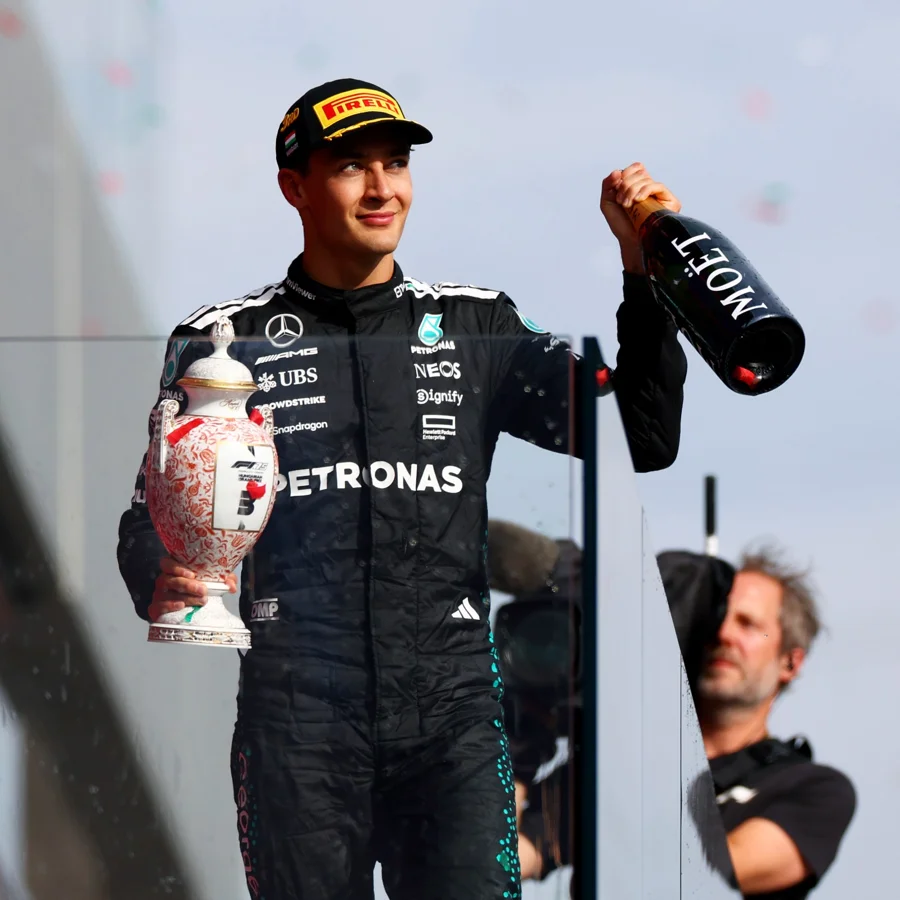

George Russell, now in his seventh season in Formula 1 and firmly established as Lewis Hamilton‘s successor at Mercedes, has also become a prominent voice beyond racing. The 27-year-old British driver is widely recognized as an outspoken figure on safety issues within the sport, emphasizing the importance of protecting drivers and improving regulations throughout his career in motorsport.
Russell’s role as a George Russell F1 safety advocate grew significantly after he joined the Formula 1 drivers’ association, the GPDA, in 2021 during his time at Williams. He succeeded Romain Grosjean in the group, and following Sebastian Vettel’s retirement, Russell was the only active member until Carlos Sainz joined earlier this year. Alongside Sainz, GPDA chairman Alexander Wurz and legal representative Anastasia Fowle, Russell contributes to ongoing efforts that focus primarily on enhancing driver protection and safety standards within the sport.
How Harrowing Crashes Fueled Russell’s Commitment to Safety
Russell’s passion for safety advocacy stems from witnessing some of motorsport’s most distressing accidents firsthand, which deeply influenced his determination to make Formula 1 safer. He recalls moments involving drivers close to him, such as British racer Billy Monger, who suffered life-changing injuries in a 2017 crash, as well as Anthoine Hubert’s fatal accident at Spa in 2019. These incidents made a profound impression on Russell, solidifying his resolve to be proactive in supporting safety improvements.
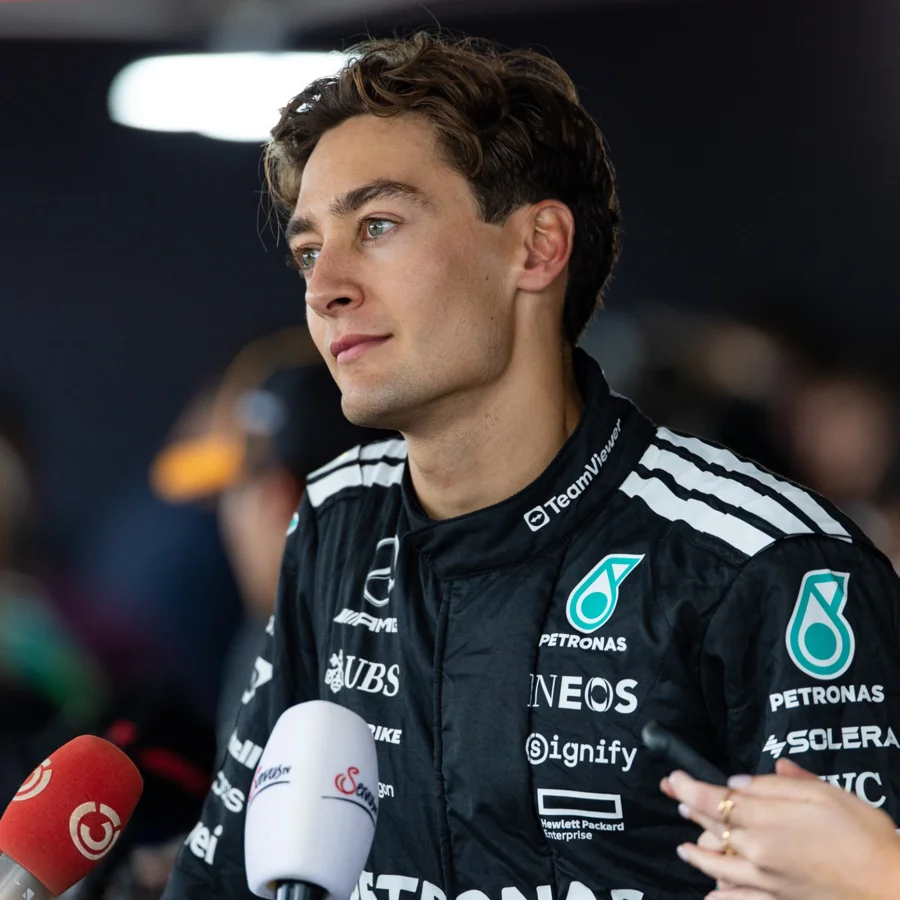
“I’m not chasing to leave any legacy. That’s never been the intention. It’s just that if I see an opportunity to improve something, I want to speak about it, especially if it comes to track safety or car safety,”
Russell explained.
“In 2012 I was team-mates with Billy Monger [who lost his legs in a British F4 crash in 2017] and had a close relationship with him. Seeing that crash live, and then watching Anthoine [Hubert]’s crash [at Spa 2019 in F2], I was watching that live. It was sickening to watch.”
—George Russell, F1 Driver
He shared how experiencing these tragedies within such a close-knit community motivates him to contribute ideas that could prevent similar accidents.
“When you experience things like this with people who you know so well, and you believe you have ideas that can help improve the safety or prevent that from happening, then you naturally want to share it.”
One of the most vivid memories for Russell involves the fiery crash of Romain Grosjean during the Bahrain Grand Prix in 2020. Passing Grosjean moments before the accident, Russell still recalls the overwhelming sight of flames in his rearview mirror, a haunting image etched in his mind.
“That could have happened to anyone. It could have happened to the greatest driver in the world. That’s just the danger we face. So, I think that’s probably why I wanted to be more involved than not.”
—George Russell, F1 Driver
Evolution of Driver Unity and Shared Challenges
Since Russell joined the GPDA as a young driver at 23, he has noticed increased unity among drivers as the sport expands and evolves, especially after the rise in popularity spurred by Netflix’s *Drive to Survive* series. This greater visibility has exposed drivers as athletes and individuals, giving them more reasons to engage collectively on various issues, including safety and technical regulations.
“As a group we are probably closer and more united than ever,”
Russell said.
“At least during my seven years of F1 it really feels like we’ve grown closer and share a similar view upon things and obviously, so much has changed.”
He pointed out the challenges faced by the drivers in adapting to new technical regulations introduced in the 2022 season, particularly the notable issue of porpoising on cars, which sparked many conversations among the GPDA members.
“Everything that’s happened to the sport commercially, with the likes of Netflix and being exposed to so much more as athletes and individuals, so much has changed on the sporting and technical side, the changes in ’22 and the problems we all faced in ’22 with porpoising. It’s given the drivers topics of conversation that we want to sort of tackle together.”
—George Russell, F1 Driver
Fostering Collaboration with the FIA for the Sport’s Future
Despite outspoken criticism in the past, particularly regarding FIA president Mohamed Ben Sulayem’s communication style and the governing body‘s strict swearing ban, Russell emphasizes the importance of cooperation between drivers, F1 officials, and the FIA. The GPDA’s open letter in November challenged the FIA to engage with drivers as mature candidates with valuable input, and though Ben Sulayem initially dismissed their concerns, the drivers prompted changes such as the relaxation of the swearing ban.
Speaking candidly, Russell highlighted the need for constructive collaboration rather than confrontation.
“I know different sports have different set-ups, and ultimately, at least from my personal standpoint—not one of GPDA—you just want to collectively work with those around you to get the best for everyone,”
Russell remarked.
“We don’t want to fight against the FIA. We don’t want to fight against F1, you want to work together with them, to get the most for them as a sport, the most for them as a regulatory body, and then the most for us as drivers. You want to rise together and fall together. How do you achieve that? That’s another thing.”
—George Russell, F1 Driver
The recent appointments of Rui Marques as race director and Tim Malyon as FIA sporting director have been met with approval from Russell, who praises their receptiveness and responsiveness to driver feedback.
“It’s been very refreshing having Rui Marques on board as race director. I feel he and [FIA sporting director] Tim Malyon have been exceptionally receptive. They listen and they react, and I think collectively, we’re all substantially happier now with where we are.”
—George Russell, F1 Driver
Handling Criticism with Focus and Resilience
Russell’s forthrightness has occasionally subjected him to criticism, similar to what fellow drivers like Lando Norris have faced for addressing personal and mental health topics openly. However, Russell remains unfazed by negative opinions and chooses to focus on what matters.
“Yeah, for sure,” Russell acknowledged when asked about dealing with criticism.
“The only way you could keep everybody happy or by having no negativity towards you, is by saying nothing, because everybody will forever have a view. Everybody will share it.”
He added,
“You get to a point where you don’t even look at it or read it, because everyone’s got a different opinion. Everyone’s open to their view. But it’s not something that really concerns me at all, to be honest. I don’t look, so it doesn’t bother me.”
—George Russell, F1 Driver
Implications for the Sport and What Lies Ahead
George Russell’s dedication to improving safety in Formula 1 highlights a broader cultural shift within the sport, where drivers increasingly leverage their influence to promote change. His experiences with devastating crashes and his role within the GPDA have reinforced the urgency of advancing driver protection and fostering transparent dialogue between stakeholders.
As Formula 1 continues to evolve commercially and technically, the active collaboration between drivers like Russell, leadership figures such as Alexander Wurz and Mohamed Ben Sulayem, and newly appointed race officials suggests a more inclusive approach to governance. This increased unity among drivers and openness to regulatory improvements promises to enhance safety measures and the overall integrity of the sport in the coming years.
With voices like Russell’s leading the charge, the emphasis on safety advocacy and driver welfare is expected to remain a central priority, ultimately benefiting current and future generations of competitors on the F1 grid.