
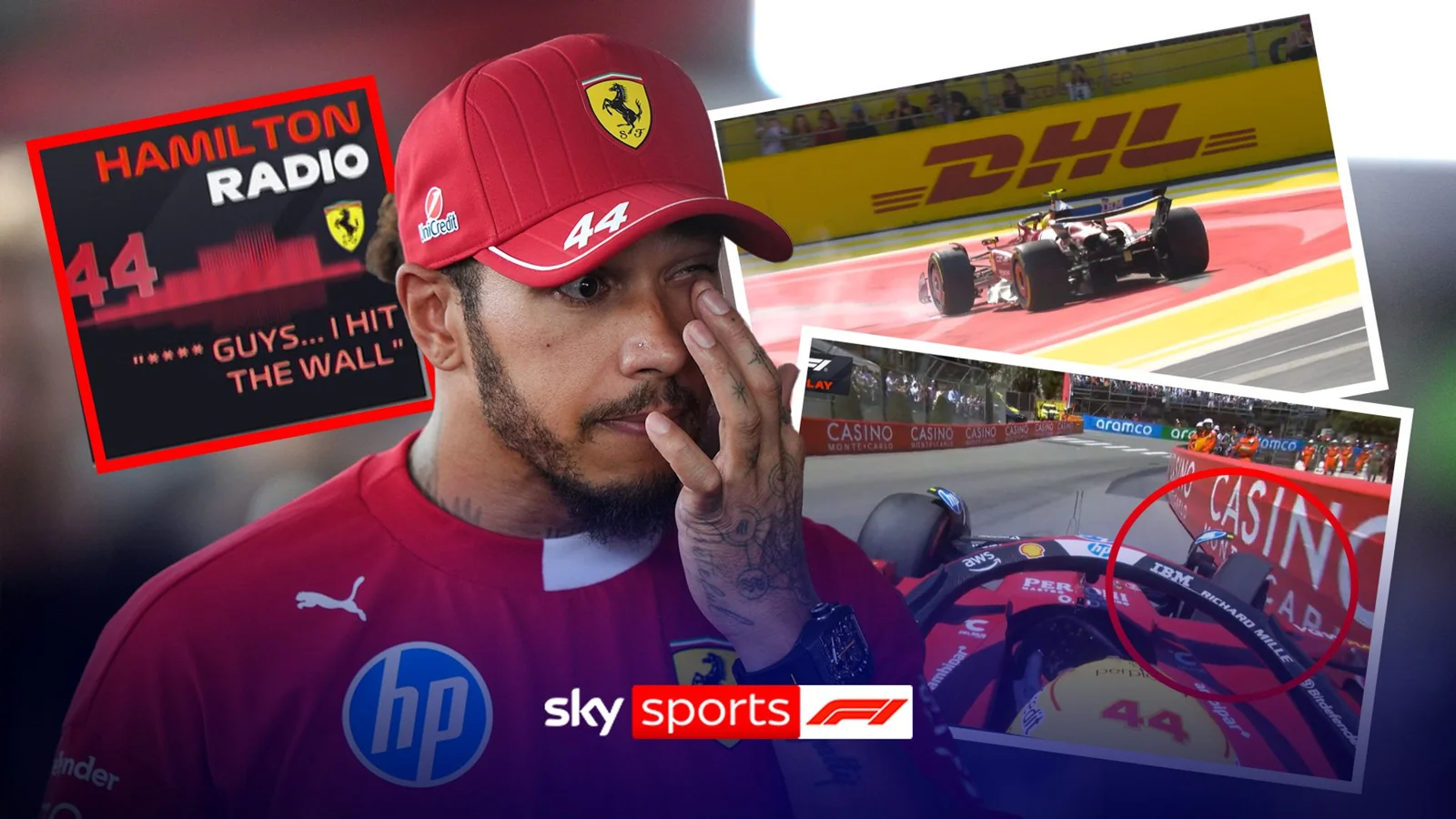

Lewis Hamilton’s move to Ferrari this season was hailed as one of the most spectacular driver switches in Formula 1 history, joining the sport’s most decorated driver with its most prestigious team. However, the 2025 F1 season has turned into a challenging ordeal far from the triumph many anticipated. Hamilton’s Ferrari struggle F1 season has been marked by underwhelming performances, as he has consistently trailed his teammate Charles Leclerc, dashing early optimism.
The season has exposed cracks in this marquee partnership, with Hamilton failing to find the pace expected of a seven-time world champion. At the Hungarian Grand Prix, a track where Hamilton holds numerous records, the British driver was eliminated in Q2, marking his first points-less finish of the season and amplifying growing doubts about his adaptation to Ferrari’s car and culture.
Early Signs of Trouble: Hamilton’s Form Compared to Leclerc
While Hamilton’s teammate Charles Leclerc has surged ahead, showcasing solid consistency and authority, Hamilton has struggled to match the pace, revealing a stark disparity. Leclerc’s strong performances have only highlighted Hamilton’s difficulties in qualifying and race pace, fueling questions about the compatibility between Hamilton’s driving style and the Ferrari machinery.
Hamilton’s candid self-assessment after qualifying 12th in Hungary was telling:
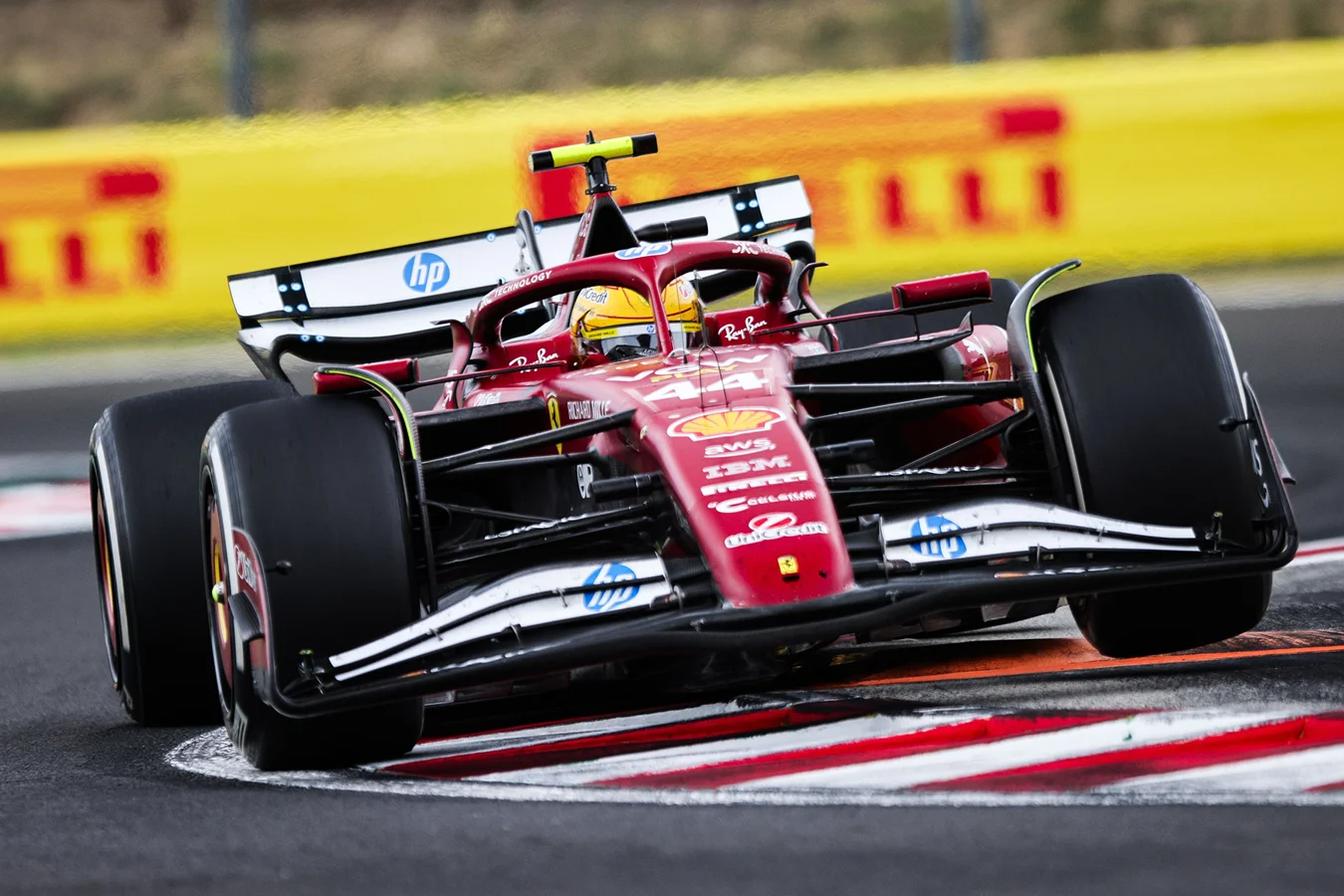
“They probably need to change drivers,”
he said, describing himself as “absolutely useless” on a day when Leclerc secured an unexpected pole position. After the race, Hamilton cryptically referenced
“a lot going on in the background that’s not great”
and even suggested uncertainty about his return after the mid-season break, stating,
“I look forward to coming back. Hopefully I will be back.”
Raw Admissions Reflect Growing Struggles on and off Track
Hamilton has openly acknowledged the intensity and complexity of his 2025 campaign, describing this season as “the most intense one” from a work perspective and admitting the challenges of integrating into Ferrari’s unique team culture. He spoke about needing time to recharge away from the demands of racing, saying,
“I definitely need to get away and recharge, be around the kids, laugh, let go,”
adding,
“I’m sure there’ll be some tears at some point, and I think that’s really healthy.”
Despite his struggles, Hamilton has still managed some moments of achievement, including a sprint race victory in China and a third-place finish in Miami’s sprint event. However, he has yet to reach a podium ceremony in the main grand prix events throughout the first 14 rounds — a first in his distinguished career.
Statistical Breakdown Highlights Hamilton’s Deficits Against Leclerc
Hamilton’s statistics starkly illustrate his current disadvantage. His qualifying average stands at eighth place, compared to Leclerc’s more frequent front-row starts. The driver comparison reveals Hamilton trails the Monegasque 4-10 in qualifying head-to-heads, with a 0.169-second average time deficit. In races, Hamilton’s best finish is fourth, while he trails Leclerc 2-11 overall, with a race finish differential of 1.5 places and a points tally of 109 to Leclerc’s 151.
Particularly concerning is Hamilton’s qualifying performance. Known historically as the sport’s best qualifier, he has failed to assert dominance in this department. Among current F1 pairings, Hamilton ranks near the bottom in terms of his qualifying gap relative to Leclerc. Only rookies and drivers facing exceptionally difficult cars have been outperformed by their teammates to a greater extent.
Identifying a Glimmer of Progress Amid the Difficulties
Despite the bleak statistics, deeper analysis reveals that Hamilton has been narrowing the qualifying gap as the season progressed. A trend line plotted from rounds 1 to 14 shows a 0.128-second improvement in Hamilton’s favor, particularly strong before the Belgium–Hungary double-header. These two races saw a setback due to mistakes and tough qualifying conditions, but excluding them the trend suggests significant gains in Hamilton’s pace.
For instance, at Belgium’s Spa-Francorchamps, Hamilton fell victim to errors despite demonstrating strong pace, including a near-identical sector time to Leclerc before a spin ended his session prematurely. Similarly, at Hungary, although eliminated in Q2, Hamilton narrowly missed advancing to Q3 by just 0.015 seconds, indicating he was competitive but failed to maximize opportunities.
Reason One: The Challenge of Transitioning to Ferrari
One major factor behind Hamilton’s struggles is the extreme difficulty of switching teams in the current Formula 1 era. Ferrari team principal Frédéric Vasseur explained the magnitude of adjustment Hamilton faces, emphasizing that Hamilton’s career prior to 2025 was spent almost entirely within Mercedes-supported teams based in Britain. This switch has required Hamilton to adapt to a new culture, environment, software, and most critically, a very different car.
“I think perhaps that we underestimate the challenge for Lewis at the beginning of the season,”
Vasseur admitted.
“He spent almost 10 years with McLaren and then 10 years with Mercedes — that’s almost 20 years with Mercedes in the same environment. It was a huge change for Lewis in terms of culture, in terms of people around him, in terms of software, in terms of car, in terms of every single topic was a big change perhaps that we underestimate this, Lewis and myself.”
Hamilton himself recognized this steep learning curve early on, stating,
“I’m back at square one. I’m under no assumptions that it will be easy. It is not.”
He described the Ferrari car as having a completely different feel compared to Mercedes machinery, notably the different engine characteristics that affect vibration and feedback.
“The whole team works completely differently. I was just sitting looking at the race trace from last year, and it’s upside down compared to the previous one,”
Hamilton remarked.
The difficulties of this adjustment have been mirrored in Carlos Sainz’s own struggles after leaving Ferrari for Williams, where he has been outperformed by Alex Albon. Sainz’s experience reinforces just how demanding team changes have become in this era of complex car design.
Reason Two: A Car and Rule Set That Mismatch Hamilton’s Driving Style
Another critical reason behind Hamilton’s poor results lies in the ground-effect generation cars, which require very specific driving techniques. Since 2022, F1 cars generate most of their downforce through the floor rather than wings, necessitating a stiff chassis and consistent ride height. This new setup changes how a car behaves, eliminating the aggressive dive under braking that characterized earlier eras.
Hamilton’s driving style relies heavily on loading the front axle under braking to induce rotation before corner entry, a tactic less effective on the current generation of cars. Ferrari’s chassis appears optimized around different attributes, emphasizing engine braking to control the rear axle instead. Leclerc has mastered this technique, blending throttle and brake inputs in overlapping phases to navigate corners effectively.
Adjusting to this new style demands substantial retraining of muscle memory developed over decades, a challenge Hamilton has struggled to overcome fully. His inconsistency—the uneven flashes of speed coupled with frequent shortfalls—reflects this difficult adaptation.
The story is not unique to Hamilton. Daniel Ricciardo suffered a similar career decline when this rule set was introduced, unable to harmonize his natural style with ground-effect cars. Though Ricciardo had occasional strong performances, they were overshadowed by erratic laps, ultimately contributing to his exit from top-tier racing.
Hamilton’s own frustration was evident when he said, “Every time, every time,” after a disappointing qualifying 12th place at Hungary just days after showing signs of hope in Belgium.
Reason Three: F1’s Racing Landscape Evolving Beyond Hamilton
The challenges Hamilton faces extend beyond the car, as the sport itself has become more competitive and complex. Ricciardo’s experience illustrates how prolonged difficulty in adapting to car changes can limit a driver’s effectiveness over time. Red Bull Racing reported seeing remnants of this struggle in Ricciardo’s simulator data, highlighting the difficulty in unlearning ingrained driving habits.
While Hamilton turned 40 in January and continues to compete at the highest level, questions about age and motivation have risen. Ferrari’s team boss Frédéric Vasseur dismissed concerns about Hamilton’s motivation, emphasizing the Briton’s unwavering drive despite visible frustration:
“I don’t need to motivate him; he’s frustrated but not demotivated.”
He noted Hamilton’s pessimism after poor sessions is an emotional response rather than a long-term mindset.
These factors combined place enormous pressure on Hamilton and Ferrari to make significant progress, especially with a new generation of cars and regulations on the horizon in 2026.
The Road Ahead: What Hamilton’s Future at Ferrari Could Hold
Hamilton’s switch to Ferrari was always aimed at a longer-term renaissance, hoping that the team‘s upcoming regulatory changes would provide a fresh start. The 2025 season’s difficulties underline just how demanding such transitions can be under the current sporting and technical landscape.
As Ferrari looks toward next year’s relaxed regulations and new car designs, Hamilton’s path may hinge on his ability to recalibrate his driving style once again and fully integrate with the team’s evolving philosophy. Meanwhile, the pressure to re-establish Ferrari as a championship leader rests heavily on both the driver and the organization.
This season has been a brutal test for one of Formula 1’s all-time greats, stripping away the initial excitement of a team–driver alliance brimming with potential and revealing a harsh struggle under the surface. Whether Hamilton can find a way back to the front with Ferrari remains one of the sport’s most compelling storylines as the 2025 campaign progresses.