

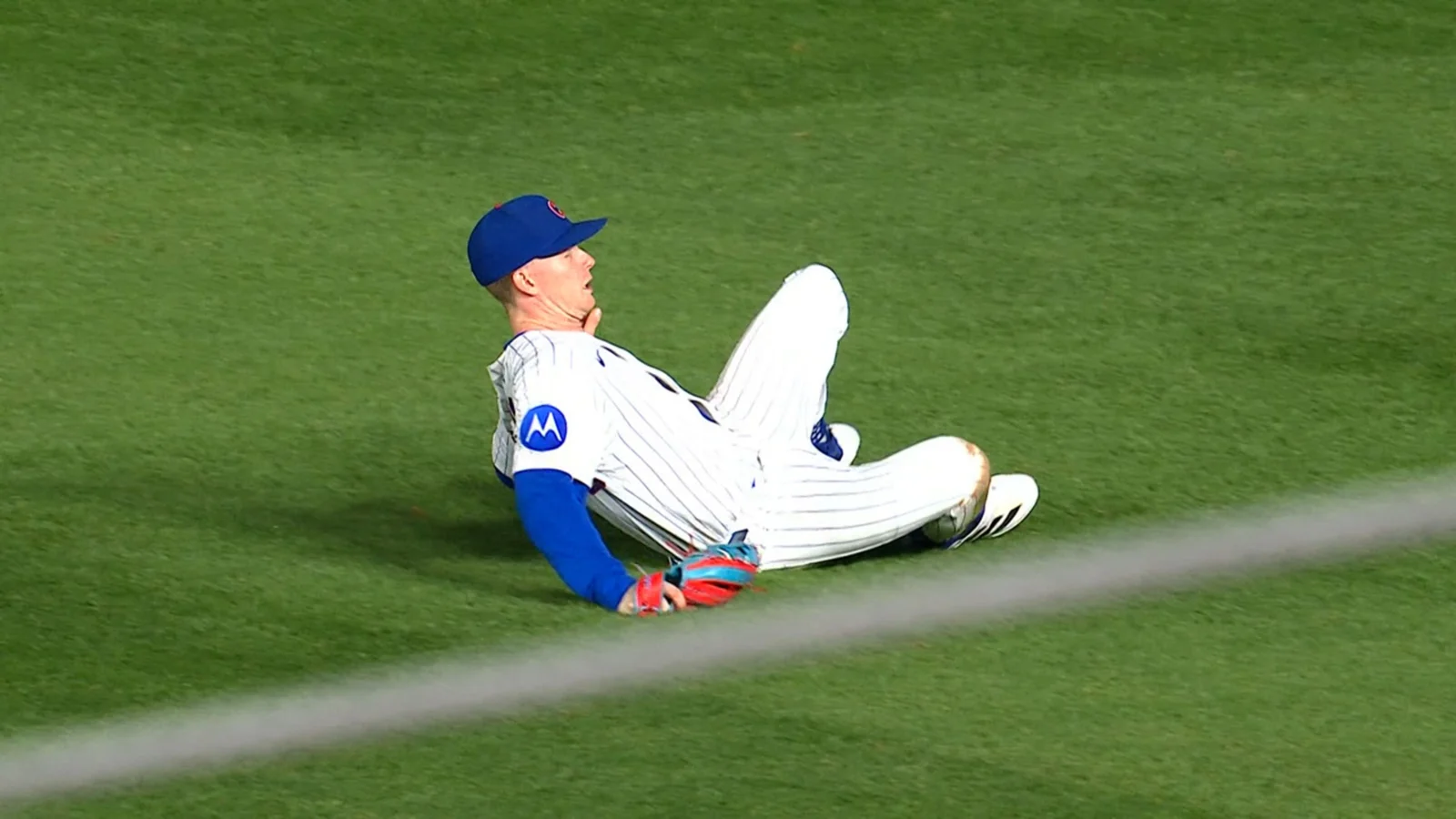
The Chicago Cubs are currently six games behind the Milwaukee Brewers in the National League Central Division as the 2025 season heads into its crucial final stretch. Amid the pressure, outfielder Pete Crow-Armstrong has emerged as a standout MVP candidate, though concerns about his plate discipline have cast doubt over his ability to secure the award. The Cubs remain focused on their postseason aspirations, but Crow-Armstrong’s approach at the plate could influence both his personal success and the team’s playoff positioning.
Examining the Concerns Around Crow-Armstrong’s On-Base Percentage
Baseball analyst David Schoenfield recently weighed in on the 2025 postseason outlook, suggesting the Cubs are still strong contenders for the playoffs with Crow-Armstrong firmly in the MVP conversation. However, Schoenfield highlighted a key issue: if Crow-Armstrong wins the MVP this year, he would have the lowest on-base percentage ever recorded by a recipient.
The statistics behind Crow-Armstrong’s season are impressive yet contradictory. He maintains a .259 batting average, with 27 home runs, 78 RBIs, and 30 stolen bases, complemented by an .822 OPS. His 6.1 Wins Above Replacement leads the National League, propelled significantly by his exceptional defense in center field.
Defensively, Crow-Armstrong is among the sport’s elite. He boasts an 18 Outs Above Average rating and a +18 Defensive Runs Saved score, with his arm strength and sprint speed ranking in the 94th and 97th percentiles, respectively. These exceptional tools cement his status as an electrifying player both currently and for the future.
Despite these strengths, his offensive approach reveals a weakness. Crow-Armstrong’s free-swinging style has limited him to only 20 walks this season, resulting in a 4% walk rate and a .296 on-base percentage. This shortfall obstructs him from batting leadoff, despite his ability to run and hit for power.
His aggressive batting also reflects poorly in plate discipline metrics. Crow-Armstrong’s 43% chase rate—the percentage of pitches swung at outside the strike zone—is among the worst in the majors. This issue becomes more stark when facing left-handed pitchers, against whom he struggles significantly with a .193 batting average and a .636 OPS. By contrast, he excels against right-handers, hitting .290 with a .911 OPS.
Adjusting Plate Discipline Amid the Playoff Race
Though Crow-Armstrong has demonstrated remarkable power by consistently driving outside pitches out of the park, the Cubs recognize that improving his selectivity at the plate is critical as teams seek to exploit this vulnerability. Addressing this will be important for both Crow-Armstrong’s development and the team’s success during the remaining games.
It took 19 pitches, but Cal Quantrill worked a 1-2-3 inning.
Struck out Pete Crow-Armstrong, Kyle Tucker grounded out to second and Seiya Suzuki popped out to Graham Pauley.#Marlins pic.twitter.com/z9yfAtT5MF
— Kevin Barral (@kevin_barral)
In a recent example that underscores this challenge, Phillies pitcher Cal Quantrill completed a 1-2-3 inning over 19 pitches that included striking out Crow-Armstrong, evidencing the difficulty Crow-Armstrong faces when pitchers are able to anticipate and exploit his aggressive tendencies.
The Cubs are currently locked in a tight divisional race with the Brewers, making Crow-Armstrong’s performance over the last two months critical both for the team’s playoff seeding and his MVP aspirations. His rare blend of power, speed, and defensive excellence has made him a favorite for the award for several seasons, but securing it will require him to refine his batting approach.
This late-season push offers Crow-Armstrong a vital opportunity to evolve into a more well-rounded player. Should he maintain his defensive brilliance and power production while improving his plate discipline, he could transform from a one-dimensional slugger into a complete superstar capable of carrying the Cubs deep into the postseason.