
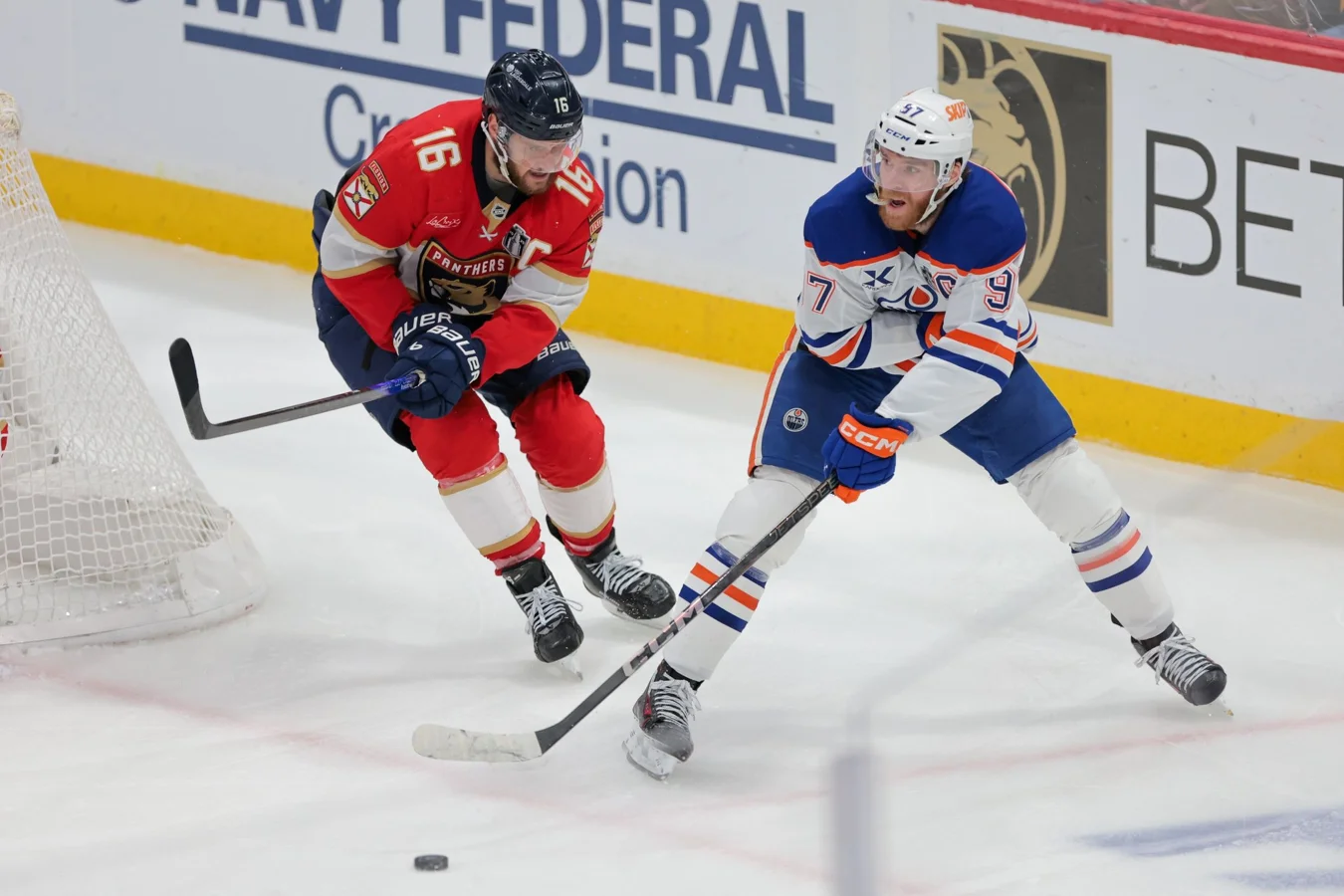

Frank Seravalli, an NHL insider, recently addressed concerns regarding the unfinished contract extension negotiations between Connor McDavid and the Edmonton Oilers. Despite McDavid not having signed a new deal, Seravalli believes that there is no immediate cause for alarm as discussions continue amid complex factors such as an increasing NHL salary cap and the team’s current drive to compete at the highest level.
The NHL salary cap is expected to rise significantly, projected to reach $95.5 million in the 2025-26 season and possibly $113.5 million by 2027-28. This ongoing growth impacts how players like McDavid and their teams approach contract terms, especially with McDavid’s annual average value (AAV) rumored to fall between $16 million and $17.5 million, with some speculation pushing closer to the league’s maximum near $20 million.
Why McDavid May Avoid the NHL Maximum Contract
Analysts generally agree that McDavid is unlikely to commit to the NHL’s maximum salary, which nears $20 million per year. By signing a long-term contract now, McDavid would potentially lose out on future earnings as the cap rises. This is why many experts predict he will choose a shorter contract, possibly for two years, allowing him to capitalize on future increases in the salary cap that will boost his earning power.
In his update, Seravalli reassured fans and stakeholders in Edmonton that nervousness is understandable but not warranted at this stage. He said,
“People in Edmonton, Alberta, are nervous. Should they be? I don’t think so.”
—Frank Seravalli
The Strategic Implications Behind the Contract Delay
The delay in finalizing McDavid’s contract is not simply about the financial figures or contract length; it also reflects a strategic approach by both McDavid and the Oilers. McDavid is targeting a rising salary cap and is leveraging his importance to the team as motivation for Edmonton to pursue a Stanley Cup win in the near future.
If McDavid signs a shorter-term deal, it would grant the Oilers a clear window of two seasons to attempt to capture the Stanley Cup before potential contract renegotiations resurface. This scenario maintains immediate pressure on the team while preserving McDavid’s flexibility to benefit from a higher salary later. Should the Oilers fail to achieve their championship goals within this timeframe, concerns about his contract situation might become more urgent.
What the Future Holds for McDavid and the Oilers
The ongoing negotiations highlight a balance between financial strategy and performance goals for both McDavid and Edmonton. The rising salary cap offers McDavid a chance to increase his earnings substantially if he waits, while the Oilers feel the urgency to capitalize on his prime years in pursuit of a Stanley Cup. This contract situation will remain a focal point for fans and analysts alike as the team navigates these critical years.