
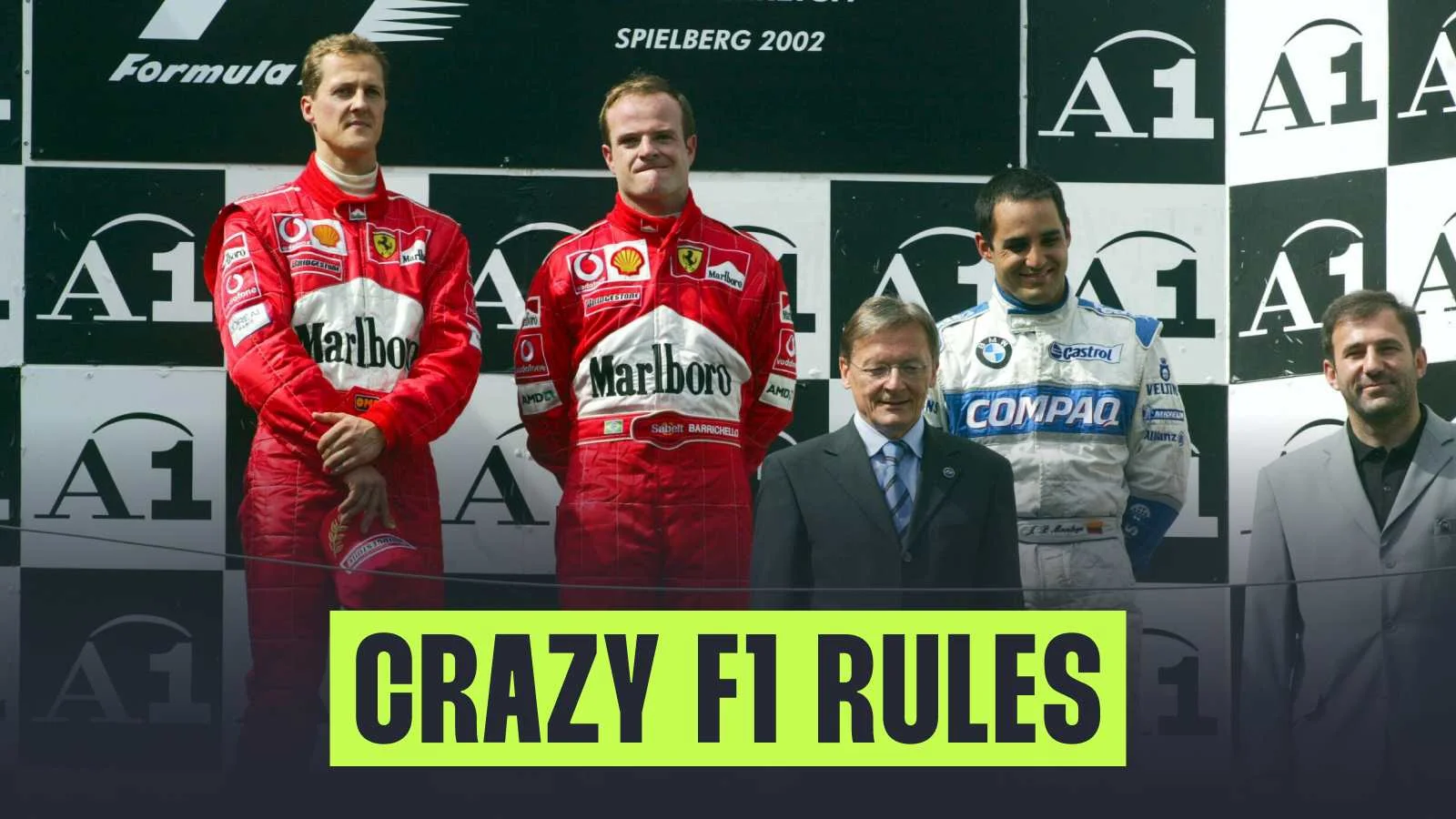

Formula 1 is preparing for a major rule overhaul in 2026, prompting a look back at some of the craziest rules in Formula 1 history that have left fans puzzled and frustrated. From discarded races affecting championship counts to controversial point systems, these regulations reveal the sport’s often chaotic evolution.
How Certain Races Were Excluded from the Championship
For much of Formula 1’s existence, not all races in a season contributed to the World Championship standings. Even if drivers participated in every event, only a select number of results were officially counted toward the title, and this number frequently changed over the years.
For example, in the inaugural 1950 season, only four out of seven races influenced the championship tally. By 1967, the system had grown more complex: nine of eleven races counted, but which races depended on when they occurred. Specifically, five of the first six rounds and four of the last five were included.
There were multiple reasons behind these dropped races. Initially, the FIA included the Indianapolis 500—a non-European event featuring different cars and rules—to justify a globally recognized championship. Since few F1 drivers competed there, dropping some races allowed logistical flexibility.
Additionally, during an era marked by mechanical unreliability and a semi-amateur approach, excluding bad results because of failures or injuries helped teams and drivers avoid season-derailing penalties. This system lasted until 1991, when the FIA decided every Grand Prix would count toward the championship.
The Controversial Double Points Experiment
In 2014, Formula 1 and the FIA introduced a double points rule for the final race in Abu Dhabi, hoping to keep the championship undecided until the conclusion. This race was set to determine the title between Mercedes teammates Lewis Hamilton and Nico Rosberg.
Normally, Hamilton’s lead would have allowed him to clinch the championship by finishing sixth or better. However, the double points system changed the equation, requiring Hamilton to finish at least second to guarantee the title. Fortunately for Hamilton, he won the race.
This change was widely unpopular. Caterham’s Tony Fernandes called it a
“fake fix”
—Tony Fernandes, Caterham boss, while Adrian Newey expressed concerns it would lessen the sport’s credibility. Vijay Mallya from Force India labeled the format
“illogical”
—Vijay Mallya, Force India, and Mercedes’ Toto Wolff described it as unfair, with Ferrari branding it artificial. The rule was abandoned after its single-season trial.
The Years When F1 Used Formula Two Regulations
At the end of 1951, growing worries about costs caused the FIA and Formula 1 to take a surprising step: the 1952 and 1953 World Championships were held under Formula Two car specifications. This was intended to attract more participants by lowering technical and financial barriers.
However, only Ferrari developed a car purposely built to F2 standards, leading to their dominance and Alberto Ascari securing consecutive world titles. In 1954, Formula 1 returned to its original engine displacement limits, raising power and inviting fresh constructors. This brief regression to Formula Two rules remains a unique moment in F1 history.
The Origins and Controversies of the Superlicense
Today’s F1 drivers must possess superlicenses, granted based on strict criteria such as age, accumulated points from other series, and technical knowledge. However, the original 1982 superlicense was quite different and caused significant conflict.
Legendary driver Niki Lauda revealed that the early license was linked to a contract with a specific team, meaning a driver switching teams mid-season risked losing their license altogether. Furthermore, it forbade drivers from any
“words or actions which might harm the moral or material interests”
—Niki Lauda, Driver of Formula 1, a vague clause that could be broadly interpreted against them.
Lauda and Grand Prix Drivers Association leader Didier Pironi spearheaded a boycott of the South African Grand Prix to oppose these terms. Although the boycott was unsuccessful and the drivers were fined $5,000 each, the flawed superlicense was eventually replaced with a fairer system.