
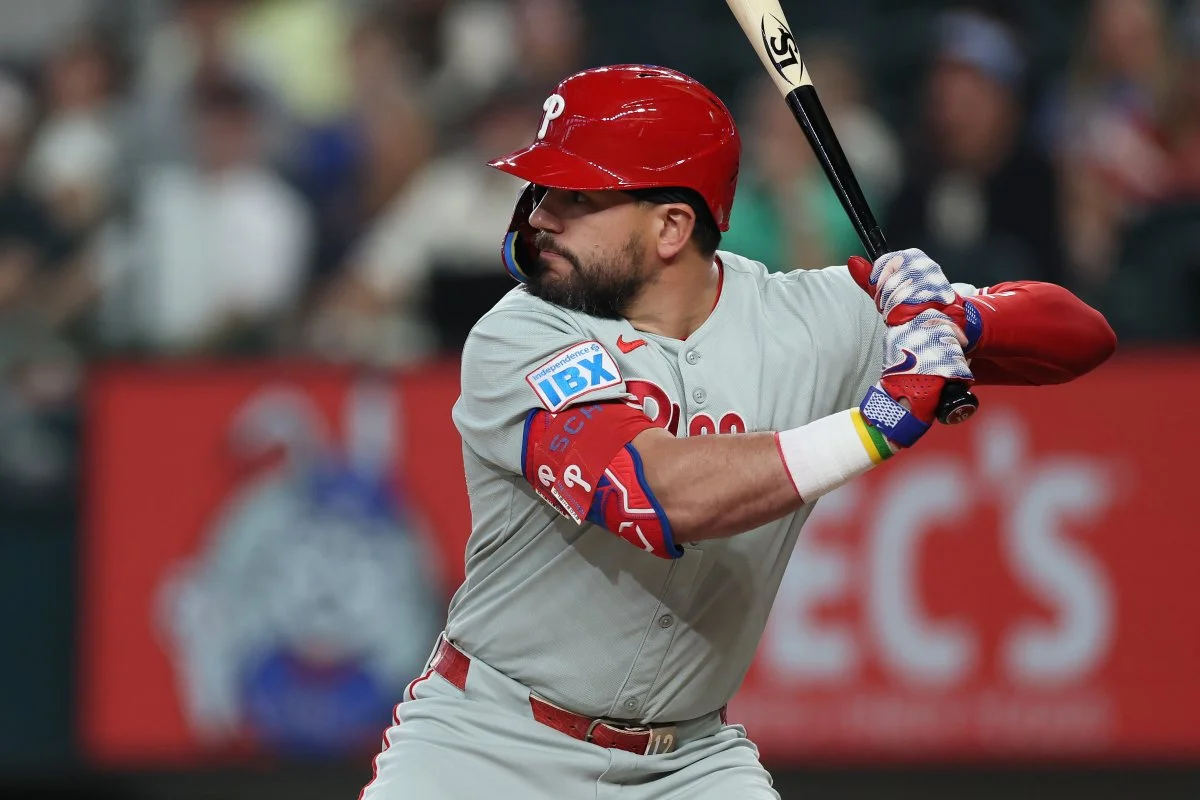

Kyle Schwarber has become the focus of “M-V-P!” chants at Citizens Bank Park as he delivers one of the most productive offensive seasons of his career. In the final year of his $79 million, four-year contract, Schwarber leads the Philadelphia Phillies in several key categories including runs, RBIs, total bases, walks, OPS, and weighted runs created plus (wRC+). With the Phillies on track for their second consecutive NL East title and nearing 95 wins, Schwarber’s role as the team’s most valuable player is clear—if not his standing beyond the club. His performance raises the question of whether he could be considered a true MVP candidate for the National League.
Comparing Offensive Statistics: Schwarber and Shohei Ohtani
When examining the league’s offensive leaders, Schwarber ranks near the top, holding the highest number of home runs and RBIs in the National League, while posting a .959 OPS, a .405 weighted on-base average (wOBA), and a 162 wRC+–all impressive figures ranking second in the league. However, those who stand above him in key offensive metrics include Shohei Ohtani, whose lead in OPS (.1.013), wOBA (.418), and wRC+ (173) extends a slight but significant edge. Although these differences are not vast, Ohtani has separated himself with 112 runs scored, an area where Schwarber’s 81 runs places him fifth in the league.
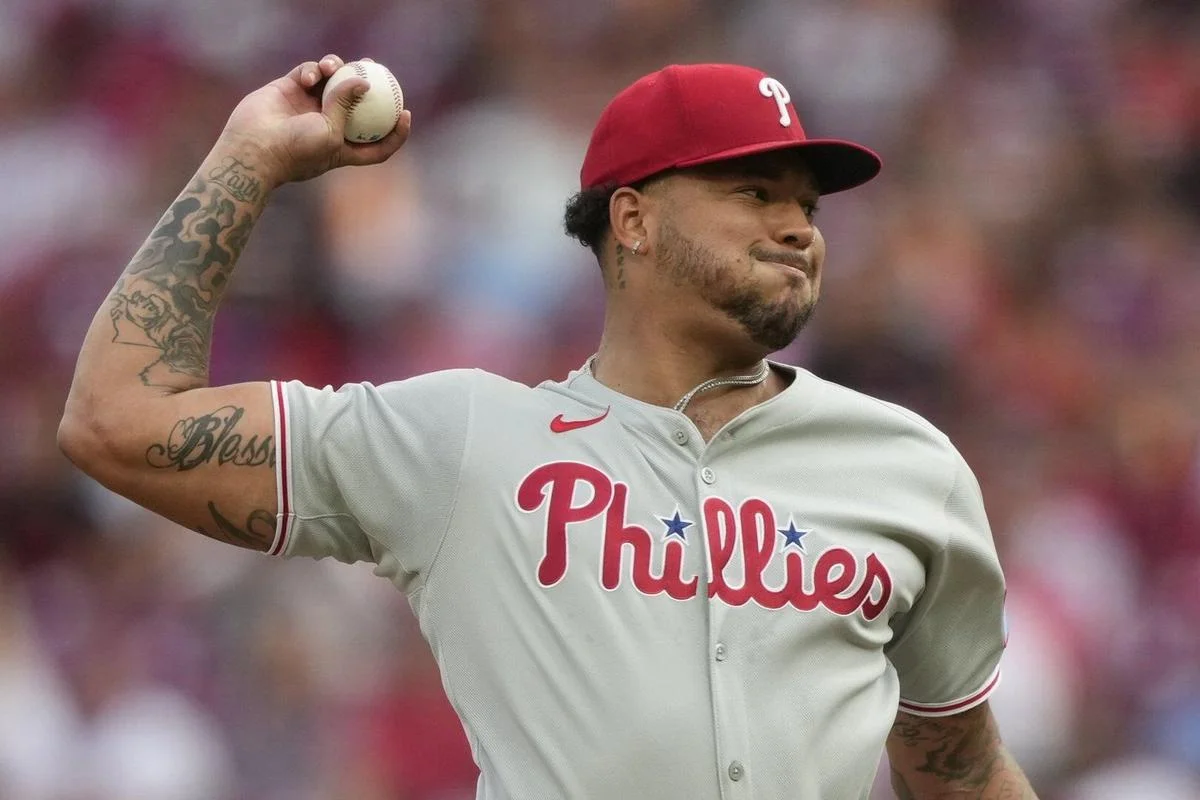
On the surface, Schwarber matches Ohtani’s power with an equal tally of home runs and even leads in RBIs with 97 compared to Ohtani’s 78. Schwarber’s 10 stolen bases also showcase his added value, closely trailing Ohtani’s 17 but with a superior success rate. Both players share similar elite expected weighted on-base averages (xwOBA) of .425, second only to Juan Soto’s .440 in the league.
The Critical Role of Pitching in MVP Considerations
While Schwarber’s bat is exceptional, Ohtani’s combined pitching and hitting prowess elevate his MVP candidacy. Ohtani, with a 2.37 ERA and 25 strikeouts in 19 innings, has significantly contributed on the mound as well as at the plate. His career-best walk rate, improved hard-hit rate, and expected ERA (xERA) reinforce his dominance. Moreover, his ability to maintain a high whiff rate and elevate his chase rate indicates a strategic and highly effective pitching approach, throwing with high velocity within the strike zone. Although pitching innings have been limited so far, Ohtani appears poised to increase his workload, potentially surpassing 60 innings by season’s end—an advantage Schwarber, as a designated hitter, cannot match.
Other MVP Contenders and Their Unique Contributions
Outside of Schwarber and Ohtani, Pete Crow-Armstrong and Paul Skenes present strong MVP cases with distinct skill sets. Crow-Armstrong stands out as a potential Gold Glove center fielder with chances to join the rare 40-40 club, while Skenes delivers a dominant pitching performance averaging six innings per start and an ERA under 2.00. These players bring a blend of defense, speed, and pitching excellence that Schwarber lacks, whose MVP case relies entirely on his bat. This singular dimension limits his ability to surpass competitors who contribute more comprehensively on both sides of the game.
Limitations of Schwarber’s MVP Prospects as a Designated Hitter
Even with career-best offensive numbers, Schwarber’s role as a DH restricts his overall value in MVP discussions. Unlike Shohei Ohtani, who contributes significantly as both a hitter and pitcher, Schwarber produces only in offensive categories. This challenge is amplified by the fact that the only full-time DH to ever win an MVP had an unprecedented season balancing hitting and limited pitching duties. Schwarber’s long absence from catching, a demanding defensive position he hasn’t played in nearly ten years, further curtails his defensive impact on the team and statistical value.
While Schwarber’s wins above replacement (WAR) metrics have reached new heights, estimating roughly a 5.5-win season, this figure remains below what is typically required to secure an MVP award. Historically, since the early 2010s when WAR became widely used, winners have exceeded this threshold except in unusual circumstances. Notably, two Phillies have won the NL MVP with WAR values under 6.0 in the past two decades—Bryce Harper in 2021 with 5.9 bWAR and Ryan Howard in 2006 with 5.2—but these are outliers rather than common precedents.
Schwarber’s Standing and Future Outlook
Kyle Schwarber is likely to receive MVP votes and potentially be among the finalists, even as the race intensifies. However, his inability to compensate for non-offensive contributions makes it difficult for him to claim the NL MVP title outright. Despite this, his importance to the Phillies remains undeniable. Schwarber helped end the team’s 11-year playoff drought in his first season and has been vital to their continuous improvement each year. As the postseason approaches, he is expected to play a key role in Philadelphia’s success.
The enthusiastic “M-V-P!” chants from the Phillies’ fanbase demonstrate the respect Schwarber commands in Philadelphia, celebrating his offensive production and the winning culture he helps foster. Ultimately, the team’s appreciation might be the most meaningful MVP recognition he receives this season.