
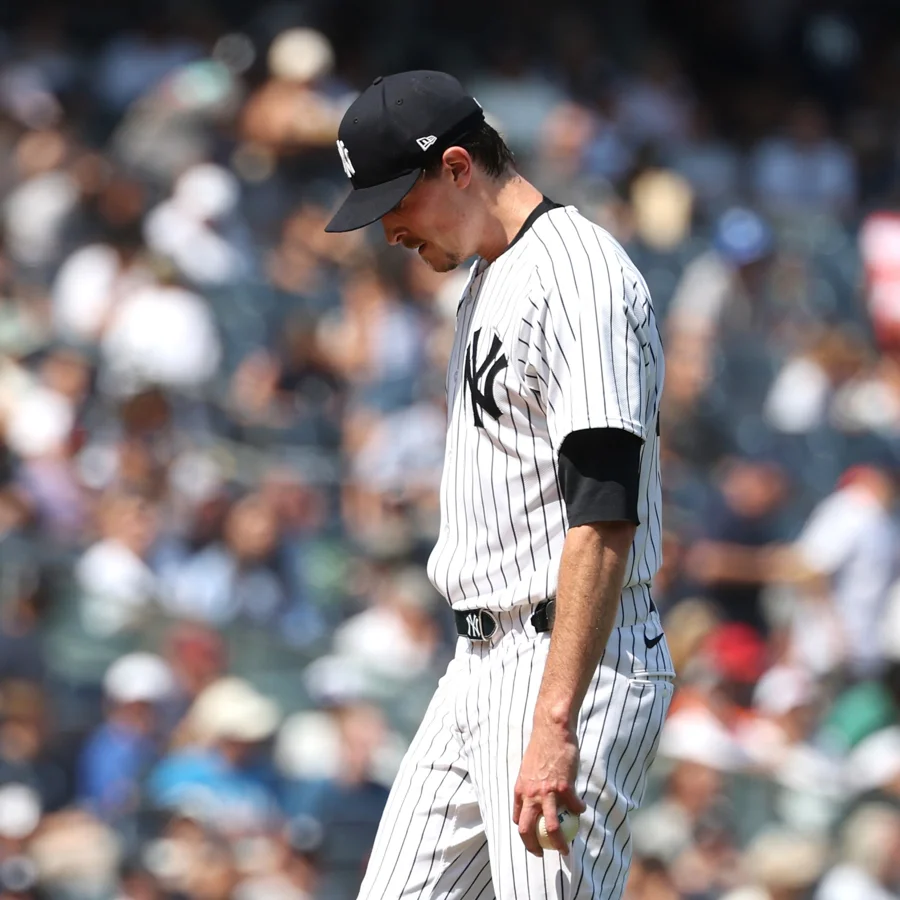

The New York Yankees continue to face significant challenges as their recent performance slump worsens, with a key factor being Max Fried’s pitching difficulties. Over the last two months, Fried’s effectiveness has declined sharply, adding to the Yankees’ broader struggles in speed, baserunning, defense, bullpen performance, and timely hitting.
In their last 98 games, the Yankees hold a mediocre 49–49 record and have struggled particularly against strong opponents, holding a 31–36 record against teams with .500 records or better. These results underscore concerns as the Yankees wrestle with maintaining their playoff position.
Max Fried’s Decline: Shifts in Performance Metrics
Max Fried, usually a dependable presence on the mound, has seen a stark downturn in his results since July. Earlier in the season through June, Fried posted a 10–2 win-loss record and an impressive 1.92 ERA, boasting a 64.1% strike percentage. Conversely, from July through August, his record slipped to 2–3 with a 6.00 ERA and strike rate falling to 61.4%.
Most recently, Fried’s seven-start stretch included an abbreviated outing and one missed start due to a blister. His latest appearance, a 7–1 loss to Houston, showed key issues: a marked reduction in fastballs—with only 18% of pitches being fastballs, among the lowest of his career. Fried increasingly relies on his cutter, but poor control has led to multiple hits allowed on two-strike counts, a rare and concerning trend in his career.
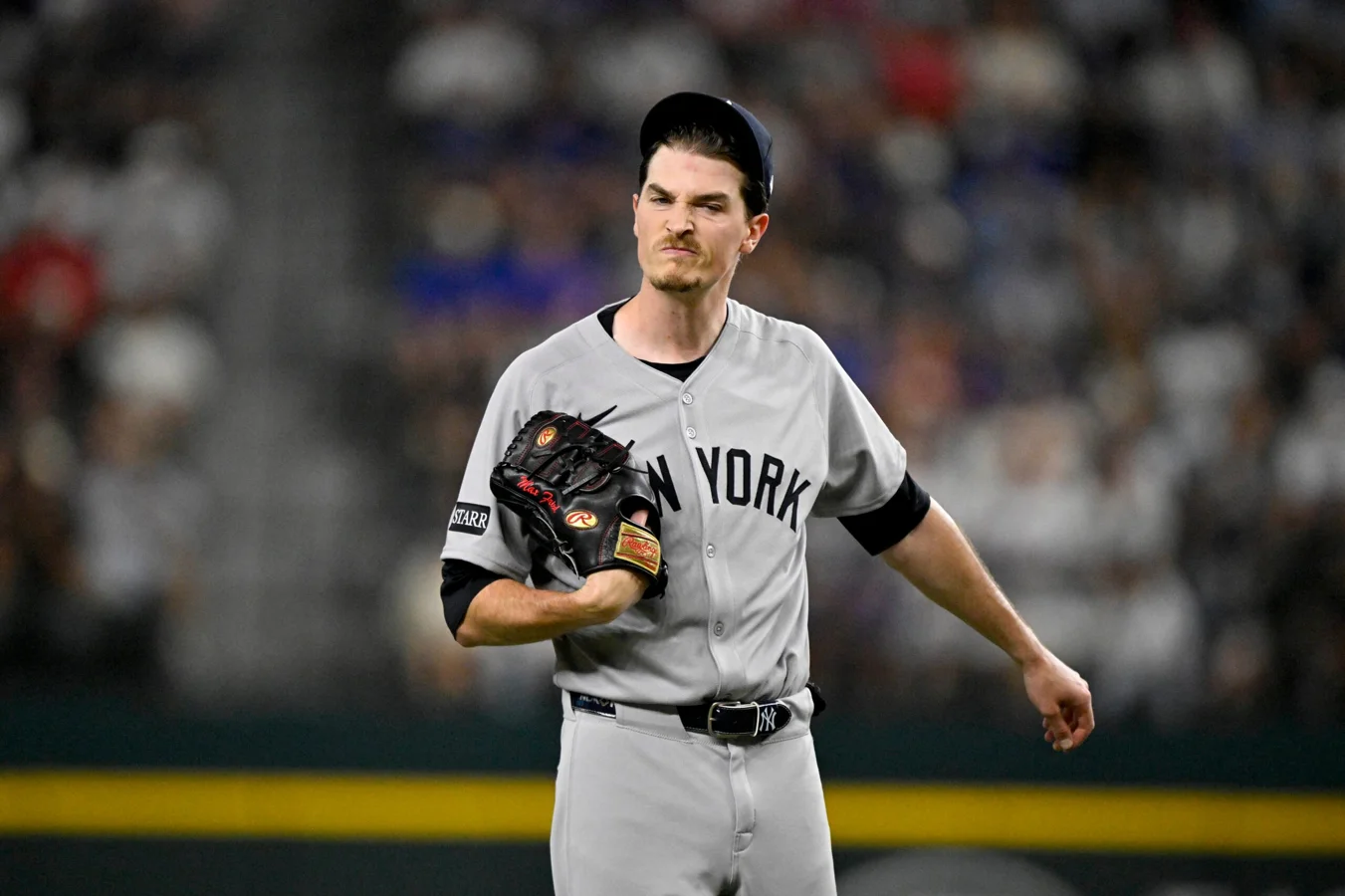
Command Challenges with Fried’s Cutter
Fried’s cutter, once a reliable weapon, has lost the sharp movement that previously helped him dominate hitters. Data shows a rise in opponents’ batting averages and slugging percentages against the cutter, reflecting diminished effectiveness. While Fried traditionally targets the inside edge of the strike zone against right-handed hitters, his misses have become more frequent and pronounced, eroding confidence in this pitch.
Adjustments by Opposing Teams to Fried’s New Pitching Style
Since signing with the Yankees, Fried has embraced a major change in pitching approach by working with team analysts and pitching coach Matt Blake. He switched from a north-south pitching style, favoring fastballs and curveballs, to a dramatic east-west approach through an increased use of cutters, sweepers, and sinkers.
This change initially threw hitters off, disrupting established scouting reports and patterns. Last year, hitters saw fastballs 64.4% of the time in full-count situations, but Fried now opts for cutters nearly half the time (47.8%). This shift has clearly drawn attention from league hitters, who have adjusted accordingly, making Fried’s extended slump more difficult to counter.
Reduced Use and Command Loss of Four-Seamers and Sinkers
Correlated with the increased emphasis on cutters and sweepers, Fried’s use of fastballs—both sinkers and four-seamers—has significantly decreased. While in 2024 Fried used fastballs 48.9% of the time, ranking 58th among pitchers with at least 1,500 pitches, that figure plummeted to 28.3% in 2025, placing him near the bottom of MLB usage rankings.
This trend worsened during his current slump, with fastball usage dropping from 29.7% in spring and early summer to 24.9% recently. As a result, Fried’s command over these pitches has weakened, affecting his ability to place them accurately. Though metrics like velocity, spin, and release point remain steady, the altered arm angle required to produce cutters and sweepers has compromised his fastball control, limiting their effectiveness as reliable options.
Wider Implications for the Yankees’ Playoff Chances
The Yankees face a growing risk to their postseason ambitions, given a range of team-wide problems compounded by Fried’s ongoing difficulties. Over the past month, their playoff odds have dropped sharply—only the Tampa Bay Rays, San Francisco Giants, and St. Louis Cardinals have suffered greater declines, with Baseball Reference assigning the Yankees about a 33% chance of missing the postseason.
Manager Aaron Boone, known for his fiery bouts with umpires, was ejected once again recently—the 44th time in his career, surpassing former Yankees skipper Joe Girardi and tying with Bobby Valentine. Boone’s on-field confrontations illustrate the team‘s mounting frustration during this challenging period.
Additional Struggles for Key Players Including Aaron Judge
The Yankees’ reliance on Max Fried and slugger Aaron Judge has heightened the impact of their combined slumps. Judge, who recently returned from the injured list after a flexor tendon strain, has struggled with consistency. Over his last six games, Judge has recorded only singles with no extra-base hits, a sharp contrast to his previous scorching pace where he batted nearly .400 over the first 66 games.
Since then, Judge’s average dropped to .238 across 42 games, alongside a spike in strikeout rate from 22.8% to 31.1%. Although Judge is expected to rebound as he regains full health, the timing and extent of his return to form remain uncertain, which adds pressure on Fried to reclaim his prior dominance.
Paths to Improvement for Max Fried and the Yankees
Fried’s blister injury may continue to affect his grip and command, especially concerning the cutter, which paradoxically he has thrown more since the blister appeared. A strategic move to increase fastball usage again—sinker and four-seamer—might help restore his control, providing a balanced pitching mix to keep hitters off guard.
Fried has historically posted stronger numbers in the season‘s latter months. His career second-half ERA stands at 2.89 compared to 3.25 in the first half, and he has excelled particularly in September with a 15–7 record and 2.44 ERA, rivaled only by stars like Stephen Strasburg and Clayton Kershaw.
Despite an encouraging start to the season with a 13–4 record in his first 17 starts, Fried has gone 2–5 in his last seven outings. With eight starts remaining, a quick return to form will be critical for the Yankees. The team’s playoff hopes may ultimately depend on Fried overcoming his current struggles and adapting once again as opponents adjust.