


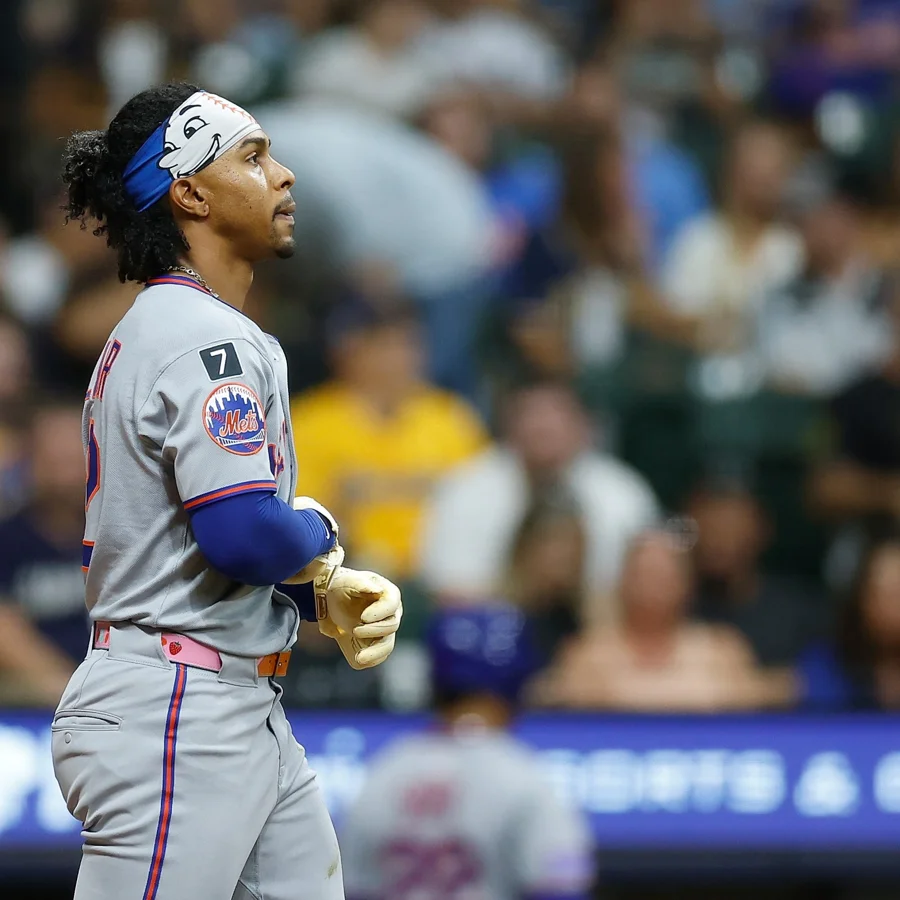
Francisco Lindor’s ongoing slump has significantly hurt the New York Mets’ chances of reaching the playoffs in the 2024 season. Once a promising leader and MVP finalist, Lindor’s recent drop in power and defensive effectiveness has coincided with the team’s fading postseason hopes in Queens, raising serious concerns about his performance going forward.
The Challenge of a Difficult Season for Lindor
Lindor’s first year with the Mets in 2021 was filled with disappointment, including a weak start and an infamous thumbs-down moment that symbolized a rocky 77-win season. Since then, he has worked hard to turn around his image and performance, rising to become a fan favorite. However, in 2024, despite beginning the year as an MVP contender, Lindor has slid into one of the worst slumps of his New York tenure.
Injuries have played a role in this decline, particularly a lingering toe issue that may be affecting his swing mechanics. Yet, the slump cannot be explained only by bad luck or injury. Lindor’s strikeout rate has climbed by 10% compared to the first half of the season, highlighting deeper troubles at the plate that go beyond mere misfortune.
Advanced metrics paint a troubling picture for Lindor as he nears his 31st birthday. His average exit velocity has dropped from an impressive 105 mph last year, which ranked him in the 90th percentile, to 104.3 mph this season. This decrease is part of a sharp decline in his overall hitter ranking, which has fallen from the 70th percentile to just the 47th — the lowest in his Mets career. These trends reflect weakened power and contact quality, critical factors in a league that favors hard-hit balls.
Significant Declines in Power and Batting Metrics
Lindor’s slump is evident in more than just average exit velocity. He has seen decreases in maximum exit velocity, the percentage of pulled fly balls, and damage caused per batted ball event—all key measurements of offensive impact. While he has never been renowned for exceptional plate discipline or elite contact rates, the loss of power and consistency has dimmed his potential to be a true superstar.
Drop in Defensive Performance Adds to Mets’ Woes
The slide in Lindor’s value extends to defense, where he has traditionally excelled as a shortstop. Although not an outright collapse, a noticeable drop in his defensive sharpness and range has emerged. In 2024, Lindor initially ranked second among shortstops with 16 Outs Above Average (OAA), but his current standing has dipped to ninth, with just 4 OAA adding minimal defensive impact.
As a player known for outstanding fielding in a demanding position, falling from elite defensive levels to average can heavily influence the Mets’ overall play. Historically, Lindor maintained strong defense despite offensive slumps, but an emerging physical decline may be causing both aspects of his game to falter at once.
The Mets Face Increasing Pressure for Lindor’s Resurgence
The Mets’ chances of contending in the NL East have faded alongside Lindor’s struggles, emphasizing how crucial his performance is to the team’s success. While there remains hope that he can return to his previous form, the 2024 season is shaping up to be a difficult campaign rather than the hoped-for comeback.
With the postseason race tightening and the team’s playoff berth uncertain, the Mets need Lindor to regain his offensive power and defensive reliability if they want to stay relevant. Players, fans, and analysts are watching closely to see if Lindor can bounce back from this downturn and restore his status as one of baseball’s elite performers.