
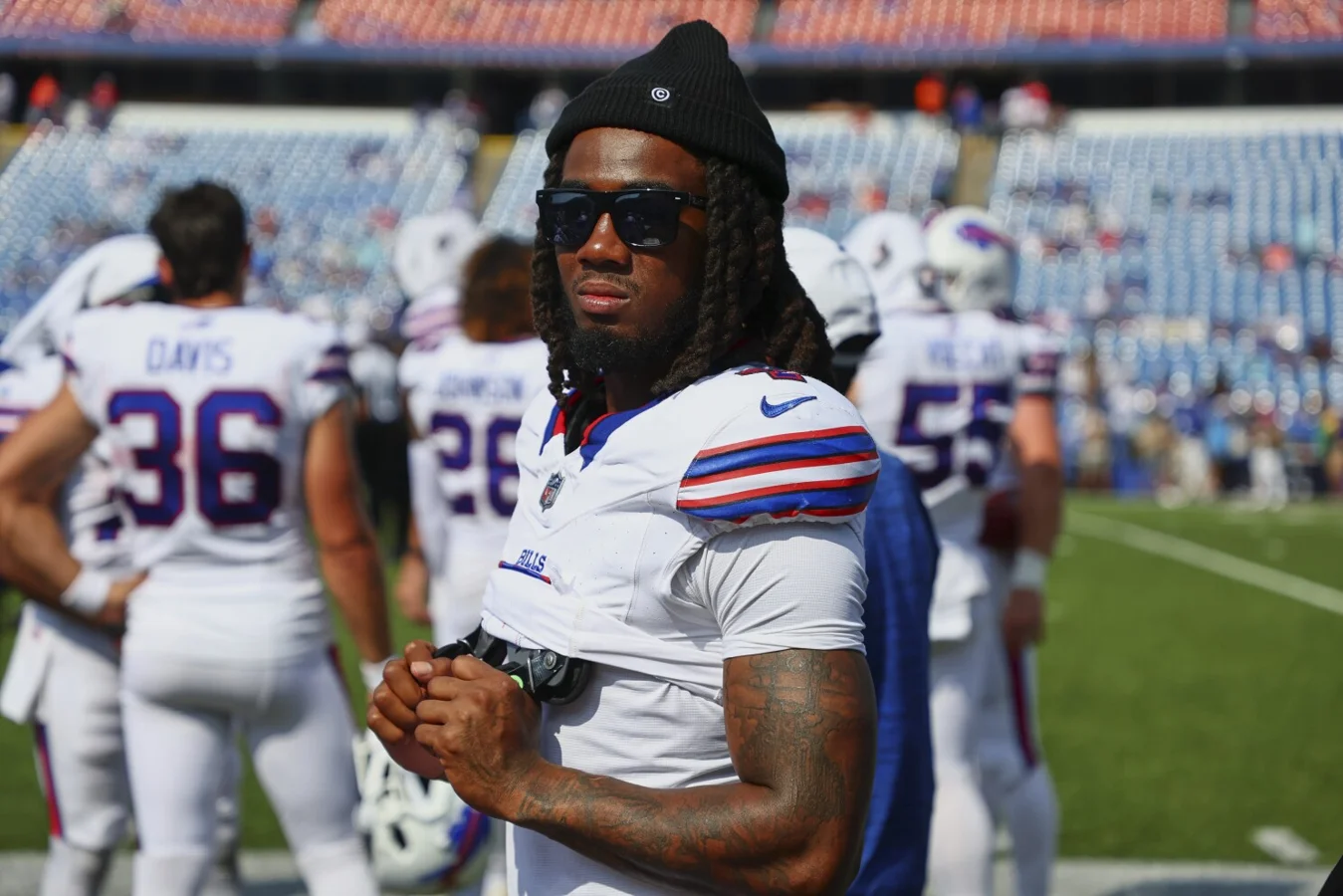

The Buffalo Bills recently committed to a four-year, $48 million contract extension for running back James Cook, with $30 million guaranteed, igniting debate around the risks of investing heavily in a position known for frequent injuries. This move underlines the Bills’ confidence in Cook’s talent but has raised concerns among analysts about the long-term value of such commitments to running backs.
James Cook’s Emergence as a Key Offensive Player
James Cook has solidified his role in the Bills’ offense and recently returned to practice after an injury hiatus, highlighting his importance to the team’s plans. His performances have earned him a Pro Bowl nod, showcasing his explosiveness and versatility as one of the <a href=”https://www.buzzineintl.com/category/football/nfl/”>NFL’s rising running backs. Despite these achievements, the substantial contract extension he received is viewed with skepticism by some experts who stress caution in awarding large sums to running backs.
Expert Analysis Raises Concerns Over Contract Value
Walter Cherepinsky of WalterFootball has been critical of the Bills’ decision, assigning a grade of D to Cook’s contract extension. He warns that fans should temper their enthusiasm, pointing out the inherent volatility of the running back position. Cherepinsky underscores the injury risks that make running backs a precarious investment and highlights the trend of NFL teams finding success with more affordable, lesser-known players at the position.

“Walter Cherepinsky of WalterFootball has been particularly vocal about his disapproval of the Bills’ decision. He assigned a D grade to Cook’s contract extension, suggesting that fans might want to temper their enthusiasm regarding this investment.” —Walter Cherepinsky, Football Analyst
Current Trends in the NFL Running Back Market
The broader context shows a shift in the NFL toward prioritizing cost-effective options rather than locking teams into expensive running back contracts. Many franchises now favor versatility and durability over big-name talent, often opting for depth created by cheaper players. This trend challenges the precedent for significant investments like the one made for James Cook, marking an ongoing debate about how teams allocate payroll to the running back position.
While the Bills clearly value Cook’s contributions, their substantial financial commitment stands out amid cautionary perspectives in the league. The risk is that such contracts may not yield the expected returns if injury or performance declines occur, reinforcing the skepticism surrounding high-priced running backs.
Implications for the Bills and the NFL’s Approach to Running Backs
The Bills’ decision to extend Cook highlights a growing divide between teams willing to invest heavily in proven talents and those who focus on managing risk through lower-cost depth. This contract will be closely watched as a measure of whether betting big on a running back in the modern NFL remains a viable strategy or becomes a cautionary example. As the league continues to evolve, the debate over running back valuations is likely to intensify.
Ultimately, the James Cook Bills contract criticism reflects a wider conversation about balancing talent, cost, and injury risk in the NFL, emphasizing how teams navigate the often unpredictable running back market.