
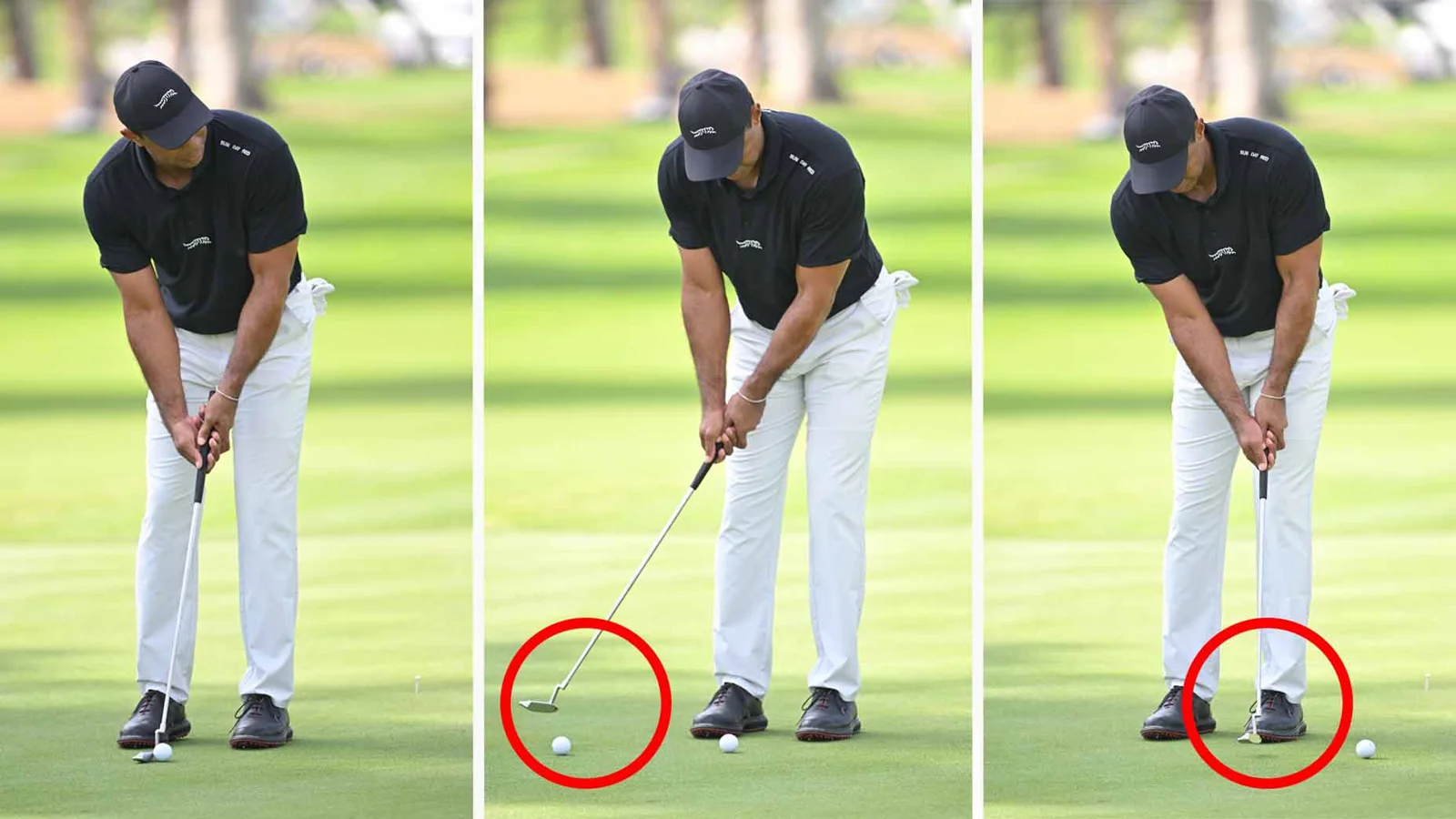

Tiger Woods has long been celebrated for his aggressive golfing precision, a hallmark that has shaped his legendary career. Throughout major tournaments, his ability to combine confidence with pinpoint execution has set him apart. In contrast, Phil Mickelson‘s approach, also marked by bold risk-taking, often attracted criticism due to inconsistent results. This contrast highlights how execution ultimately defines a player‘s legacy in professional golf.
Early in his career, Woods blended fearless aggression with remarkable accuracy. For instance, during the 1997 Masters, despite a shaky start with a score of 40 (+4) on the front nine, Woods stormed back to finish 22-under par over the final 63 holes, showcasing both resilience and precision. Another unforgettable moment came at the 2019 Open Championship when Woods executed a nearly perfect 4-iron shot on the challenging par-4 14th hole, the ball bouncing multiple times before settling into the cup for an eagle. These moments exemplify his signature aggressive yet controlled style, a combination that earned widespread acclaim.
Meanwhile, Mickelson was often labeled as overly aggressive, a characterization that sometimes worked against him. Known for attempting high-risk shots, his approach brought spectacular successes, such as his famous shot from a tree during the 2010 Masters. However, some of his risky plays faltered, intensifying scrutiny from fans and critics. Mickelson’s aggressive tendencies, paired with moments of frustration, occasionally led to controversy and penalty, exposing the thin margin between bravery and recklessness in golf.

Insight from Those Who Witnessed Their Styles Up Close
Andy Johnson, speaking on The Fried Egg Podcast, compared Tiger Woods’ precision to another exceptional player, Scottie Scheffler, saying,
“…The ability to just, like, hit shots at these very well-placed targets and go at these that are scary shots. He doesn’t bail out like a lot of players do in those situations,”
highlighting Woods’ fearless commitment to high-difficulty shots. Jim “Bones” Mackay, Mickelson’s longtime caddie with 25 years of experience, also weighed in:
“…People gave, you know, Phil Mickelson a really hard time back in that era for, you know, overly aggressive play…You know, I thought Tiger was a guy that was, you know, quite a bit more aggressive than people ever gave him credit for,”
underscoring the complex perspectives around their styles.
Mackay’s reflections are particularly insightful given his close proximity to both players during key moments in their careers. Mickelson’s aggressive risk-taking may have drawn criticism, but it was also a crucial factor in his six major titles, five of which occurred during Mackay’s tenure as his caddie. Yet, contrast in temperament played a role in public perception—while Woods maintained a stoic composure on the course, shielding him from some backlash, Mickelson’s emotional displays made him more vulnerable to criticism.
When Risk Backfires: Mickelson’s Controversial Moments
Mickelson’s penchant for risk occasionally led to costly mistakes, which fueled the debate about his playing style. One notable incident took place at the 2018 U.S. Open, where Mickelson’s frustration led to a rule violation. After missing a putt on the 13th green, he jogged over and hit the ball back toward the hole to prevent it from rolling further away. This action resulted in a two-stroke penalty, turning a likely bogey into an astonishing score of 10 on a par-4 hole. His final position tied at 48th in the tournament. Mickelson later explained,
“It was meant to take advantage of the rules as best as you can,”
in an interview with FOX, before apologizing to fans for the incident.
This episode exemplifies how Mickelson’s aggressive mindset, combined with emotional reactions under pressure, sometimes led to unfavorable outcomes. Woods, by contrast, generally avoided such controversies due in part to his disciplined demeanor, which often deflected scrutiny even when taking bold shots.
Comparing the Duel: Woods and Mickelson’s High-Stakes Battles
The contrast between Woods’ aggressive precision and Mickelson’s risk-embracing style is vividly illustrated in their head-to-head matchups. At the 2005 Ford Championship at Doral, Mickelson began the final round with a two-shot lead. However, Woods delivered a masterclass with a 6-under 66, including a critical eagle on the 12th hole, pushing him ahead by two strokes. Mickelson remained undeterred, aggressively shooting back-to-back birdies on holes 13 and 14 to tie the lead. Ultimately, missed putts on 15 and 16, coupled with Woods’ clutch birdie on 17, swung the victory to Woods by a single stroke. Mickelson’s nearly successful final chip on the 18th hole highlighted the razor-thin margins that define the risks they took.
Reflecting on the match, Mickelson shared with ESPN:
“I knew I was playing well enough to win. I believe I should have won, certainly could have won. Hope that the next time we play, we both play well again and get in the last group. Because this was fun competing against him,”
capturing the competitive spirit between the two legends.
Earlier, in the 2001 Arnold Palmer Invitational, a similar narrative unfolded. Mickelson mounted a strong, bogey-free 66 round aiming to catch Woods, only to see Woods respond under pressure, securing victory by a single stroke. These encounters emphasize that both players employed high-risk strategies, but Woods’ superior execution frequently proved decisive in their outcomes.
Why Execution Shapes Legacy More Than Boldness Alone
Woods and Mickelson both embraced aggressive tactics, but their legacies diverge primarily because of execution quality. Woods’ precise control, mental toughness, and composed delivery often resulted in successes that translated aggressive strategies into wins. Mickelson’s riskier style produced memorable and sometimes spectacular shots but also occasional misjudgments and errors that influenced public perception and tournament results.
Beyond their playing styles, demeanor on the course added to how fans and commentators judged them. Woods’ quiet intensity helped shield him from criticism, whereas Mickelson’s expressive nature made him an easier target for scrutiny. Still, both players have contributed richly to golf’s history, demonstrating that the line between brilliance and failure often depends on split-second execution.
As golf continues to evolve, current and future players can learn from the contrasting approaches of Woods and Mickelson. Aggression alone does not guarantee success; it must be paired with precision and a steady mindset. For the golf world, their rivalry remains a compelling study of how execution shapes not just outcomes, but lasting reputations.