
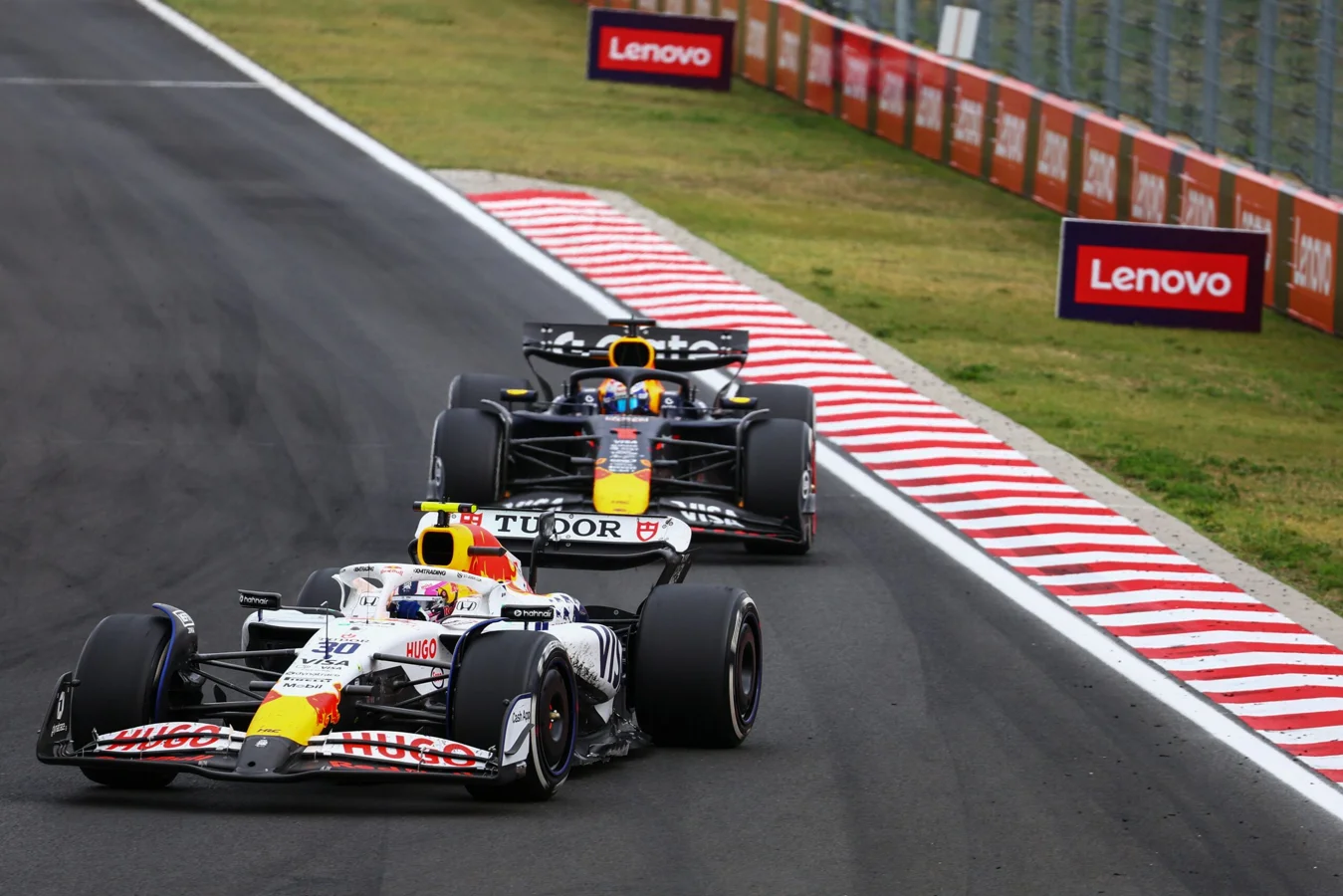

Throughout the first half of the current Formula 1 season, a clear distinction has emerged between the Red Bull RB21 and the Racing Bulls VCARB 02. The Red Bull car is known for having a very narrow performance window, making it particularly difficult to handle. In contrast, the Racing Bulls vehicle has demonstrated a more forgiving nature behind the wheel. This difference has played a role in Isack Hadjar‘s impressive debut, as well as the difficulties faced by Red Bull’s second drivers.
Yuki Tsunoda, initially promising at Racing Bulls, has lately encountered struggles similar to previous Red Bull teammates of Max Verstappen. Meanwhile, Liam Lawson, who was dropped by Red Bull after just two races, regained confidence with the sister team. Lawson’s resurgence has led to notable performances such as his eighth place finish at the Hungarian Grand Prix, even outpacing Verstappen on that occasion.
Intentional Design Choices Behind the Racing Bulls’ Manageable Car
The disparity between the two cars reflects both the challenges faced by drivers trying to match Verstappen’s level and deliberate engineering choices by the Racing Bulls team. Alan Permane, the new team principal, openly acknowledges that building a more driveable car was a targeted effort. He explained that it was a learning process that unfolded over the winter months.
It’s something we have worked on over the winter, and then we realised that we had a nice car to drive,
said Permane.
But until you start competing, it’s difficult to judge it. Through that Bahrain test we were never quite sure. After that we were pretty confident, because we ran with quite a lot of fuel that week. When we got to the first races, we realised what we’d done, and that helped lead the rest of the development for this car.
Permane emphasized that the team consciously prioritized creating a car from which drivers can extract performance without excessive difficulty. Although Racing Bulls has become known as a platform for developing rookie drivers, the ergonomics of the car were not primarily tailored for newcomers.
No, I don’t think so, honestly. I think it’s what we discovered over the winter from last year to this year,
Permane said.
We made a car, and you’re right, it undoubtedly helps when you have rookie drivers, but I suspect it’s a car that a top-line driver would also find comfortable to drive and would also be able to extract the performance from.
Political and Sporting Sensitivities Surrounding a Potential Verstappen Test
Despite Permane’s suggestion that even elite drivers would appreciate the Racing Bulls chassis, Max Verstappen has yet to take the wheel of the VCARB 02. Although logistical and media complications during race weekends might restrict such opportunities, teams have two annual filming days allowing for demonstration runs up to 200 kilometers each, potentially providing a suitable occasion for such a test.
The potential benefits of Verstappen driving the Racing Bulls car include obtaining a precise benchmark for Hadjar’s performances, gaining technical feedback that could advance the sister team’s car, and offering Verstappen himself a direct comparison between the two vehicles. However, this prospect remains unrealized.
When questioned after the Hungarian GP about his interest in testing the Racing Bulls, Verstappen laughed and replied:
Well, let’s not talk about that.
—Max Verstappen, Red Bull Racing
Insiders within Red Bull suggest the main deterrent is the political sensitivity such a test might invite. Rival teams are closely monitoring the relationship between Red Bull’s main and sister teams, and new FIA regulations planned for 2026 aim to clarify these dynamics more strictly. Although Verstappen driving the Racing Bulls car is not forbidden outright, it could draw unwanted attention from competitors and regulators alike.
Supporting this view, McLaren team principal Andrea Stella highlighted ongoing concerns about team independence during a press conference in Budapest. He affirmed the importance of safeguarding the sport’s fairness by preventing any advantage derived from too-close links between affiliated teams.
At the moment, we at McLaren trust that the regulations in place and the way they are enforced are already a valid way of mitigating any potential risk associated with connections between teams, like changing from one team to the other from one day to the next. But definitely, we think this is a topic that can be part of constructive conversations in the future to see if there’s a way of approaching the matter of team independence in an evolved way compared to where we are at the moment.
—Andrea Stella, McLaren Team Principal
Given this context, Red Bull’s hesitation to even permit the smallest possibility of controversy over Verstappen testing the sister team’s car appears reasonable from a strategic and regulatory standpoint.
Limited Practical Value of a Late-Season Filming Test for Development
Another important factor reducing the likelihood of such a test is timing. Red Bull’s team principal, Laurent Mekies, has noted that the two cars differ significantly, making direct technical feedback difficult to apply from one to the other. This experience-based insight suggests Verstappen’s input on the Racing Bulls vehicle would have limited relevance for refining the RB21.
Furthermore, as teams increasingly concentrate on the forthcoming 2026 regulations, development focus and substantial updates on current cars have largely ceased. Budget caps, restrictions on wind tunnel usage, and future regulatory requirements constrain teams’ ability to implement meaningful changes based on any insights gained at this stage. Consequently, even if a filming day with Verstappen in the Racing Bulls car was feasible, the timing renders its practical value marginal.
Implications for Verstappen and the Sister Team Moving Forward
Red Bull’s choice to withhold Verstappen from testing the Racing Bulls car highlights the careful balancing act between technical development, driver management, and sport governance. While a test might clarify differences between the cars and potentially support Racing Bulls’ driver growth, the political sensitivities and limited technical benefits weigh heavily against it.
As Verstappen continues to focus on maximizing results with the challenging RB21, the sister team remains a proving ground for rookies and emerging talent like Isack Hadjar, thriving with a car designed for accessibility. Moving forward, the relationship between the teams will continue to draw scrutiny under new FIA regulations intended to ensure fairness and transparency.
Ultimately, Red Bull’s strategic decisions surrounding Verstappen’s involvement with its sister team underline the complex dynamics shaping Formula 1 in a season marked by evolving regulations and intense competition.