
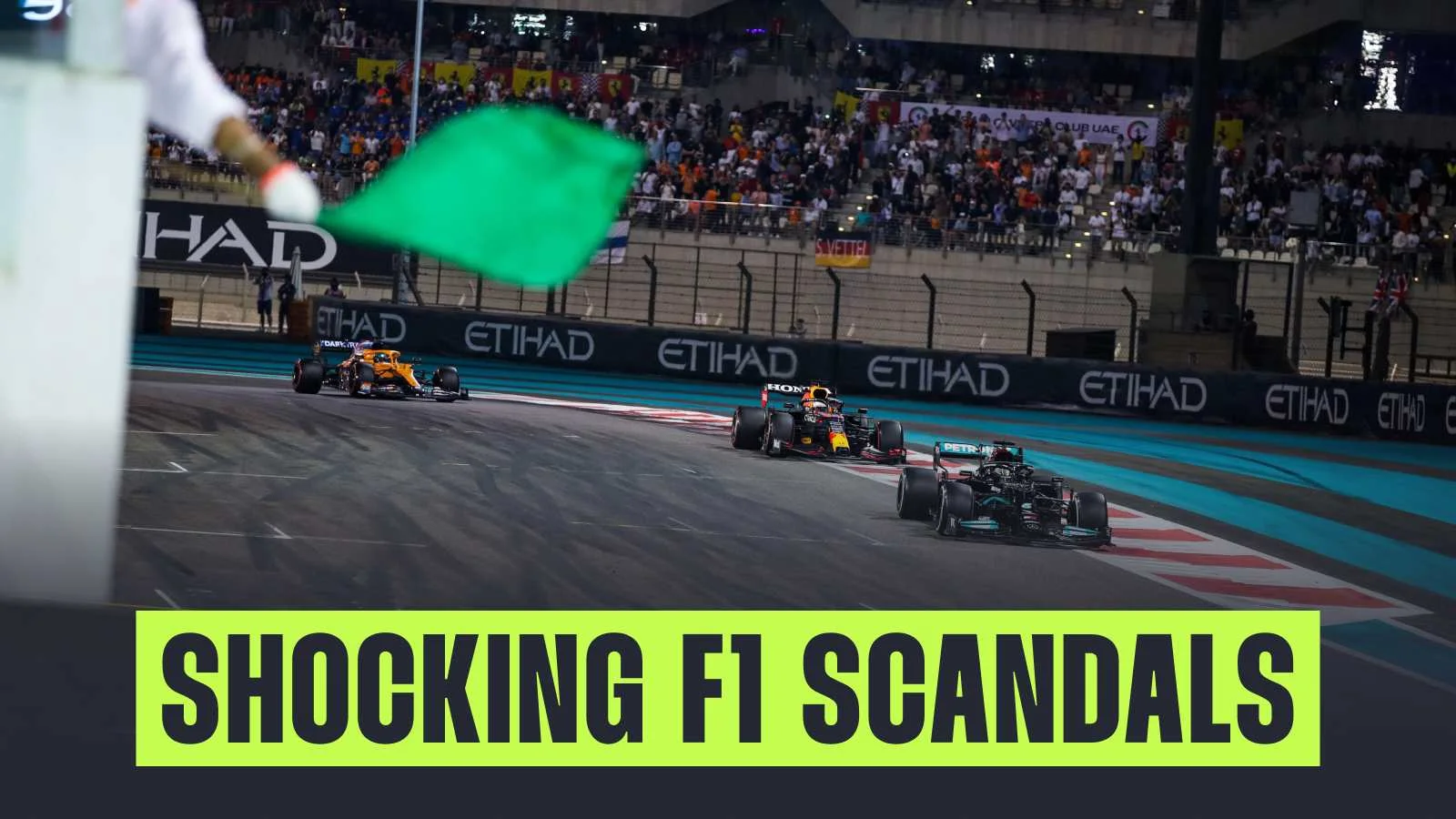

Formula 1’s long history of 75 years has been marked by numerous controversies, ranging from cynical team tactics to intense political drama. This list ranks some of the F1 biggest scandals ranked by their sheer shock value, detailing incidents that sparked outrage, shifted championship fates, and altered the sport’s reputation forever.
Overview of Seven Landmark F1 Controversies
Across decades, Formula 1 has experienced many episodes that shook its foundations. Here we explore seven of the most significant scandals, arranged from those less shocking to the highly sensational, to understand their causes, consequences, and lasting marks on the sport.
The 1982 Drivers’ Protest Against Restrictive Licensing
At the start of the 1982 season, a dispute over new Super License conditions pushed F1 drivers to take a stand. Returning champion Niki Lauda raised concerns after noticing that the license restricted drivers to stay with a single team throughout the season and prohibited them from criticizing the sport. Teaming up with Grand Prix Drivers’ Association leader Didier Pironi, they orchestrated a collective boycott of the South African Grand Prix, demanding change.
On race day, drivers arriving at the circuit were persuaded to gather in a hotel ballroom, refusing to take part until the Super License terms were revised. Despite threats from FISA president Jean-Marie Balestre that drivers without licenses would be banned from racing, the protest persisted through jokes and piano playing. The race proceeded, but the drivers were fined and given suspended bans they chose not to pay. Ultimately, the contentious clause binding drivers to one team was removed, showcasing the drivers’ power to challenge governance.
The 2005 United States Grand Prix Tire Controversy
The 2005 US Grand Prix at Indianapolis became infamous for a tyre safety crisis that left fans disappointed and tarnished Formula 1‘s image in America. During practice, Michelin discovered their tyres could not withstand the stresses of the circuit’s banked turn, a problem exacerbated by a mid-season ban on tyre changes intended to tighten competition.
When Michelin advised its seven customer teams to withdraw for safety reasons, only the three Bridgestone-shod cars from Ferrari, Jordan, and Minardi started the race, resulting in a six-car farce. Attempts by Michelin to introduce a chicane or allow tyre changes were blocked by the FIA, citing unfair advantages. Fans were outraged by the lack of genuine competition, a view echoed later by Minardi boss Paul Stoddart, who labelled the event a ‘farce.’ Though Michelin issued refunds and tickets for the following year, the public perception damage lingered for years.
The 1989 Collision Between Ayrton Senna and Alain Prost at Suzuka
The fierce rivalry between McLaren teammates Ayrton Senna and Alain Prost reached a dramatic peak at the Japanese Grand Prix in 1989, where the championship hung in the balance. Trailing Prost by 16 points, Senna needed an outright victory in Japan and Australia to claim the title.
Senna started on pole but fell behind Prost after the start. On lap 47, in a desperate bid, Senna dived inside Prost at the Casio Triangle chicane, resulting in the two locking wheels and crashing out. Prost abandoned his car, but Senna managed to restart his stalled car with the help of marshals and rejoined the race. After pitting for repairs, he caught and passed the leader to finish first, only to be disqualified for missing the chicane.
The decision sparked decades of debate over who was at fault and whether Senna’s move was justified. Fined $100,000 and handed a suspended six-month ban, Senna’s disqualification handed Prost the championship, cementing this incident as one of the sport’s most contentious personal and sporting clashes.
The 1958 Kidnapping of Five-Time World Champion Juan Manuel Fangio
In a political event that transcended motorsport, five-time world champion Juan Manuel Fangio was abducted at gunpoint from his Havana hotel by members of the Cuban Revolution on February 23, 1958. The kidnappers sought to undermine the oppressive regime of Fulgencio Batista by holding F1’s biggest star hostage the night before the non-championship Cuban Grand Prix.
Despite the trauma, Fangio was treated respectfully during his 29-hour captivity; he was allowed to contact family and watch the Grand Prix on television. His disappearance embarrassed Batista’s government, illustrating its vulnerability. Shortly afterwards, the revolutionaries led by Fidel Castro toppled the regime, with this high-profile incident drawing international attention to Cuba‘s political turmoil.
The Spygate Controversy: McLaren’s Espionage Scandal
In one of the most severe breaches of trust in Formula 1, McLaren was caught in possession of almost 800 pages of confidential Ferrari technical documents in 2007. This episode, dubbed Spygate or Stepneygate after disgruntled Ferrari employee Nigel Stepney who leaked the files, exposed a deliberate act of corporate espionage.
The documents contained deep design secrets that could have given McLaren an unfair advantage. Ferrari discovered the leak after a local print shop employee notified them of the suspicious photocopying. The FIA initially cleared McLaren, attributing wrongdoing to one individual, Mike Coughlan.
However, a second investigation concluded differently, penalizing McLaren with a $100 million fine and exclusion from the constructors’ championship that year. The scandal heightened existing tensions involving FIA president Max Mosley and McLaren team principal Ron Dennis, and worsened the internal rivalry between drivers Fernando Alonso and Lewis Hamilton. Alonso even threatened to expose further details to the FIA but later retracted the threat. Bernie Ecclestone humorously remarked that the fine consisted of
“$5 million for the offence and $95 million for Ron being a t**t,”
highlighting the bitterness within the sport.
The Controversial Decisions at the 2021 Abu Dhabi Grand Prix
The final race of the 2021 Formula 1 season in Abu Dhabi became one of the most debated in recent memory when race director Michael Masi’s inconsistent race management decided the Drivers’ Championship between Max Verstappen and Lewis Hamilton. Both entered the race tied in points, with the highest finisher claiming the title.
After a late crash by Nicholas Latifi triggered a Safety Car, Hamilton stayed on track while Verstappen pitted for fresh tyres. When race control allowed only the lapped cars between Hamilton and Verstappen to un-lap themselves—not all lapped cars as per standard procedure—a single lap restart ensued. This unusual decision gave Verstappen a decisive tyre advantage on the final lap, allowing him to overtake Hamilton and secure the championship.
Mercedes protested, but stewards upheld the race result citing Masi’s discretionary powers. The FIA later removed Masi from race director duties after an investigation into procedural irregularities. The incident triggered intense debate about race control transparency and consistency, underscoring the high stakes and pressures of modern F1 governance.
The 2008 Singapore Grand Prix ‘Crashgate’ Race Fixing Scandal
The 2008 Singapore Grand Prix produced one of the darkest episodes in F1 history, known as Crashgate. Nelson Piquet Jr., driving for Renault, deliberately crashed at Turn 17 on lap 14 under team orders to trigger a Safety Car period that ultimately benefited his teammate Fernando Alonso, who won the race by capitalizing on the timing of pit stops.
Initially labeled a simple mistake, Piquet admitted the truth after losing his seat at Renault in 2009. The subsequent investigation by the World Motor Sport Council resulted in team managing director Flavio Briatore receiving a lifetime ban from the sport and chief engineer Pat Symonds handed a five-year suspension. Though overturned in court, the scandal cast a long shadow, ending Piquet’s racing career and leaving a bitter legacy. Felipe Massa famously blamed the engineered crash for costing him the championship that year to Lewis Hamilton.
The Enduring Impact of Formula 1’s Greatest Controversies
These scandals reveal the intense pressures and rivalries that drive Formula 1, exposing moments when the pursuit of victory crossed ethical or legal boundaries. From political kidnappings to secret document theft, on-track collisions, and manipulated race results, the sport’s history is deeply intertwined with high drama well beyond the racetrack.
Each controversy reshaped regulations, governance, and public perception — emphasizing F1’s constant struggle to balance fierce competition with fairness, safety, and integrity. As Formula 1 continues evolving with new technologies and global reach, these historical incidents serve as cautionary tales underlining the sport’s vulnerability and the necessity of vigilant oversight.
Going forward, lessons from these events remain crucial to safeguarding the spirit of racing, ensuring that championships are decided on merit and not manipulation, and maintaining trust between teams, drivers, officials, and fans worldwide.