
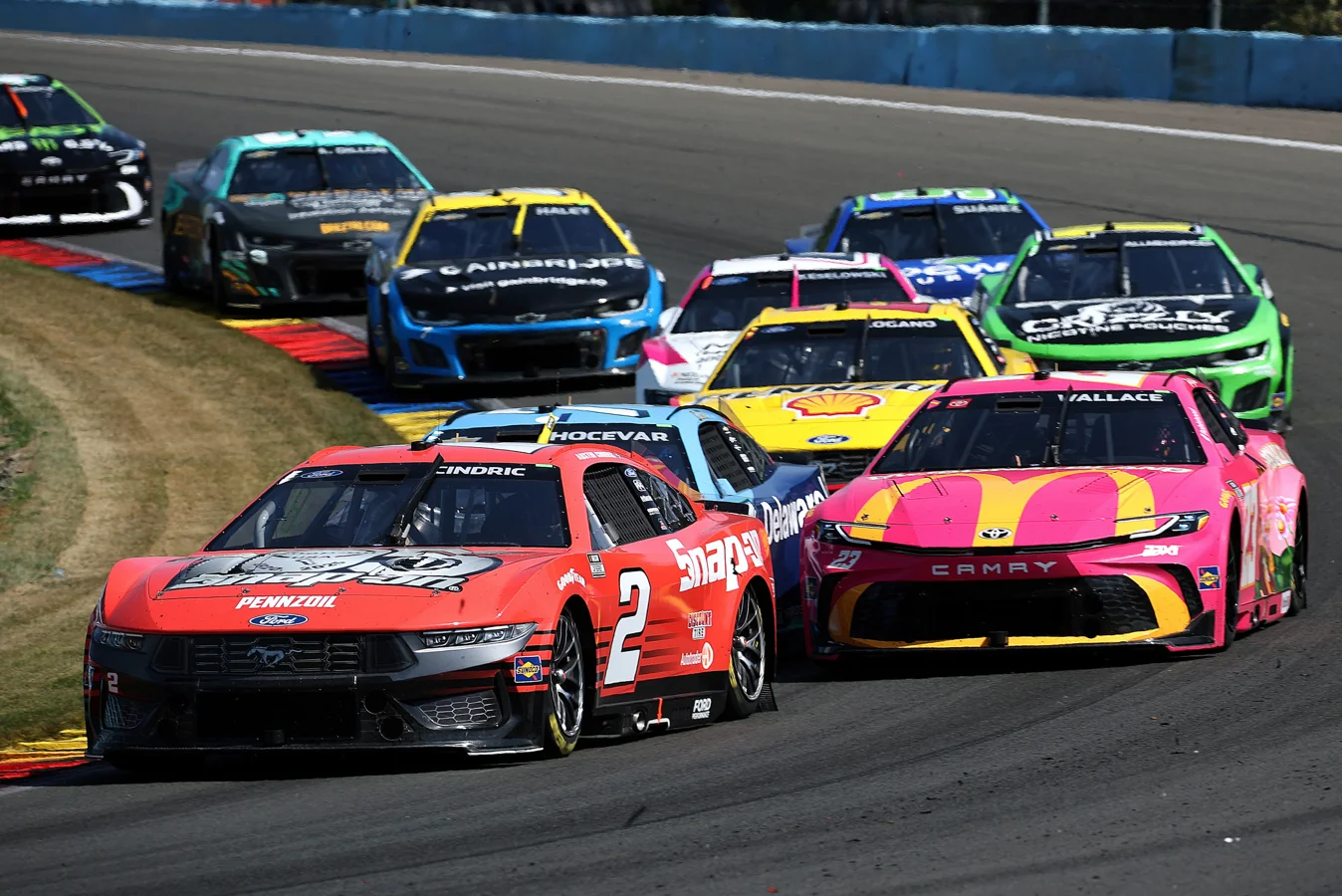

Austin Cindric of Team Penske recently highlighted the significant differences between the cars used in the Xfinity Series and the Cup Series, focusing on how the Next Gen car affects driver behavior. He discussed the impact of dirty air on car handling and explained why aggressive racing tends to increase toward the final laps, providing insight into the dynamics of the current competition.
Handling Dirty Air: Comparing Xfinity and Cup Series Cars
Cindric emphasized that all racing series deal with dirty air—the turbulence created by one car that impacts others nearby—but the way this affects vehicles varies markedly between the Xfinity and Cup Series. He pointed out that the design of the Xfinity car, featuring longer rear quarterpanels, allows drivers to influence the car ahead simply by their positioning more effectively than in the Cup Series cars.
He explained,
“I feel like in the Xfinity car with the longer rear quarterpanels, you could definitely affect the car in front of you by your proximity a lot more than you can in our (Cup Series) cars. On the flip side, taking air off each other’s doors in the Truck and Xfinity car also affects the racing.”
—Austin Cindric, Team Penske Driver
This aerodynamic difference has a direct bearing on racing styles, particularly on how closely cars can follow each other and how side-by-side battles unfold. Cindric also noted that the Next Gen Cup car encourages a lot more side-by-side running, although he remained uncertain whether that change is entirely positive or negative for competition.
The Role of Competition and Speed Margins in Racing Battles
Another factor Cindric highlighted is the intense level of competition within the Cup Series. Because the field is highly competitive, the margins between drivers are often extremely small, which shapes overtaking strategies and race dynamics.
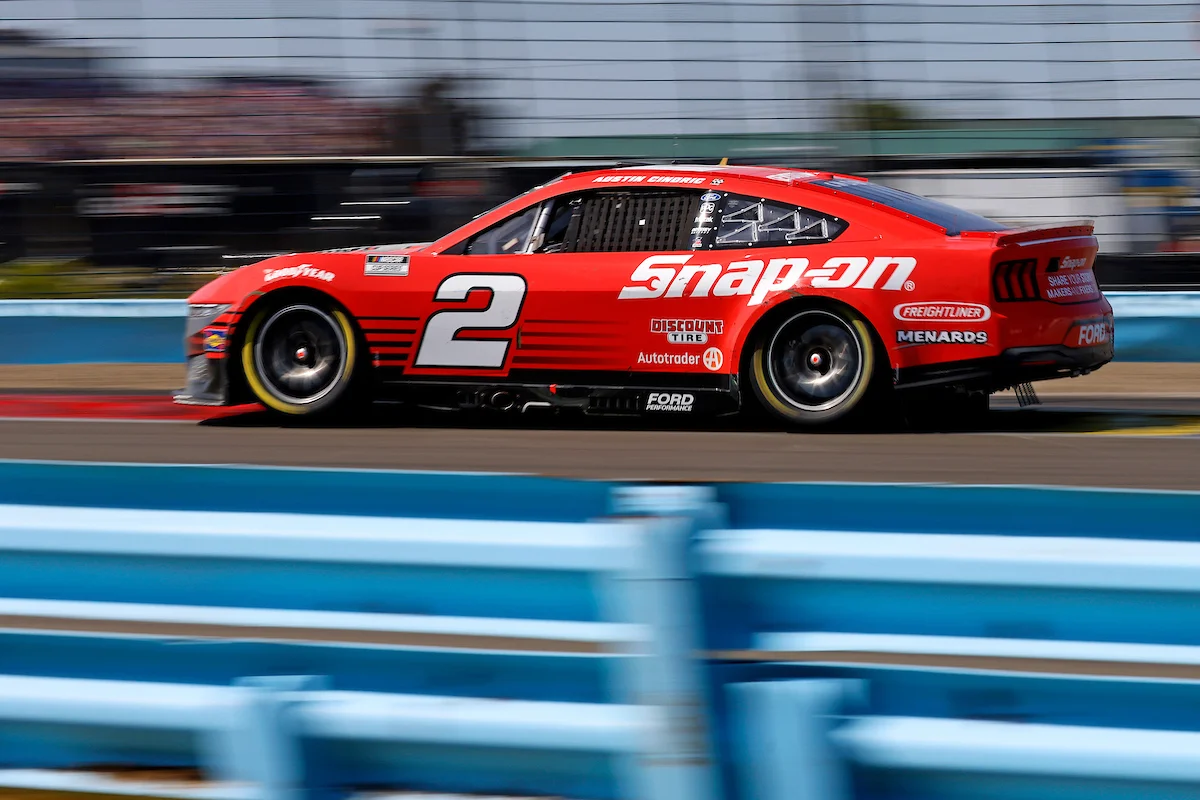
He observed,
“That’s the nature of having a highly competitive series. If I’m half-a-tenth to a tenth faster than you in any series, am I going to realistically expect to pass you? That’s going to be a hard pass to actually make. I’m going to have to go off the line, have a big enough run, so I think there are a lot of details other than just the air.”
—Austin Cindric, Team Penske Driver
Cindric’s comments underline how factors such as driver skill, timing, draft usage, and track position are critical in determining race outcomes alongside aerodynamic influences.
Why Races Get More Aggressive Toward the Finish
When asked about the surge in aggressive driving seen in the closing laps of races, particularly with the Next Gen Cup car’s parity across the field, Cindric suggested this is a natural aspect of racing rather than a consequence of car design. He pointed to similar patterns in other series like Xfinity and Truck, which also see intensified contact and accidents near the race end.
He stated,
“I think you’re going to get close to the end of the race in any series and you’re going to have an uptick in aggression,”
and added,
“I mean, you watched Watkins Glen in the Xfinity and the Truck Series. We wrecked a bunch of stuff just because it was the end of the race, so I feel like that is just racing.”
—Austin Cindric, Team Penske Driver
Cindric attributed these late-race incidents to the urgency drivers feel to improve their position in the final moments, highlighting the relentless competitive spirit that fuels aggressive maneuvers.
The Impact of Next Gen Car Parity and What to Watch Next
The Next Gen car’s design aims to create a more even playing field among competitors, which inherently makes races more closely contested. While this contributes to frequent side-by-side racing and tighter packs, Cindric suggests that driver decision-making and competitive instincts ultimately govern the level of aggression on track.
As Cindric prepares for his upcoming race at Richmond with his playoff spot secured, his insights provide valuable perspective on how advancements in car technology blend with driver mentality to shape modern NASCAR competition. With multiple racing lanes and closely matched equipment, fans can expect thrilling, intense finishes to continue as part of the sport’s evolution.