
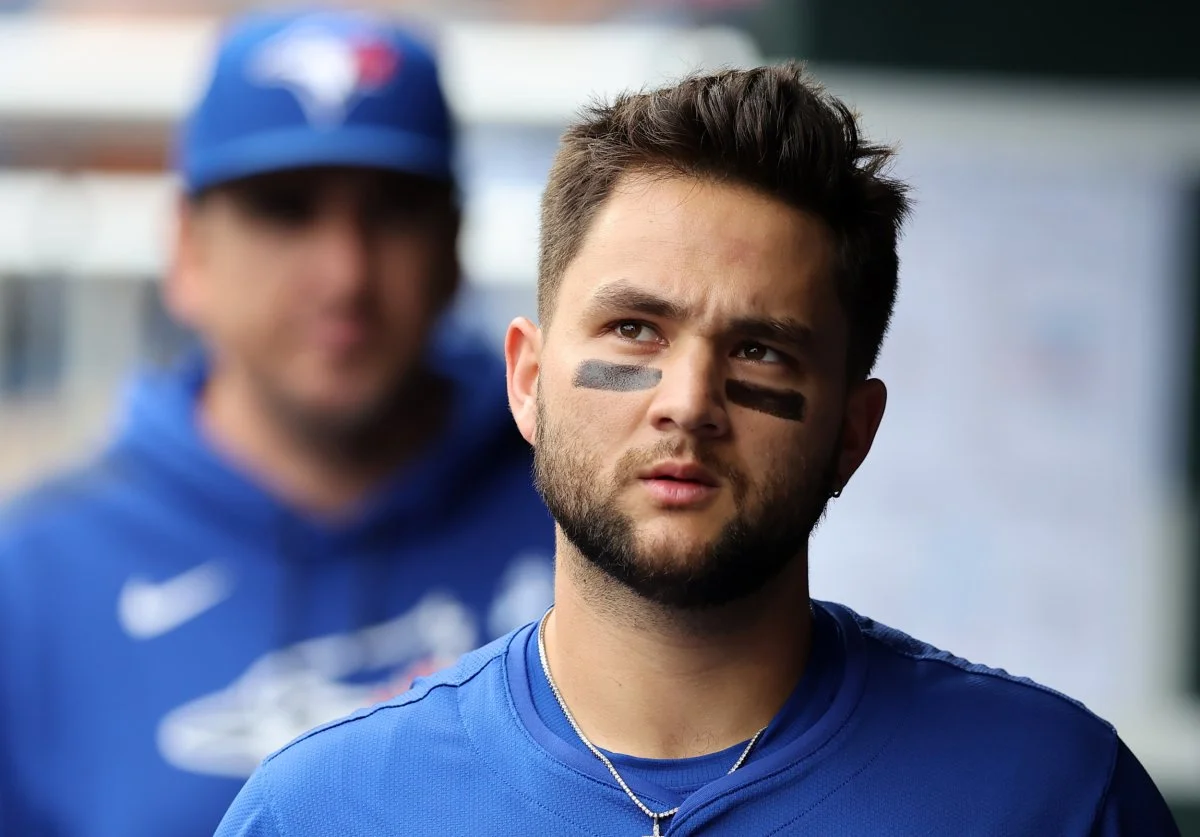

As Bo Bichette has regained his performance form during the 2025 season, discussions increasingly focus on his free-agent future and the likely value of his next contract. At age 27, Bichette’s consistent offensive output, with a .294/.336/.463 slash line closely matching his career averages, positions him as an appealing candidate for long-term investment by teams across Major League Baseball (MLB).
Performance Overview and Free-Agent Appeal
Bichette’s steady offensive contributions, highlighted by a weighted Runs Created Plus (wRC+) of 122 — slightly better than his career mark of 120 — reinforce his status as an important offensive asset in the shortstop position. Despite challenges on defense, his youth and production have generated notable interest, especially given his two All-Star selections and 19 career wins above replacement (fWAR). He is projected to finish the season near 3.7 fWAR, underscoring his value at the plate and on the bases.
His blend of youth, power, and overall impact make Bichette a homegrown talent teams are reluctant to lose, resulting in a competitive free-agent market for his services. However, a review of recent shortstop contracts suggests that defensive concerns could temper his ultimate market value.
Recent Shortstop Contracts Offer Insight into Bichette’s Market Value
The off-seasons since 2021-22 have witnessed several top-tier shortstops sign lucrative contracts, often exceeding $100 million for at least six years, setting benchmarks relevant for Bichette’s situation. Notably excluded from direct comparisons are Francisco Lindor, Carlos Correa, Bobby Witt Jr., and Wander Franco due to differing contract structures or physical health concerns at signing.

Therefore, the most comparable contracts come from Trevor Story, Dansby Swanson, Willy Adames, Xander Bogaerts, Trea Turner, and Corey Seager. These players provide a clearer framework for understanding how Bichette’s next deal might be structured given his offensive consistency and defensive limitations.
Trevor Story’s Contract as a Conservative Reference
Trevor Story received a six-year, $140 million contract with a 2025 opt-out and 2028 club option at age 29. At signing, his career statistics included a .272/.340/.523 slash line and a 17 Outs Above Average (OAA) defense metric with 20.3 fWAR. His preceding season featured regression, with a .251/.329/.471 slash line and negative defensive metrics, which influenced the contract’s value.
Story was a two-time All-Star and two-time Silver Slugger awardee, but his inconsistent offense tempered expectations. Bichette, still in his prime offensive years and younger, should aim to surpass this level of compensation, as accepting a contract similar to Story’s would reflect a disappointing negotiation result.
Dansby Swanson’s Deal Reflects Defensive Value Over Offense
Dansby Swanson’s seven-year, $177 million contract with the Chicago Cubs began in 2023, signed at age 29. Swanson had a career slash of .255/.321/.417 with a 94 wRC+ and a strong +32 OAA defensive output, accumulating 16.1 fWAR prior to his deal. His 2022 season showed improvement to a .277/.329/.447 slash line and a 117 wRC+ with +20 OAA.
Swanson’s trajectory involved evolving from a below-average to an above-average hitter, paired with excellent defense. While his overall numbers at signing lag behind Bichette’s offensive resume, his glove skill explains the premium placed on his contract. Conversely, Bichette’s stronger offense and youth provide leverage, although defensive shortcomings might challenge comparisons.
Willy Adames’ Recent Agreement Offers a Balanced Benchmark
Willy Adames signed a seven-year, $182 million deal with the San Francisco Giants in the 2024 off-season, at age 29, boasting a .248/.322/.444 slash line with a 110 wRC+ and 21.5 career fWAR. His 2024 platform season improved to a .251/.331/.462 line with a 121 wRC+ and neutral defense metric.
Adames represents perhaps the closest contract parallel for Bichette. Both players exhibit a blend of offensive productivity and defensive reliability, though Bichette’s bat is more consistent. Adames’ power potential and occasional offensive fluctuations contrast with Bichette’s steadier production, making their valuations fairly aligned. This deal may well serve as a starting point for Bichette’s negotiations, with adjustments to account for age and offensive upside.
Top-Tier Contracts Illustrate the Premium Paid for Elite Shortstops
Xander Bogaerts’ 11-year, $280 million contract and Trea Turner’s 11-year, $300 million agreement illuminate how teams reward offensive stars despite defensive flaws. Bogaerts signed at age 30, coming off a .292/.356/.459 slash line with 34.0 fWAR but questionable defensive metrics, suggesting teams expect a positional shift over time. His 2022 season featured a 133 wRC+ with modest defensive improvement.
Turner, also 30 at signing, brought a .302/.355/.487 slash line and a 124 wRC+, along with standout baserunning skills that have elevated his overall value. His playoff experience and offensive consistency place him a class apart from Bichette, though their raw offensive numbers share some similarities. Both Bogaerts and Turner’s contracts exceed expectations for players past their prime defensive years, largely reflecting market inflation and youth premium factors.
Corey Seager’s Long-Term Deal as a Model for Risk and Upside
Corey Seager’s 10-year, $325 million contract signed at age 28 illustrates how teams invest heavily in players with high offensive ceilings despite defensive limitations and durability concerns. Seager had a career .297/.367/.504 slash line and 21.9 fWAR at signing, supported by postseason success and multiple All-Star honors. He produced three consecutive 30-plus home run seasons post-signing, validating the Rangers’ gamble on his bat.
Although Seager’s pedigree elevates him above Bichette, his deal symbolizes a willingness among MLB clubs to prioritize offensive talent and youth when structuring long-term contracts, even if defensive metrics are less than ideal.
Defensive Challenges Highlight Concerns Over Position Viability
Despite Bichette’s offensive prowess, persistent below-average defensive metrics raise questions about his long-term fit at shortstop. Statcast data over recent seasons reflect low percentile rankings in Outs Above Average (OAA) and significant declines in Sprint Speed, alongside below-average arm strength. These factors jeopardize his ability to remain at the most athletically demanding infield position.
Consequently, some teams may view a shift to second base as more realistic for Bichette, which complicates his contract value. The second base market typically garners less financial reward, with few players such as Marcus Semien, Jose Altuve, and Javier Báez commanding annual averages above $20 million. Báez’s six-year, $140 million contract with an opt-out stands as a primary reference point for second base deals, paralleling the Trevor Story contract but at a lower tier of investment than Bichette might expect.
Ultimately, defensive concerns could restrict the range of suitors willing to offer contracts that reflect Bichette’s status as a starting shortstop, with teams expecting a position change pushing for lower valuations. Conversely, teams prioritizing his offensive skills and youthful potential could compete aggressively in the market.
Projected Contract Valuation and Market Dynamics
Bichette faces a uniquely complex free agency landscape due to his defensive liabilities, making his case more challenging than most comparable high-performing shortstops under 28. Pure offensive metrics would support a contract aligning with elite peers, but recent deals suggest the most realistic benchmark rests near Willy Adames’ $182 million for seven years agreement.
Factoring in Bichette’s age advantage and escalating market conditions marked by inflation and agents seeking top deals, a plausible contract forecast would add approximately one year and $1 million in average annual value to the Adames deal. This formula results in an estimated eight-year, $216 million contract, balancing risk and reward from both player and franchise perspectives.
Teams that perceive Bichette’s defense as an insurmountable issue might hesitate to extend offers near this magnitude, but the presence of even one club willing to embrace his offensive ceiling could drive a prosperous negotiation.
Upcoming Competitive Environment and Contract Implications
As the 2025 season progresses, Bo Bichette’s next contract prospects carry high stakes amid sharp contrasts between his offensive consistency and defensive struggles. His situation exemplifies the tension modern MLB teams face in valuing multi-dimensional players with positional uncertainties. The decisions made during free agency could shape not only Bichette’s career trajectory but also become a template for how teams weigh offensive value against defensive limitations moving forward.
While his youth and batting skill provide a firm foundation for lucrative offers, the defensive outlook may constrain the market’s breadth. Observers and stakeholders will watch closely how negotiation dynamics unfold, especially in relation to precedents set by high-profile shortstop contracts in recent years.